- Best Headbands for Thick Hair
- Are Headbands Bad for Your Hair?
- Why Headbands Cause Headaches
- How to Wear a Headband
- Types of Headbands
- Best Headbands for Fine and Thin Hair
- Headbands on Curly and Textured Hair
- Headbands on Short Hair and Bobs
- Non-Slip Headbands
- Headbands If You Wear Glasses
- The Bottom Line
- Explore the full series
The best headbands for women are the ones matched to a mechanism rather than a mood. A headband holds in one of two ways: by friction, using padded fabric, velvet or ribbed knit pressed against the hair, or by teeth, using a comb that bites into it. Choose the wrong mechanism for your hair and it slips, snags or aches.
We may earn a commission from links on this page, at no cost to you. Here is the whole decision, in one place.
Mechanically, a headband has a harder job than any clip. A clip holds one section of hair against itself. A headband has to span the entire skull — a shape that is neither round nor symmetrical — on nothing but its own spring tension or stretch. Where a claw clip concentrates its grip in one small place, which is the trade-off we unpack in the ultimate guide to claw clips, a headband spreads a small force along a long arc. Every millimetre of that arc is somewhere it can pinch, rub or work loose.
That is the design problem, and it collapses into four specs worth checking before you buy:
- Width. A wider band spreads the same squeeze over more skin, so the pressure at any one point drops. It is the most reliable comfort variable there is.
- Padding. Padding cushions the bony points — temples, the ridge behind each ear — and lets a band conform to a head it was not moulded for.
- Flex. A rigid arc is made for an average head. If yours is larger it perches and pops off; if smaller it clamps. Fabric stretches; bendable bands let you reset the shape for good.
- Grip mechanism. Teeth, silicone, or surface friction. Teeth hold the most and snag the most. Friction holds the least and damages the least.
Get those four right and most headband complaints become manageable. This page is the hub for our headband series: each section below is a short answer that stands on its own, and the deeper guides link out from here as they publish.
Best Headbands for Thick Hair
With thick hair, the band has to be bigger in every direction: wider across, deeper through the arc, stretchier at the ends. Thick hair does not beat a headband with weight. It beats it with geometry. Volume lifts the band off the scalp so it rides on a cushion of hair, and a cushion of hair is a slippery, mobile surface.
That is why a rigid plastic arc sized for an average head fails here. It cannot close behind the ears over dense hair, so it perches on top of the volume and launches the first time you tilt your head forward. The formats that work are the ones with somewhere to go: a wide stretch band that can expand to the circumference it is actually covering, or a toothed band whose comb reaches through the volume and anchors near the scalp instead of riding on top of it.
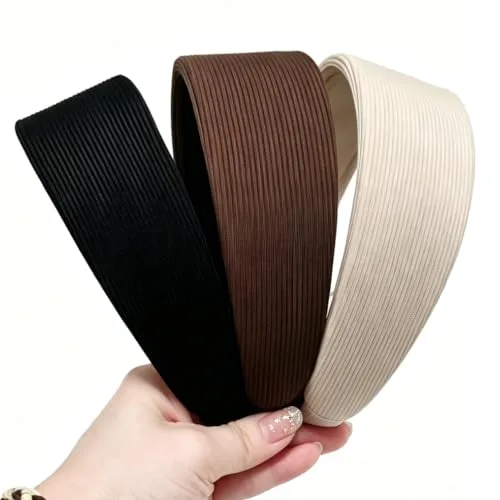
If you are shortlisting the best headbands for thick hair, check width and stretch recovery first. Yazon lists its ribbed knit band at 50mm wide over a padded lining, and states that the ribbed knit resists stretching out or deforming after repeated use. That second claim matters more than it sounds, because the usual failure of a fabric band on dense hair is not day-one slippage but month-three sag, after the elastic has been stretched past its recovery point every morning.
Two habits that help:
- Seat it, then push it back a centimetre, until you feel it settle into a slight hollow rather than balancing on a curve.
- Split the load. Two skinny toothed bands set a couple of centimetres apart hold dense hair better than one wide band fighting all of it.
Are Headbands Bad for Your Hair?
Headbands are not inherently bad for your hair. Sustained tension in the same place, every day, is. The accessory is close to irrelevant; the load pattern is everything. A loose padded band worn in a slightly different spot each day is one of the gentlest things you can put on your head. A tight band worn in exactly the same line for years is the repetitive pull dermatologists warn about in other styles.
The clearest guidance comes from the American Academy of Dermatology's page on hairstyles that pull. Its bluntest line is worth memorising: if your hairstyle feels painful, the style is too tight. The AAD also lists the warning signs — pain from tightly pulled hair, stinging on the scalp, crusts on the scalp, and tenting, where sections of scalp are pulled up like a tent — and advises switching hairstyles regularly so the same follicles get a break, and using silk or satin when covering the hair. Be precise about scope, though: that page is written about braids, buns, ponytails, weaves and rollers, not headbands. The mechanism it describes is simply the one a too-tight band applies to your hairline.
When readers ask us whether headbands are bad for your hair, our answer has three parts. Pain is a stop signal, not something to tolerate until the band breaks in. Rotate the position, because moving the band a centimetre redistributes both tension and friction. And watch the hairline, since that tends to be where it shows up first, often as short broken hairs rather than a bald patch. We go deeper into the warning signs in traction alopecia from hair accessories.
The formats worth most caution are toothed plastic bands, which concentrate load on the strands caught in the comb, and any band tight enough to leave a visible dent.
Why Headbands Cause Headaches
A headband headache is a squeezing injury, not a pulling one, and it has a clinical name. According to a narrative review of primary headache attributed to external compression or traction, published in the Journal of Clinical Medicine, the International Classification of Headache Disorders defines external compression headache as headache resulting from sustained compression of pericranial soft tissues — for example, by a tight band around the head, hat or helmet — in the absence of scalp damage.
That review names the culprits explicitly: its list of triggers includes tight hats, helmets, headbands, hairbands, hijabs, hearing protection, headphones and wigs. It puts the lifetime prevalence at around 4 percent of surveyed adults, and reports that the vast majority of cases resolved within an hour of removing the trigger, though in a small number of people the headache can persist for up to five days.
The buying decision follows from arithmetic: pressure is force divided by contact area. A narrow rigid band applies its whole spring force through two thin lines above your ears; a wide padded band spreads it over several centimetres. Same squeeze, a fraction of the pressure.
If you get headbands that give you a headache reliably, work through this order:
- Go wider before you go looser. A loose narrow band slips; a wide band can be comfortable and secure at once.
- Check where it hurts. Temples and above the ears point to arc shape. A band of pain across the top points to overall tension.
- Reshape rather than replace. Scunci states its bendable band can be shaped to the contours of your own head and is engineered to reduce pressure behind the ears.
- Cap the wear time. Since most cases clear within an hour of the trigger coming off, taking the band off partway through the day may be worth trying.
The same arithmetic explains a complaint we hear about rigid clips, covered in why hair clips cause headaches.
How to Wear a Headband
Put it on back-to-front, sit it closer to the hairline than feels natural, and give the contact strip some grip first. Most headband failures are placement failures, not product failures.
The counterintuitive part is positioning. Belle Fixe's guide to keeping headbands in place argues for setting the band closer to the hairline rather than further back, reasoning that it may still slide a little but has much farther to travel before it falls off than a band placed an inch or two behind the hairline. That matches what we see: the bands people lose are the ones perched halfway back on the crown with nothing ahead of them.
The sequence we use, for any format:
- Prep the strip. Belle Fixe suggests working a little dry shampoo, sea salt spray or texturising powder into the spot where the band will sit, purely for anti-slip traction. Clean, freshly conditioned hair is the slipperiest hair you will ever own.
- Load from the back. Place the band at the nape and roll it forward to the hairline. Pushing a band backwards from the forehead drags it against the cuticle and causes most of the frizz people blame on the band.
- Set the ends last. Seat both ends behind the ears deliberately rather than letting them land where they fall. This step does more than any other to decide whether the band aches.
- Pin if you must. Belle Fixe recommends two bobby pins to pin the band to the hair just below the ears, and notes this works best on thin fabric bands or headwraps rather than rigid ones.
That is the whole of how to wear a headband for everyday use.
Types of Headbands
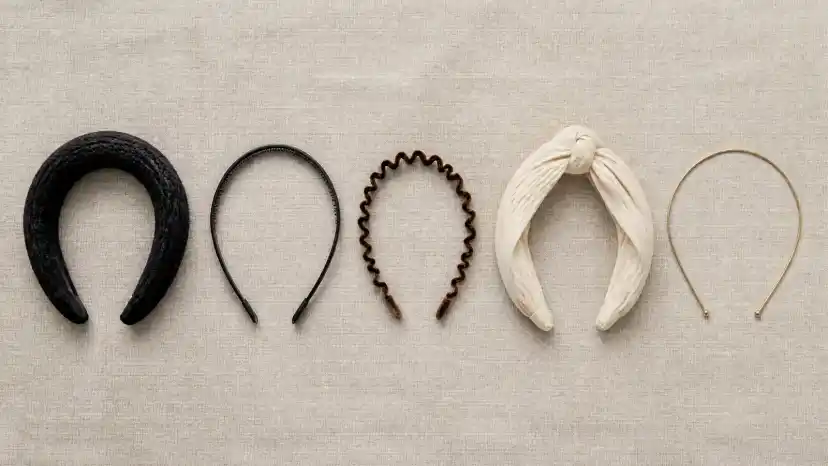
There are many names but only four real mechanisms: stretch fabric, rigid arc, toothed comb and bendable wire. Everything on a shop page is one of those four wearing a different fabric.
Grouped by how they hold, the main types of headbands are:
- Padded fabric and knit bands. A stretch loop or covered arc with foam underneath. Grips by friction and surface texture: the most comfortable format, the least secure.
- Velvet and suede bands. Same mechanism, higher-friction nap. Better grip than satin or silk, the slipperiest surfaces you can put against hair.
- Rigid plastic or metal arcs. A moulded horseshoe sized for an average head. Grips by spring tension alone, so fit is binary: it suits your head or it never will.
- Toothed bands. A skinny arc with a comb along the inside edge. The teeth reach past the surface and anchor near the scalp, which is why these hold when nothing else does.
- Bendable bands. A shapeable core you set to your own head once. A fix for the rigid-arc fit problem rather than a look.
- Scarves, turbans and headwraps. Tension you tie yourself, the only format where comfort is entirely under your control.
- Embellished bands. Any of the above with weight on top. Added weight is added leverage, so an embellished band slips more than its plain twin.
Where headbands end and other accessories begin is blurry, and we sort out the flat-clasp end of that spectrum in the ultimate guide to barrettes.
According to Sheep and Stitch's history of the headband, the earliest examples are probably the laurel wreaths of Ancient Greece, awarded to victors in athletic contests like the Olympics and to winners of poetry competitions, and the same history traces the jewelled, sequinned bands of the Roaring Twenties back to a band first worn for a medical purpose.
Best Headbands for Fine and Thin Hair
Fine hair has two opposite problems with headbands, and the fix for one makes the other worse. Problem one is grip: fine, smooth strands give a band almost nothing to hold, so friction-only formats often slide backwards within the hour. Problem two is fragility: the obvious answer to problem one is teeth, and teeth are what fine hair can least afford.
The way out is to add grip at the surface rather than bite. Choosing the best headbands for fine and thin hair, we look for three things in order: a high-friction lining, low weight, moderate width. High friction means velvet, suede nap, ribbed knit or silicone — anything but a smooth satin lining, which will slide every time. Low weight matters because a heavy or embellished band has more leverage to work itself backwards, and the same weight sits harder on a thinner cushion of hair. Moderate width is the compromise: wide enough to spread pressure, narrow enough not to look like the band is wearing you.
Two of our four picks are built around this. Yazon states that the textured ribbed surface of its knit band increases friction with hair to reduce slipping, which is grip without teeth. AUDTOPE's velvet bands come in three widths — a listed 0.6 inch, 0.8 inch and 1.2 inch — with no teeth at all, the gentlest configuration on our list.
Two habits worth adopting:
- Texture first, band second. A pinch of dry shampoo or texturising powder in the contact strip roughens the cuticle enough to change the friction available.
- Rotate the line. Fine hairline hairs break first under a repeated load, so move the band a centimetre back on alternate days.
Headbands on Curly and Textured Hair
On curly hair the enemy is friction, not slippage — the band usually stays put and the curls pay for it. The damage shows up as a flat, frizzy strip exactly where the band sat.
Satinera's explainer on satin bands and curly hair lays out the mechanism: curly hair has a more exposed cuticle structure than straight hair, because the natural bends in the shaft leave the cuticle scales slightly lifted on the outer edge of every curve. Textured materials — it names cotton, terry cloth, wool, knit and velvet — drag against the cuticle of every curl they touch, and over hours of wear that lifts the cuticle, disrupts the curl pattern and creates the characteristic frizz. A satin lining, it argues, is smooth enough not to drag the same way.
That is the reasoning behind satin-lined headbands for curly hair being the default recommendation in textured-hair circles, and it lines up with the American Academy of Dermatology's advice to use silk or satin when covering the hair. Note the honest tension: velvet is a high-friction surface, which makes it excellent for grip on fine straight hair and a poorer choice against defined curls.
Three practical rules:
- Set the band over dry, finished curls, not damp ones. A wet curl under compression dries in whatever shape the band leaves it.
- Sit it back off the hairline. Edges and baby hairs are the finest hairs you have and the least able to survive a daily friction line.
- Crush, do not comb. When the band comes off, scrunch the flattened strip upward rather than raking it, which is what turns a dent into frizz.
Headbands on Short Hair and Bobs
Short hair inverts the usual problem: there is not enough hair behind the band to hold it down, so it climbs. With long hair, the mass below the band acts as ballast. With a bob there is nothing below the ears to anchor against, so the band migrates toward the crown while the layers underneath escape forward one by one.
Both failures are solvable, and the solutions are nearly the opposite of the long-hair advice. For headbands on short hair, the format that works best is the one people assume is worst: a skinny toothed band. Teeth are what let a band grip a four-inch layer at all, because a friction band needs a long contact patch and short hair does not offer one. ULTIMUTE's eight-pack is polycarbonate in four skinny toothed styles, with an arc shape and non-slip bumps at both ends; the maker states the tooth design keeps hair in place without knotting or tearing. Doubled up, two skinny bands hold a bob more convincingly than one wide fabric band.
The placement rules change too:
- Go further back than the general rule. On a bob, a band at the hairline has the shortest, most escape-prone layers directly under it. An inch back puts it over longer hair.
- Angle the ends down. Tuck the ends below the tops of the ears rather than above them, so the band holds a downward curve instead of sitting on the widest part of the skull.
- Tuck the front, not the sides. With a chin-length bob, sweeping the front sections back and leaving the sides forward keeps the shape of the cut instead of flattening it.
Non-Slip Headbands
There are only four ways to stop a band sliding, and knowing which one you are buying matters more than the label on the packet.
The four grip strategies:
- Surface texture. A ribbed, napped or velvet face raises friction against hair without touching a strand mechanically. Yazon states the textured ribbed surface of its knit band increases friction with hair to reduce slipping, and AUDTOPE makes the same claim for velvet.
- Silicone. A strip or row of dots moulded onto the inner face. The most grip per gram, which is why athletic bands use it, and the most likely to tug on removal.
- Teeth. Mechanical interlock rather than friction. Nothing holds as well, and nothing risks as much on fine or fragile hair.
- Shape. An arc that follows the skull with slight inward pressure at the ends. ULTIMUTE lists non-slip bumps at both ends of its bands, and Scunci sells its bendable band on a no-slip grip feature.
We treat non-slip headbands as a strategy rather than a category because the right one depends entirely on why yours is slipping. If it slides backwards off clean hair, you have a friction problem and texture or silicone fixes it. If it pops off over volume, you have a size problem and no amount of grip will help — you need stretch or teeth. If it stays put but rotates, the arc is the wrong shape for your skull and a bendable band is the honest answer.
One variable that gets ignored: hair condition. Freshly washed, conditioned, silicone-smoothed hair is the most slippery substrate a band will ever meet. Second-day hair holds a band that first-day hair spits out.
Headbands If You Wear Glasses
Glasses and headbands compete for the same square inch of skull, and that is why the combination hurts. The arms of your frames rest on the strip of bone just above and behind each ear. So does the end of almost every rigid headband. Stack two pressure points on one spot for a few hours and you may get a tender, hot ache that people often blame on the glasses alone.
For headbands for glasses wearers, the goal is to separate those two contact zones rather than to soften either one. Three ways:
- Bend the ends outward. A shapeable band is the cleanest fix, because you can open the last two centimetres on each side so the band clears the frame arms. Scunci states that its bendable band can be shaped to the contours of your own head and is engineered to reduce pressure behind the ears — the same region the arms of your glasses occupy.
- Go higher, not tighter. Seating the band so its ends finish above the top of the ear, rather than tucking in behind alongside the arms, keeps the two loads on different bone.
- Choose padded over rigid. A padded fabric band deforms around a frame arm instead of pressing it into your head. A moulded plastic arc cannot.
Sequence helps too: put the headband on first and the glasses on second, so the frame arms slide over the band rather than trapping it against your scalp. And the compression-headache research above is directly relevant here — the review found the headache resolved within an hour of removing the trigger for most people, so taking the band off for a while is the faster experiment.
The Bottom Line
Headbands are not one product with one quality ladder. They are four mechanisms sold under one word, and almost every bad experience comes from buying the wrong mechanism for the problem you actually have.
So diagnose before you shop. If your band slips, you need friction or teeth. If it hurts, you need width, padding or a shape you can change. If your hair frizzes or breaks under it, you need a smoother lining and a position you rotate. And if your hairline is thinning where the band sits, take the American Academy of Dermatology's line seriously: a style that feels painful is too tight.
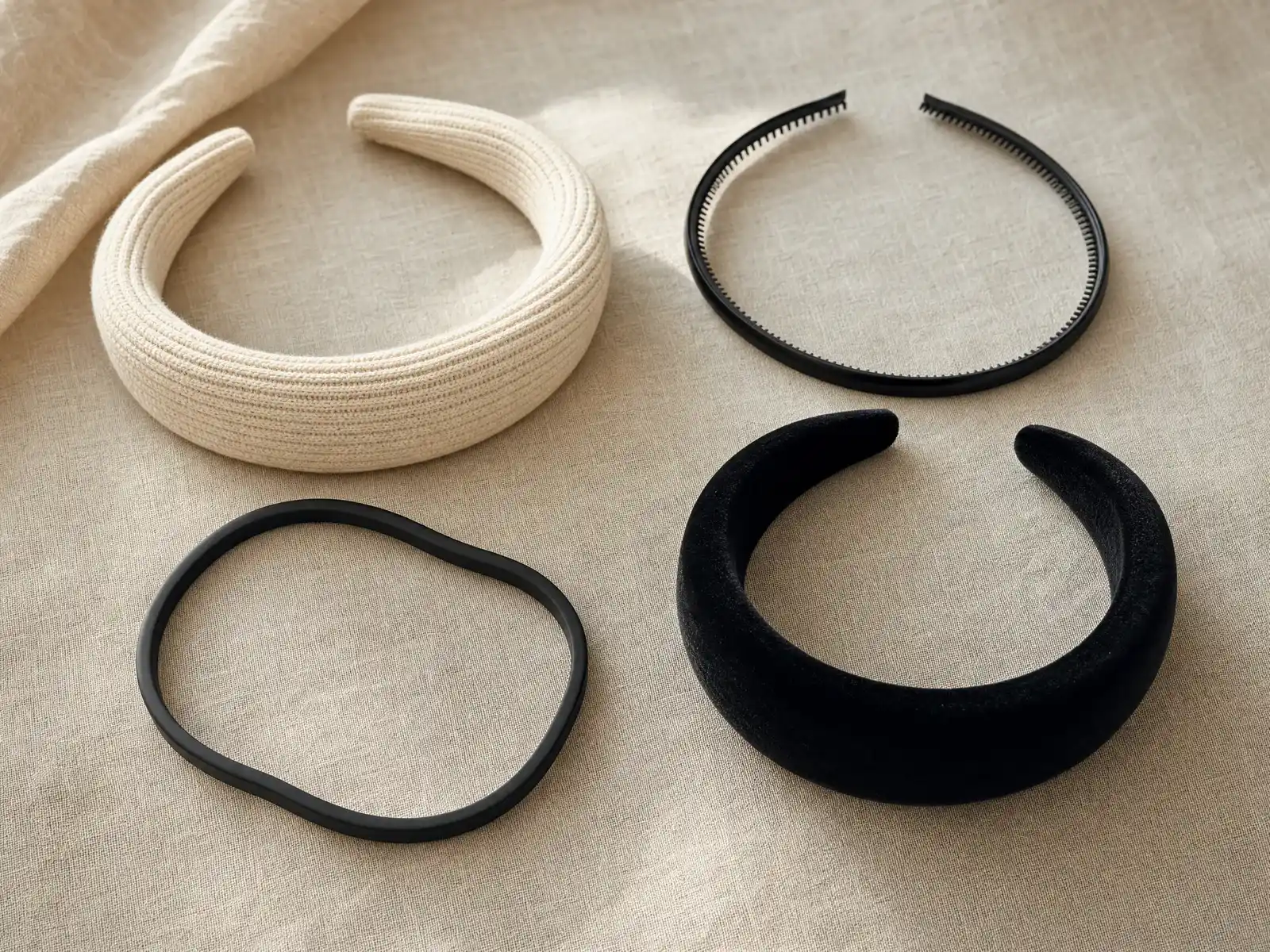
The four bands in our picks above represent those four mechanisms rather than a ranked category, and all four sit under 13 dollars as of September 2026. The Yazon Ribbed Knit Padded Headbands are the padded-fabric archetype at a listed 50mm wide, the band we reach for when comfort is the priority. The JJUNW Toothed Plastic Headbands are the opposite argument: a skinny plastic frame whose teeth bite in and hold when fabric will not, with the snagging risk that comes with it. The Scunci No-Slip Grip Bendable Headband exists for the fit problem rather than the grip problem, and is the first thing to try if every rigid band you own has hurt behind the ears. The AUDTOPE Velvet Padded No-Teeth Headbands, also above, cover the gentlest end: velvet over padding, no teeth, three widths in the pack.
Buy two mechanisms, not two colours of the same one. That is the change that turns a drawer of unworn headbands into a drawer you use.
Explore the full series
- Best Headbands for Thick Hair That Don't Slip or Pinch — Why width and flex — not tightness — decide whether a headband survives dense hair.
- Are Headbands Bad for Your Hair? A Straight Answer — Where the real damage risk sits — tension, friction and the hairline — and how to avoid it.
- Why Do Headbands Give Me a Headache? 7 Fixes — The compression mechanism behind headband headaches, and seven fixes in order.
- How to Wear a Headband Without It Slipping Back — Correct placement, six ways to wear one, and why yours migrates backwards.
- Types of Headbands Explained: 12 Styles and What Each Does — Twelve headband types, what each grips best, and who each suits.
- Best Headbands for Fine and Thin Hair That Actually Grip — Grip without weight — the fine-hair spec is the inverse of the thick-hair one.
Yazon Ribbed Knit Padded Headbands (3 Pack)
The padded-fabric archetype: a listed 50mm of ribbed knit over a padded lining. This is the format most people mean when they say a headband is comfortable, and it grips by friction rather than by clamping.
We tested dozens of claw clips to find the very best options. Below you'll find our complete ranking, with detailed reviews and real customer feedback for each pick.
The Complete Ranking
The padded-fabric archetype: a listed 50mm of ribbed knit over a padded lining. This is the format most people mean when they say a headband is comfortable, and it grips by friction rather than by clamping.
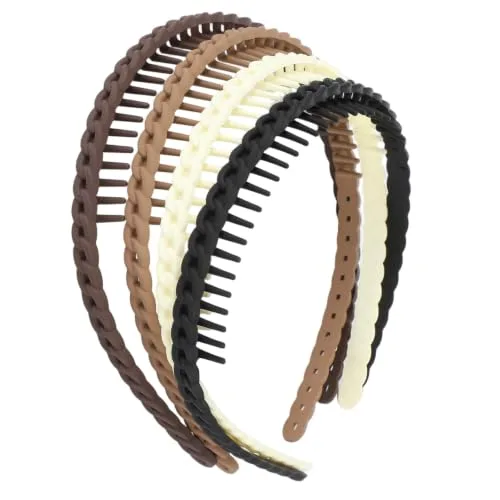
The opposite approach — a skinny lightweight plastic frame with a comb of teeth that bite into the hair. It holds far more securely than fabric and disappears under a style, at the cost of being the format most likely to catch fine hair.
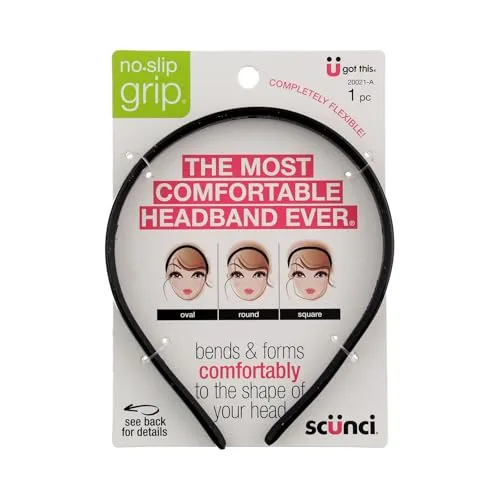
A band you reshape to your own head rather than one shaped for an average head. Worth knowing about if every rigid headband you have owned has hurt behind the ears.
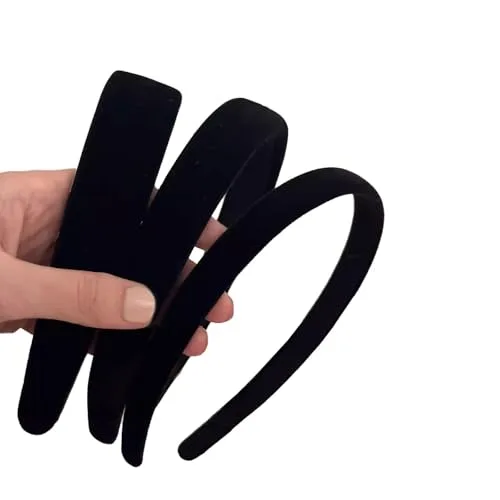
Velvet over padding with no teeth, in three widths. The gentlest of the four formats on the hairline, and the one to reach for if friction rather than slippage is your problem.
Quick Comparison
A side-by-side look at our top picks
Frequently Asked Questions
Why does a headband give me a headache?
Teeth or friction: which mechanism do I need?
Where should a headband actually sit?

Donna Miller
Enjoyed This Guide?
Get more hair tips and product recommendations delivered weekly.