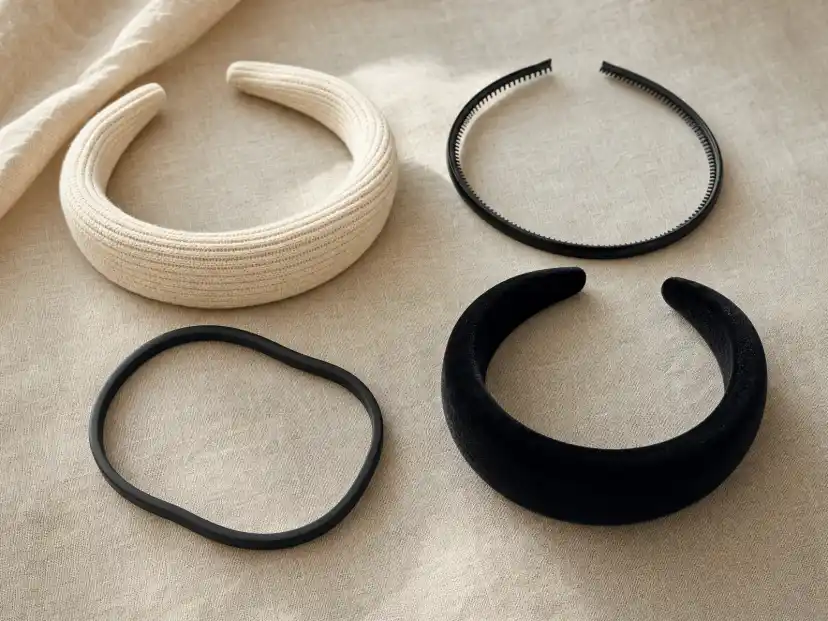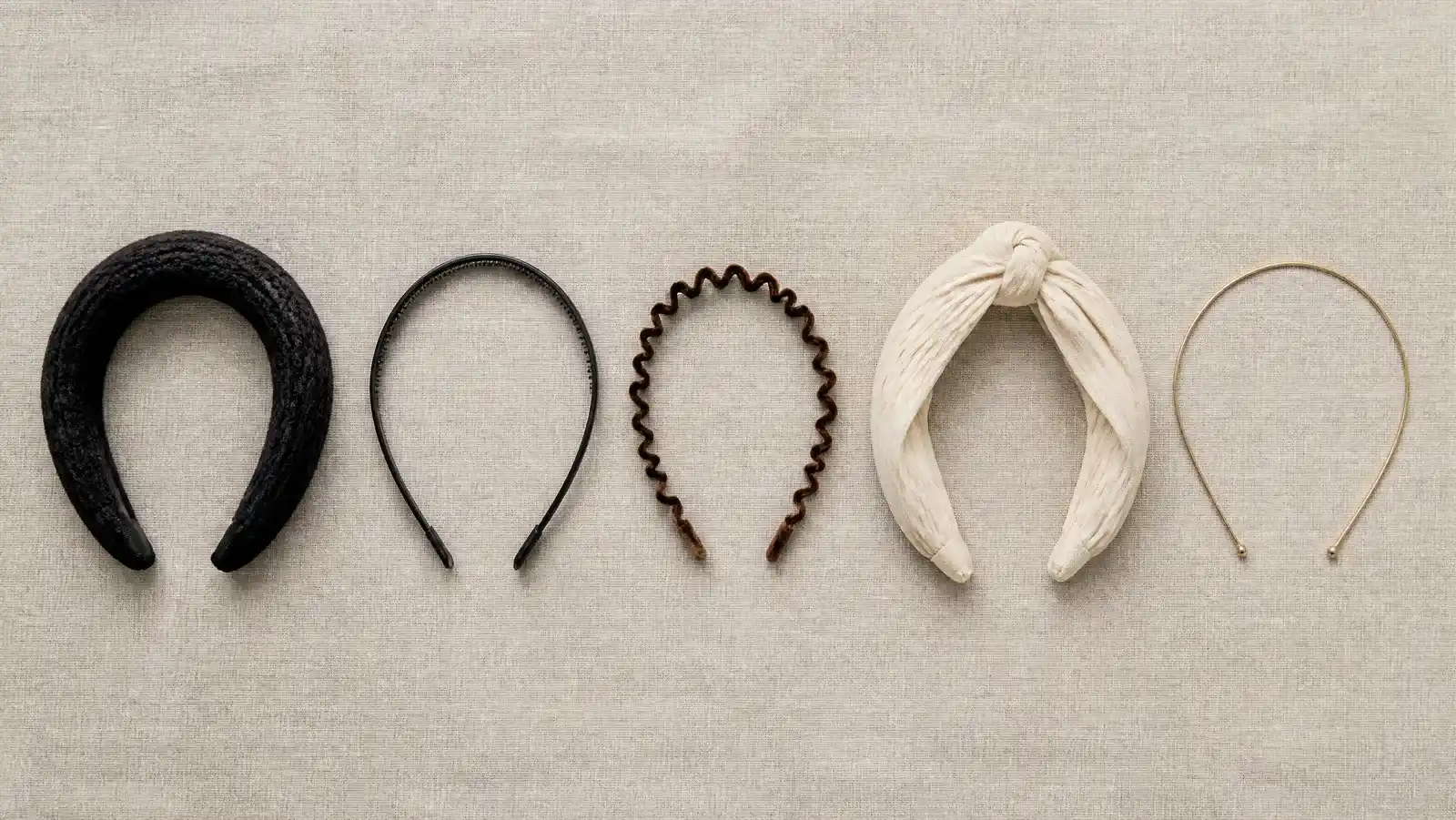
- The 12 types of headbands at a glance
- Twelve names, four mechanisms
- Friction bands, part one: padded hoops and wide knit bands
- Friction bands, part two: velvet, satin, thin elastics and sweatbands
- Spring-tension hoops: the Alice band and its dressed-up cousins
- Toothed and comb headbands: the different kinds of headbands that actually anchor
- Bendable wire bands and tied wraps
- Padded vs flat headbands: which to buy
- Four headbands that show four different builds
- Types of headbands for women, by hair type
- Fit, slipping and the headache problem
- The bottom line on different kinds of headbands
Twelve names get printed on headband packaging, but only four things actually hold a band on your head: friction, spring tension, teeth, and tension you tie yourself. Every one of the types of headbands below is one of those four mechanisms wearing a different fabric. Sort them that way and choosing stops being guesswork. We may earn a commission from links on this page, at no cost to you.
Below are all twelve styles, what each is genuinely good at, and the trade-off each asks you to accept. If you would rather start from your own hair than from the shelf, we cover how to choose a headband for your hair type in the main headband guide.
The 12 types of headbands at a glance
| Headband type | How it holds | Best for |
|---|---|---|
| Padded fabric hoop | Friction over a foam cushion | Long wear, pressure-sensitive heads |
| Wide knit stretch band | Friction plus stretch across the whole head | Thick hair, casual and cold-weather wear |
| Velvet or suede band | High-friction nap against the hair | Fine hair that slides out of everything |
| Satin or silk band | Very little friction; largely decorative | Looks, and low drag on fragile strands |
| Thin elastic band | Tension concentrated on a narrow strip | Washing your face, sleep, under a helmet |
| Terry or performance sweatband | Friction plus absorbency | Running, the gym, hot weather |
| Plain hard hoop (Alice band) | Spring tension from two braced ends | Heads the hoop happens to fit |
| Embellished or pearl band | Spring tension, with weight added on top | Occasions and short wear |
| Toothed hard hoop | Teeth anchored below the hair surface | Hold that survives a whole day |
| Comb headband | A row of comb teeth plus band tension | Thick, heavy or slippery hair |
| Bendable wire band | Tension you set yourself by reshaping it | Head sizes no standard hoop suits |
| Scarf, wrap or turban twist | Tension you tie, undo and retie | Total control over tightness |
Twelve names, four mechanisms
A shop page sorts headbands by look, which predicts nothing about whether one stays on your head. Sort by hold instead.
- Friction bands rest on the hair surface and hold because that surface is grippy or the loop is slightly smaller than your head. Comfortable, forgiving, least secure.
- Spring-tension bands are rigid arcs sized for an average head, bracing against two points behind the ears. Fit is binary: the hoop suits your skull or it never will.
- Toothed bands reach past the surface and anchor near the scalp. Real hold, and the format that demands the most care.
- Tied bands let you set the tension by hand each time. The only type where comfort is entirely yours to decide.
Everything else - the trims, the prints, the pearls - is decoration on top of one of those four. The headband is also one of the oldest accessories in the drawer. According to Sheep and Stitch's history of the headband, the earliest examples are probably the laurel wreaths of Ancient Greece, awarded to victors in athletic competitions like the Olympics and to winners of poetry competitions.
Friction bands, part one: padded hoops and wide knit bands
Types 1 and 2 are the two formats most people mean by a modern headband, and they are the most comfortable on this page for one reason: they spread load. Pressure is force divided by the area it acts across, so a band that doubles its width halves how hard the same hold presses on any patch of scalp.
The padded fabric hoop is a covered arc or loop with foam underneath. The padding does two jobs - it widens the contact patch and it lets the band deform around the bumps of your skull instead of bridging them. The wide knit stretch band takes the same idea further and drops the rigid frame entirely, so it stretches over the head rather than springing onto it.
That difference matters more than the fabric. A sprung arc holds by pushing outward from two fixed points. A knit loop holds by squeezing a circle that is slightly too small, which distributes the work around the whole circumference. If any band you own leaves two sore spots above your ears, the second mechanism is the one to switch to.
Width is the spec worth paying for in both. On dense hair we would not go below about an inch, and we would rather be nearer two - the reasoning is laid out in full in our guide to the best headbands for thick hair.
Friction bands, part two: velvet, satin, thin elastics and sweatbands
Types 3 through 6 are all friction bands too, but they sit at opposite ends of the grip scale.
- Velvet and suede bands have a raised nap, which is among the highest-friction surfaces you can put against hair without resorting to teeth. This is the format to try first if bands creep backwards on you.
- Satin and silk bands are the slipperiest. That is a genuine problem for hold and a genuine advantage for the hair itself: the American Academy of Dermatology, in its guidance on hairstyles that pull, advises that a head scarf or other covering made of silk or satin is gentler on hair than other materials. Treat a satin band as jewellery with a job on the side. We go deeper on that trade-off in our look at silk and satin hair accessories.
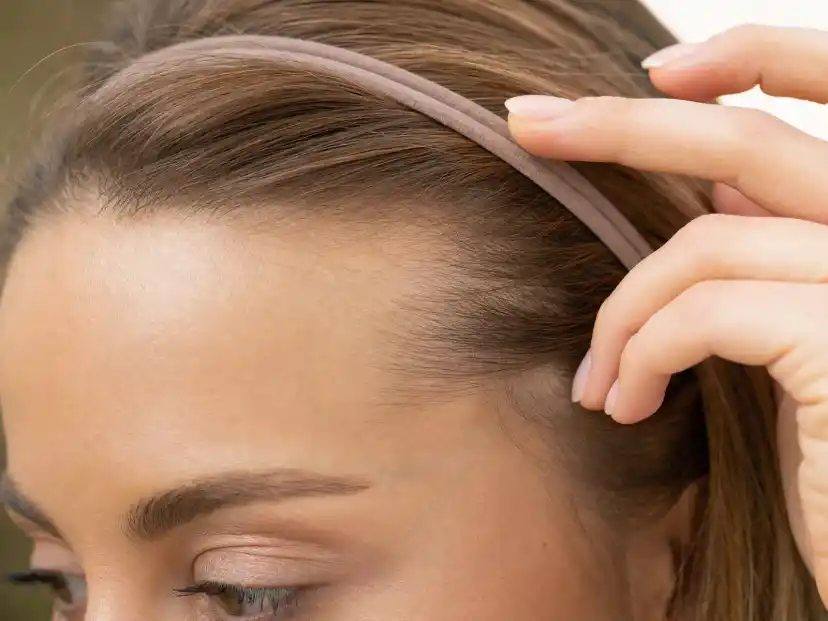
- Thin elastic bands concentrate all their tension on a strip a few millimetres wide. Fine for ten minutes of washing your face. Poor for a workday, for the pressure reason above.
- Terry and performance sweatbands are the only type designed around moisture rather than looks - they absorb sweat instead of trapping it against the hairline.
Spring-tension hoops: the Alice band and its dressed-up cousins
Type 7, the plain hard hoop, is the shape most of us drew as children when we drew a headband. In British English it has a name of its own. Wikipedia's entry on the Alice band says the style is said to have originated around 1871, following the publication of Lewis Carroll's Through the Looking Glass, in which John Tenniel's illustrations show Alice wearing a ribbon that keeps her long hair away from her face.
Mechanically it is the simplest thing here and the fussiest to buy. A moulded horseshoe comes in one diameter, and it holds because the ends sit slightly narrower than your head and press inward behind the ears. A hoop that is too wide slides off whatever you do; one that is too narrow aches within the hour. Neither can be adjusted.
Type 8, the embellished band - pearls, crystals, oversized bows - is the same hoop with mass added on top. Added weight is added leverage. A decorated band has more turning force working to lever it backwards off the crown than its plain twin does, which is why occasion bands slip on the one day you need them not to. Buy these for the event, not the commute.
Toothed and comb headbands: the different kinds of headbands that actually anchor
Types 9 and 10 stop relying on surface grip and reach into the hair instead. A toothed hoop carries a row of short teeth along its inner edge; a comb headband carries a proper comb, sometimes moulded in silicone. Either way, the hold is transferred to hair close to the scalp rather than to the slippery outer layer, which is why these are the bands that survive a full day when nothing else does.
That anchoring is also why they are the format to treat carefully. Teeth turn a band into a tension device, and sustained tension on hair is the mechanism behind traction alopecia. A 2021 review of traction alopecia in the pediatric patient by Afifi and colleagues in Pediatric Dermatology emphasises that the most important aspect of management is early recognition and intervention through prevention. A 2021 paper by Sharquie and colleagues in the Indian Journal of Dermatology found marginal hair loss - the frontal, temporoparietal and occipital margins - to be the predominant pattern, and notes the condition can be reversed if diagnosed early, with permanent scarring alopecia the outcome if it is not. The margin is exactly where a headband sits.
The practical version: use teeth for the hours you need hold, not for sixteen hours a day, and move the band a centimetre from where you wore it yesterday. Where toothed bands end and clasped accessories begin is a blurry line, and we sort out the clip end of it in our guide to the types of barrettes explained.
Bendable wire bands and tied wraps
Type 11 is the only headband you can adjust after you buy it. A bendable band has a shapeable metal core - a memory wire - under a silicone or fabric skin, so you set the diameter to your own head once and keep it. If every rigid hoop you have tried has been a millimetre too tight, this is the answer to that specific problem rather than a look.
Type 12, the scarf, wrap or twisted turban band, hands the tension decision back to you. You set it at the knot, you feel it as you tie it, and you can undo it in two seconds when it starts to nag - an advantage nothing rigid can match. Sheep and Stitch's history of the headband describes the jewelled, sequinned, feathered and latticed bands of the 1920s, and notes they were also useful for keeping the flapper's hair in place while she danced the Charleston.
Padded vs flat headbands: which to buy
The padded vs flat headbands question comes down to what is limiting you.
- Choose padded if your complaint is comfort - soreness above the ears, an ache behind the eyes after an hour, a red line across the forehead. Padding buys you contact area, and contact area is what lowers pressure.
- Choose flat if your complaint is bulk or looks - padded bands sit proud of the head, while a flat band disappears under a helmet, a hood or a hat.
- Choose flat with teeth if your complaint is hold. A flat toothed band is thinner than a padded one and still outholds it, because it is not asking friction to do the work.
Four headbands that show four different builds
These are not a ranked best-of. They are four cheap examples of four different mechanisms, so you can see what each construction actually costs. Prices are as of September 2026.
- The AUDTOPE Velvet Padded No-Teeth Headbands are the padded friction hoop at its plainest, and the three-pack usefully contains three widths - a listed 0.6, 0.8 and 1.2 inch - for $7.99. Wearing all three is the cheapest way we know to find your own comfort threshold.
- The JJUNW Toothed Plastic Headbands show the toothed hard hoop for $5.49 across four pieces: a rigid plastic frame whose teeth anchor into hair rather than clamping it.
- The lumitrail Silicone Comb Headbands are the bendable format at $13.99 for two. The listing describes a silicone layer over a memory metal wire core, with tightness adjusted by bending the wire, plus comb teeth.
- The Yazon Ribbed Knit Padded Headbands are the wide knit stretch band, listed at 50mm and $12.99 for three, with no rigid frame to spring against your skull.
Spending more on any of these buys better fabric and finishing. It does not change the mechanism, and the mechanism decides whether a band works on you.
Types of headbands for women, by hair type
Hair density flips which mechanism wins.
Fine and thin hair gets nothing to grip on, so friction-only bands creep backwards - and yet teeth are what fine hair can least afford. The way out is more grip at the surface rather than more bite: velvet nap, ribbed knit or silicone linings, and low weight, since a heavy band has more leverage to work itself loose. We lay out the full shortlist in our guide to the best headbands for fine and thin hair.
Thick and dense hair has the opposite problem. A narrow band never reaches the scalp; it perches on a compressible cushion of hair that pushes straight back. Width and teeth both help, and a wide knit band that stretches over the whole head beats a rigid hoop sized for an average one.
Curly and textured hair does best with tied wraps and wide knit bands, because both let you choose your own tension rather than accepting a manufacturer's.
Fit, slipping and the headache problem
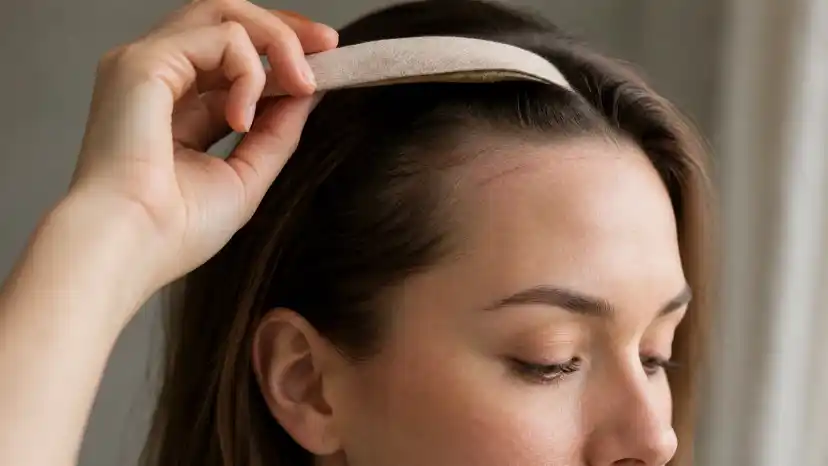
No mechanism survives bad placement. A band seated halfway back is resting on hair, not on your head, and it will keep creeping until it falls off. Seating it at the hairline and tucking both ends behind the ears fixes more slipping than any product change does - the full method is in our guide to how to wear a headband without it slipping back.
Tightness is the other half. According to the ICHD-3 classification, external-compression headache is a headache resulting from sustained compression of pericranial soft tissues, for example by a tight band around the head, hat or helmet, or goggles, without damage to the scalp. The 2024 narrative review by Ole Hensel and Torsten Kraya in Brain and Behavior lists headbands and hairbands among the triggers and reports a lifetime prevalence of about 4 percent in adults aged 25 to 64, with onset within an hour of sustained compression and resolution within an hour of relieving it.
The hair side has the same tell. The American Academy of Dermatology's guidance on hairstyles that pull states that if your hairstyle feels painful, the style is too tight, and lists pain, stinging on the scalp, crusts and tenting as signs to change the style. The same page notes that constant rubbing of a hat, head scarf or other hair covering can lead to traction alopecia, especially if hair is pulled back tightly beneath it. We would apply that to a band worn daily. Our longer answer on whether headbands damage hair goes through the evidence.
The bottom line on different kinds of headbands
Twelve headband styles, four mechanisms, one question worth asking in the shop: is this band holding by friction, by spring tension, by teeth, or by a knot I control? Friction is comfortable and slips. Spring tension fits you or it does not. Teeth hold and need supervising.
If you want a single starting pair, take one wide padded or knit band for long days and one toothed band for days that have to hold, and note which one you reach for. That answer is worth more than any list. Our full roundup of the best headbands for women picks the specific bands we would buy in each category.
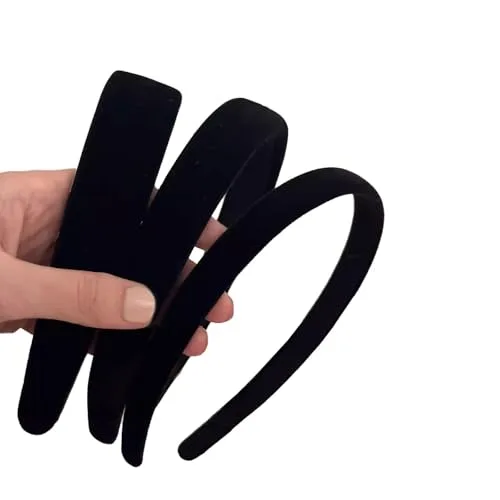
AUDTOPE Velvet Padded No-Teeth Headbands (3 Pack)
The plainest version of the padded friction band, and a useful one to learn on because the pack contains three different widths - a listed 0.6 inch, 0.
“Three widths in one pack is the cheapest way to find out which width your head tolerates....”
We tested dozens of claw clips to find the very best options. Below you'll find our complete ranking, with detailed reviews and real customer feedback for each pick.
The Complete Ranking
AUDTOPE Velvet Padded No-Teeth Headbands (3 Pack)
“Three widths in one pack is the cheapest way to find out whi...” — Verified Buyer
The plainest version of the padded friction band, and a useful one to learn on because the pack contains three different widths - a listed 0.6 inch, 0.8 inch and 1.2 inch. Wear all three for a week and you will know exactly where your own comfort line sits. No teeth anywhere on it, so grip comes entirely from the velvet-finish surface.
“Three widths in one pack is the cheapest way to find out which width your head tolerates.”
— Verified Buyer
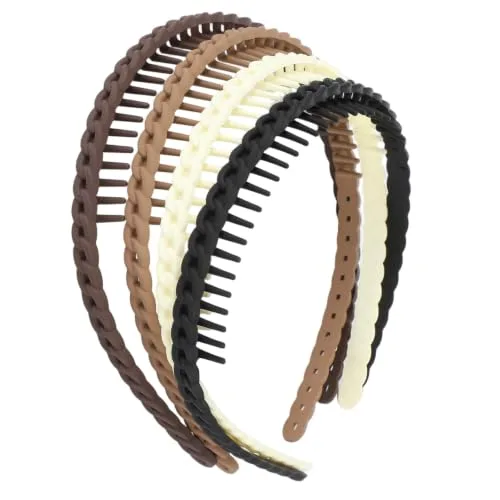
JJUNW Toothed Plastic Headbands (4 Pack)
“Four pieces at this price makes the toothed format cheap to ...” — Verified Buyer
A textbook toothed hoop: a rigid lightweight plastic frame with a row of teeth along the inside edge. The teeth are the point - they anchor into hair instead of relying on clamping force, which is why this format holds on heads that shed every fabric band by lunchtime. It is the least forgiving type if the hoop diameter does not suit you.
“Four pieces at this price makes the toothed format cheap to audition.”
— Verified Buyer
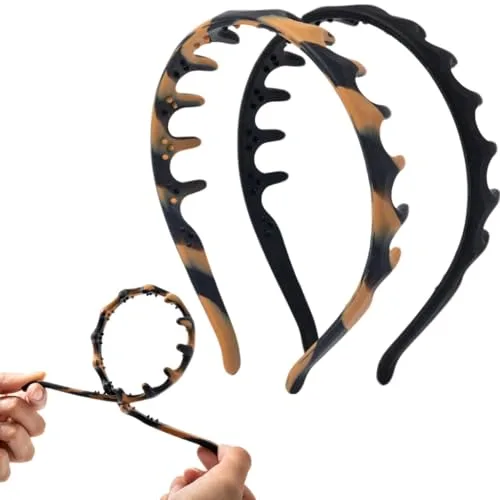
lumitrail Silicone Comb Headbands (2 Pack)
“A bendable core means one band can be re-set instead of retu...” — Verified Buyer
The one build on this page that lets you change the tension rather than live with it: a silicone outer layer over a memory metal wire core, which the listing says you bend to adjust tightness. Comb teeth and anti-slip points do the anchoring, and the ends are micro-folded. The most expensive format here, and the only one that answers a fit problem instead of a grip problem.
“A bendable core means one band can be re-set instead of returned.”
— Verified Buyer
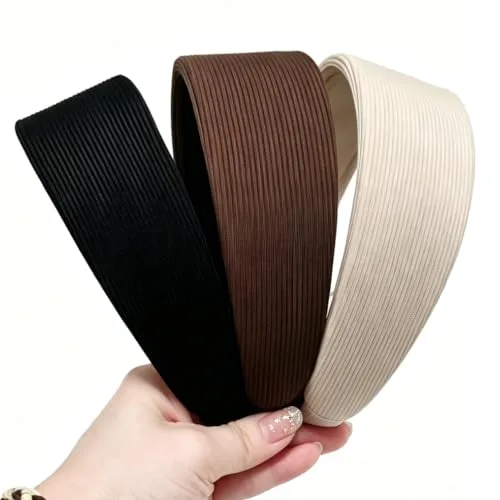
Yazon Ribbed Knit Padded Headbands (3 Pack)
“At a listed 50mm it is the widest band in this group, which ...” — Verified Buyer
A listed 50mm of stretchy ribbed knit with a padded lining and no rigid frame at all, so it stretches over the head rather than springing onto it. That width is the whole argument: the same holding force spread across roughly two inches presses far less hard on any one patch of scalp. The ribbed texture supplies the friction.
“At a listed 50mm it is the widest band in this group, which is the spec that decides comfort.”
— Verified Buyer
Three widths in one pack is the cheapest way to find out which width your head tolerates.
Quick Comparison
A side-by-side look at our top picks
Frequently Asked Questions
What is the difference between an Alice band and a headband?
Which type of headband is least likely to give me a headache?
Are toothed headbands bad for your hair?

Donna Miller
Enjoyed This Guide?
Get more hair tips and product recommendations delivered weekly.