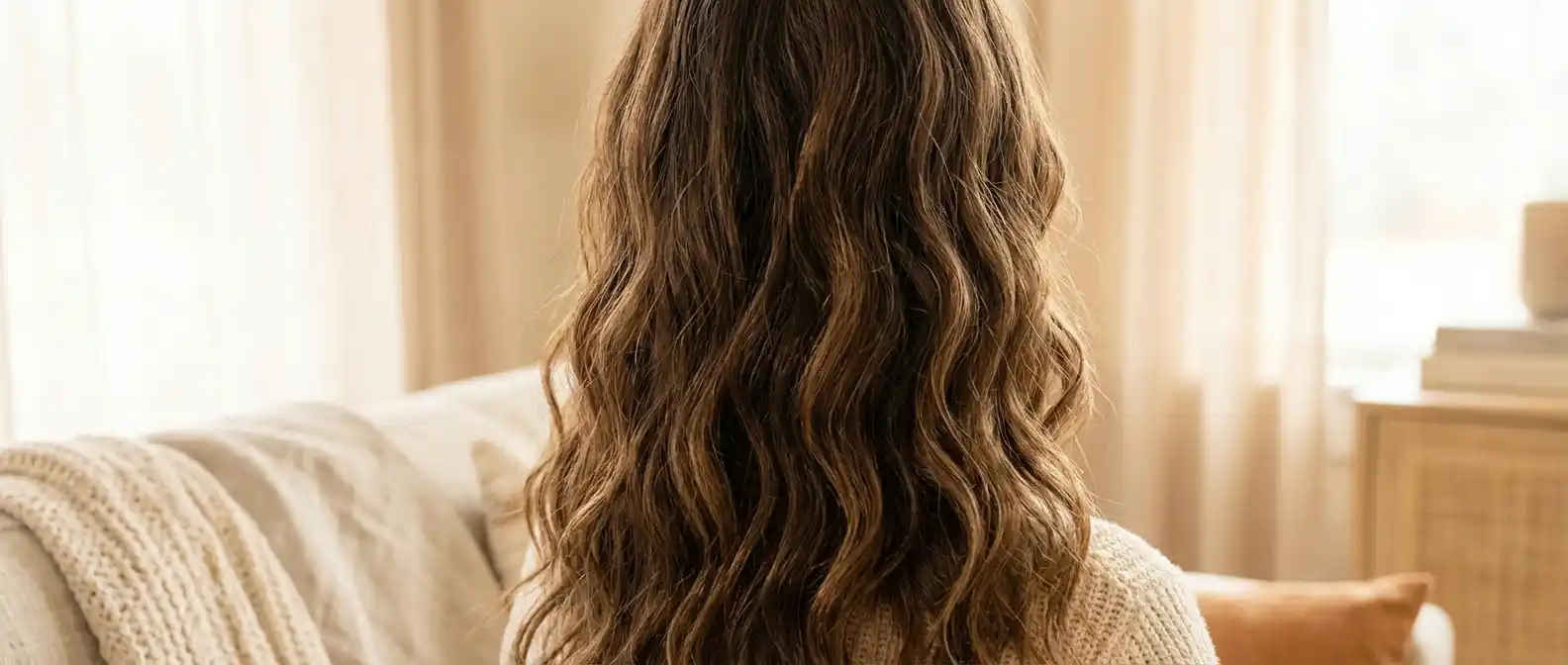
Wavy hair occupies the beautiful middle ground between straight and curly—which means it can be styled in almost any direction, but also means it's often misunderstood. The secret to great accessories for wavy hair isn't fighting your texture or forcing it straight—it's embracing and enhancing your natural wave pattern.
Whether you have loose beach waves or more defined S-curves, the right accessories can make your waves look intentional, beachy, and effortlessly gorgeous. The wrong ones flatten your texture, create awkward dents, or make waves look frizzy and undefined.
Understanding Wavy Hair: The Versatile Texture
Wavy hair has unique characteristics that set it apart from both straight and curly hair types.
The Wave Spectrum
Wavy hair typically falls into the Type 2 category on the curl pattern scale:
| Type | Description | Characteristics |
|---|---|---|
| 2A | Slight waves | Waves start near ear level, very loose S-pattern |
| 2B | Medium waves | Defined S-shaped waves from mid-lengths down |
| 2C | Strong waves | Waves start at the root, pronounced S-curves |
Understanding your specific wave pattern helps you choose accessories that complement rather than compete with your natural texture.
The Science of Wavy Hair
Wavy hair gets its shape from partially oval hair follicles—rounder than curly hair follicles but less round than straight hair follicles. This creates:
- S-shaped curves: Unlike the spirals of curly hair or the straightness of flat hair
- Variable texture: Waves may be looser or tighter in different sections
- Frizz susceptibility: The partially raised cuticle catches humidity
- Texture memory: Waves want to return to their natural pattern
- Volume variability: Waves create more body than straight hair but less than curly
These characteristics influence how wavy hair responds to accessories.
Common Characteristics of Wavy Hair
You likely have wavy hair if you recognize these traits:
- Natural S-pattern: Your hair has bends and curves without being coiled
- Weather reactivity: Humidity makes your hair wavier or frizzier
- Versatile styling: You can straighten it flat or encourage more curl
- Second-day texture: Your waves often look better the day after washing
- Unpredictable behavior: Some days wavy, some days straighter
- Mix of textures: Often wavy on one side, straighter on the other
Understanding these traits helps you work with your waves rather than against them.
What to Look For in Wave-Friendly Accessories
Accessories for wavy hair should enhance your natural texture while providing secure hold.
Wave-Preserving Designs
The best accessories for wavy hair work with the natural movement of your texture:
Open-center clips: Allow waves to flow through rather than being compressed flat.
Curved designs: Follow the natural curve of gathered wavy hair.
Wide-spaced teeth: Give waves room to maintain their shape.
Lightweight materials: Don't weigh waves down or straighten them out.
Texture-Enhancing Features
Look for accessories that actually make waves look better:
- Decorative elements that complement beach aesthetics: Tortoiseshell, natural materials, subtle textures
- Flexible construction: Gives slightly as waves settle and move
- Proportional sizing: Large enough to accommodate wave volume, not so large they overwhelm
Grip Without Compression
Wavy hair needs accessories that hold without flattening:
Ideal characteristics:
- Moderate spring tension (not too tight)
- Even pressure distribution
- Smooth inner surfaces that won't snag
- Secure closure without crushing
Material Recommendations
Certain materials work particularly well with wavy hair:
Best choices:
- Acetate: Smooth, wave-friendly, beautiful patterns
- Matte plastics: Won't slip, gentle on waves
- Coated metals: Smooth and secure
- Natural materials: Bone, wood, shell (for decorative accents)
What to Avoid: Wave Killers
Certain accessories and approaches consistently work against wavy hair.
Accessories That Flatten Waves
Tight clips: Compress waves and leave visible dent lines.
Heavy metal clips: The weight pulls waves straight over time.
Narrow-toothed clips: Create concentrated pressure points that disrupt wave pattern.
Super-strong springs: Crush waves rather than cradling them.
Techniques That Damage Waves
Brushing before styling: Brushing separates natural wave clumps and creates frizz.
Pulling hair tight: Stretches waves out of their natural pattern.
Excessive handling: Each touch disrupts wave definition.
Sleeping with clips in: Creates severe dents in wave pattern.
Products to Use Carefully
Heavy serums and oils: Weigh waves down and make them limp.
Anti-frizz products with silicone: Can flatten waves over time.
Strong-hold hairsprays: Make waves crunchy rather than touchable.
Expert Styling Techniques for Wavy Hair
These methods maximize wave beauty while keeping accessories secure.
The Scrunch and Clip
For natural-looking half-up styles:
- Apply wave-enhancing product to damp hair
- Scrunch from ends to roots to encourage wave formation
- Let air dry or diffuse
- Gather the top section without pulling tight
- Scrunch the gathered section again to maintain texture
- Secure with an open-center claw clip
- Arrange so waves flow naturally
Result: Waves stay defined, volume stays intact.
The Messy Wave Twist
For effortless-looking updos:
- Start with day-old waves (they hold better)
- Gather loosely at the back—don't smooth
- Twist gently, letting waves create natural texture in the twist
- Roll against your head
- Secure with a clip positioned to maintain looseness
- Pull a few wavy pieces free around your face
Result: Romantic, beach-y, undone elegance.
The Wave-Friendly Ponytail
Keeping waves visible in a ponytail:
- Gather at your desired height without brushing smooth
- Use a spiral hair tie or gentle elastic
- Don't pull the base tight—leave it slightly loose
- Scrunch the tail to revive waves
- Optional: Add a claw clip over the elastic for decoration
Result: A ponytail that shows off your natural texture.
The Pineapple Refresh
For preserving waves overnight or during activities:
- Flip your head forward
- Gather hair at the very top of your head
- Secure loosely with a silk scrunchie
- Let waves cascade from the top
Result: No dent lines, waves protected and easily released.
Styles That Enhance Wavy Hair
These styles specifically leverage wave texture for beautiful results.
The Beach Wave Half-Up
Perfect for: Casual elegance, showing off your natural texture
- Apply sea salt spray to enhance wave texture
- Scrunch to activate waves
- Separate the top section (ear to ear)
- Loosely gather without smoothing
- Secure with a medium claw clip
- Allow waves to flow freely from the clip
- Pull a few pieces free around your face
Time required: 2 minutes Why it works: The loose gathering keeps waves intact; the volume on top enhances the overall shape.
The Twisted Wave Chignon
Perfect for: Special occasions, professional settings
- Part hair to one side
- Gather low at the nape, letting the side part create asymmetry
- Twist loosely, allowing wave texture to show in the twist
- Wrap the twist into a low chignon
- Secure with bobby pins placed horizontally
- Leave tendrils around your face to show wave texture
Time required: 5 minutes Why it works: The loose twist lets waves create natural texture; face-framing pieces maintain the wavy aesthetic.
The Wave-Accented Style
Perfect for: Adding interest while keeping hair mostly down
- Let your waves do their thing—minimal styling
- Take a small section near your part or behind your ear
- Twist this section loosely
- Secure with a decorative clip or pin
- Allow the rest of your waves to flow freely
Time required: 30 seconds Why it works: Minimal manipulation means maximum wave definition.
The Low Wave Knot
Perfect for: Easy weekday styling
- Gather hair at the nape—don't brush smooth
- Twist loosely into a rope
- Wrap into a loose knot (like you're starting to tie a shoelace)
- Tuck ends and secure with a claw clip
- Leave it a little messy—that's the look
Time required: 1 minute Why it works: The loose knot structure lets waves create organic texture.
Caring for Wavy Hair with Accessories
Proper care keeps your waves healthy and beautiful.
Daily Handling
Finger-comb only: Use fingers or a wide-tooth comb, never a brush on dry wavy hair.
Minimal manipulation: Each touch can disrupt wave clumps.
Scrunch to revive: If waves flatten, scrunch with a bit of water or wave spray.
Remove accessories gently: Open clips fully before removing.
Overnight Protection
Waves benefit from overnight protection:
- Use the pineapple method with a silk scrunchie
- Sleep on a silk or satin pillowcase
- Never sleep with claw clips in
- Refresh in the morning with water and scrunching
Product Strategy
Wave-enhancing products: Sea salt spray, wave cream, mousse Apply to damp hair: Products work best before drying Scrunch: This is the key motion for wave definition Avoid over-applying: Too much product weighs waves down
Refreshing Waves Between Washes
Wavy hair often looks best on days 2-3:
- Lightly mist with water or wave refresher
- Scrunch to reactivate waves
- Add a touch of sea salt spray for texture
- Let air dry or diffuse on low heat
Frequently Asked Questions
Why do my waves fall flat when I use clips?
Usually this comes from clips that are too tight, too heavy, or compress waves too much. Look for open-center designs with moderate spring tension. Also, make sure you're not pulling hair too tight when positioning clips.
What's the best clip for wavy hair half-up styles?
Medium to large claw clips with open centers work best. Look for curved designs that follow the natural shape of gathered waves. Tortoiseshell and acetate clips are classic choices that complement wave texture beautifully.
How do I prevent clip dents in my waves?
Position clips on loosely gathered hair rather than pulled-tight sections. Use the pineapple method for temporary holds. Take clips out before sleeping. When dents happen, mist with water and scrunch to revive.
Should I straighten my waves before using accessories?
Not unless you're specifically going for a sleek look. Your natural waves are an asset—the right accessories will enhance them. Trying to make wavy hair act like straight hair is fighting an uphill battle.
Why does my wavy hair get frizzy with accessories?
Usually caused by rough-edged accessories catching on the slightly raised cuticle of wavy hair, or by too much handling when styling. Choose smooth accessories and minimize touching styled hair.
Can wavy hair do intricate updos?
Absolutely! Wavy texture actually makes updos look more interesting and romantic. The key is working with your texture—loose, flowing styles look better on waves than severe, slicked-back looks.
Seasonal Considerations for Wavy Hair
Wavy hair responds to weather and seasons differently than straight or curly hair.
Humid Weather
Humidity tends to enhance wave pattern but can also cause frizz:
- Use anti-humidity products designed for wavy hair
- Choose updos that embrace extra texture
- Carry a mini sea salt spray for refreshing
Dry Weather
Low humidity can flatten waves and create static:
- Use more moisture-rich products
- Avoid over-washing
- Leave-in conditioner helps maintain definition
Summer Beach Days
Salt water and sun naturally enhance waves:
- Embrace the texture—it's a style in itself
- Claw clips are perfect for beach hair
- Rinse salt water before styling with clips
Winter Challenges
Cold, dry air and hat-wearing challenge wave pattern:
- Use satin-lined hats when possible
- Refresh waves after removing hats
- Deep condition regularly to maintain wave health
Conclusion
Wavy hair is naturally beautiful and incredibly versatile—once you know how to work with it. The key principles for accessorizing wavy hair:
- Embrace your texture: Choose accessories that enhance rather than fight waves
- Stay loose: Tight pulling flattens waves and creates dents
- Use gentle handling: Finger-comb, scrunch, don't brush
- Pick wave-friendly designs: Open centers, curved shapes, moderate tension
- Think beach-y: Even polished wavy styles look better with natural movement
Your waves are an asset that many people try to create artificially. With the right accessories and techniques, you can make them look effortlessly gorgeous every day.