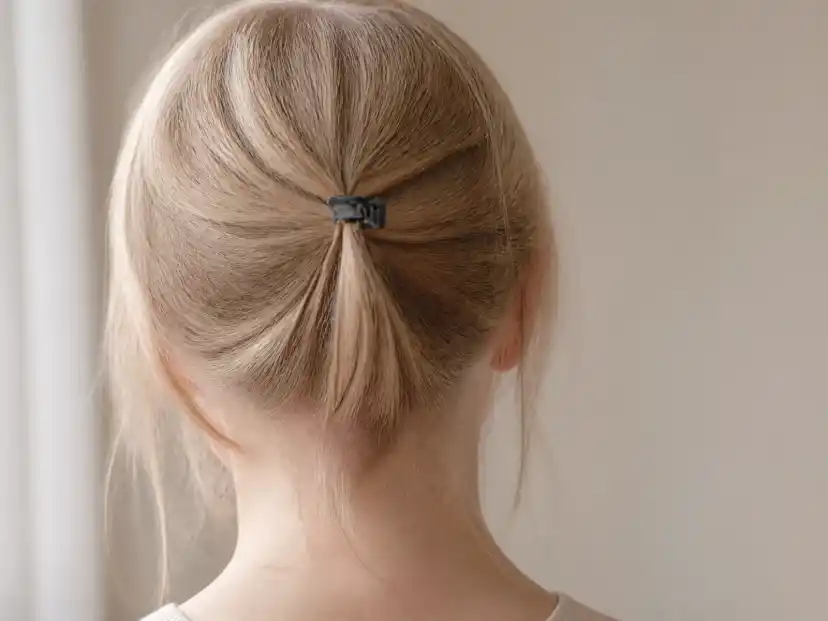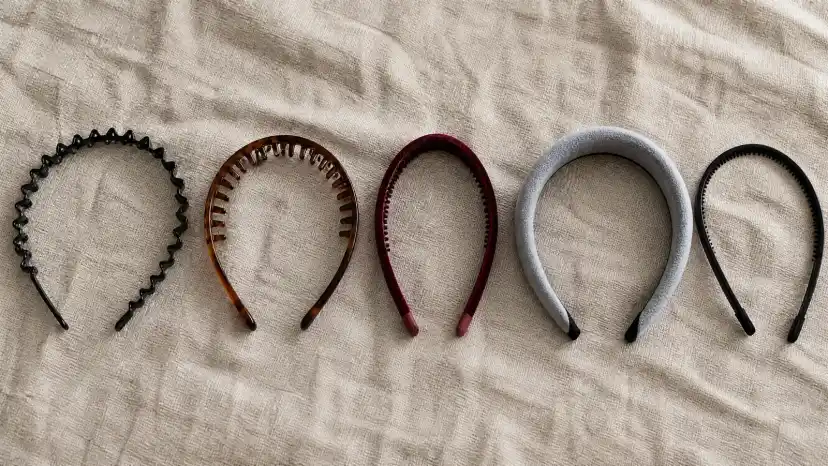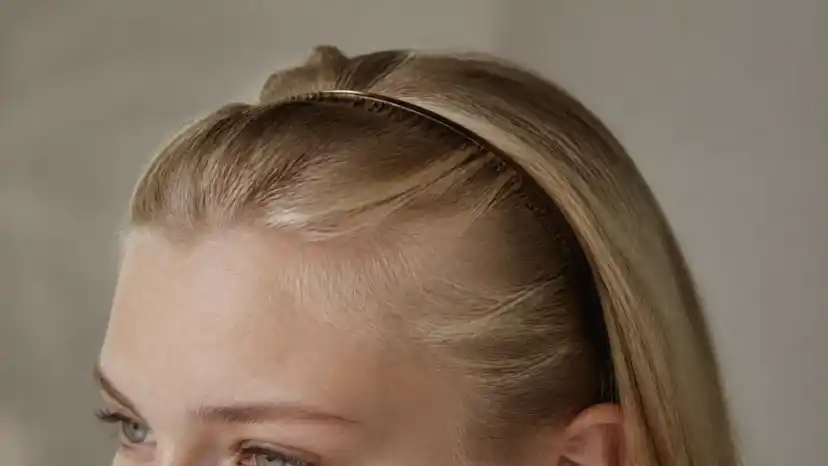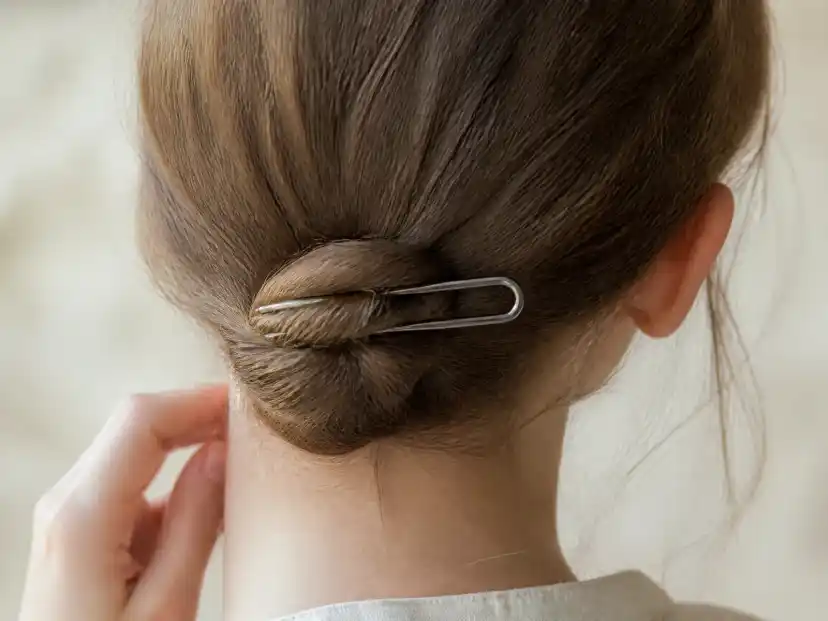
You secure a clip perfectly, check the mirror, and it looks great. Two hours later, you realize it's slowly migrated down your head—or worse, fallen out completely without you even noticing. Fine hair's slippery texture makes it the most challenging hair type for accessories, but the problem isn't your hair. It's that most accessories are designed for hair with more natural grip.
Fine hair refers to the diameter of individual hair strands, not how much hair you have. You can have thick, dense hair that's also fine (lots of silky-smooth strands), or thin, fine hair (fewer slippery strands). Either way, that smooth, silky texture means accessories need to work harder to stay put.
Understanding Fine Hair: The Slippery Slope
Fine hair has specific structural characteristics that create accessory challenges—but understanding these traits reveals the solutions.
The Science of Fine Hair
Individual hair strands are measured in micrometers, and fine hair typically measures below 50 micrometers in diameter. For comparison:
- Fine hair: Under 50 micrometers
- Medium hair: 50-70 micrometers
- Coarse hair: Over 70 micrometers
This smaller diameter means:
- Less surface area for accessories to grip
- Smoother cuticle layer that lies very flat
- More flexible strands that slip through grip mechanisms
- Lighter weight that doesn't anchor accessories in place
These characteristics explain why standard accessories simply can't hold fine hair effectively.
Common Characteristics of Fine Hair
You likely have fine hair if you recognize these traits:
- Silky, smooth texture: Your hair feels sleek and slippery when touched
- Accessories slip out: Clips, pins, and ties don't stay in place
- Hair doesn't hold styles: Curls fall and updos collapse
- Quick to show oil: Fine hair appears greasy faster than coarse hair
- Breaks easily: The smaller diameter means less structural strength
- Flyaways: Fine hair is prone to static and flyaway strands
Understanding these characteristics helps you choose accessories designed to counteract fine hair's slippery nature.
What to Look For: Grip-Enhancing Features
Fine hair requires accessories with specific features that create friction and grip on smooth strands.
Textured Grip Surfaces
The most important feature for fine hair accessories is surface texture:
Effective textures:
- Rubberized coating: Creates friction against smooth hair
- Silicone inserts: Grip without damaging
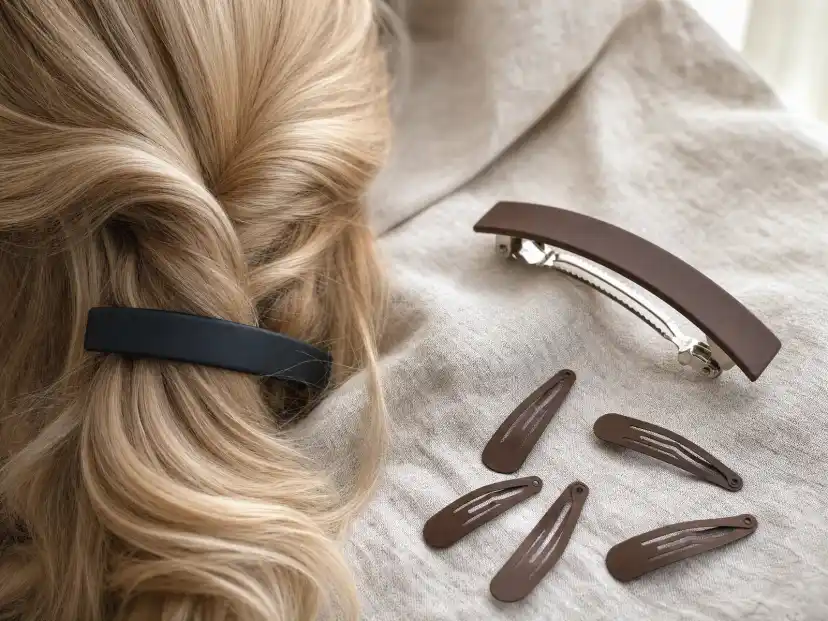
- Matte finishes: Less slippery than glossy surfaces
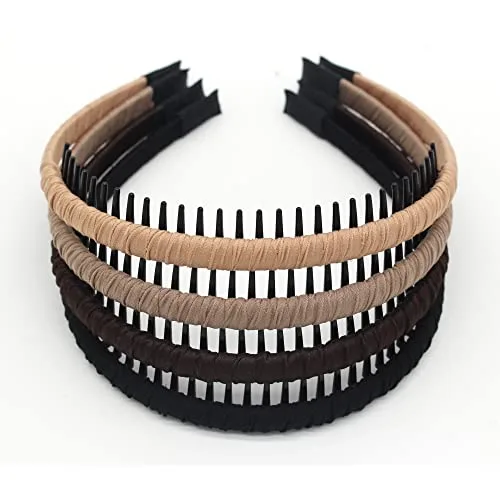
- Ribbed or ridged teeth: Create multiple grip points
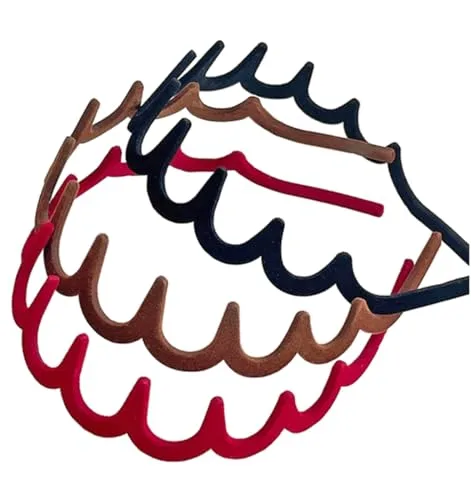
- Flocked surfaces: Velvety texture that grips
What doesn't work:
- Smooth, polished plastic
- Glossy metal surfaces
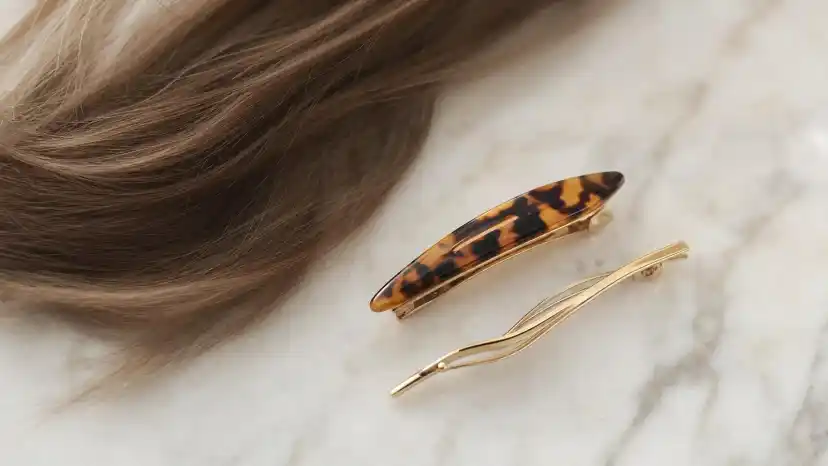
- Slick acetate without texture
- Highly polished teeth
When shopping, feel the inner surfaces of clips. If they're smooth and slippery, they'll treat your hair the same way.
Multiple Contact Points
Fine hair benefits from accessories that grip in multiple places:
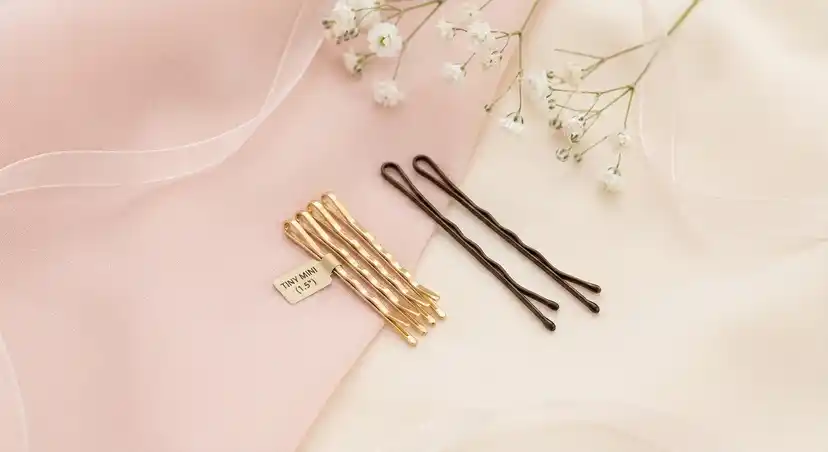
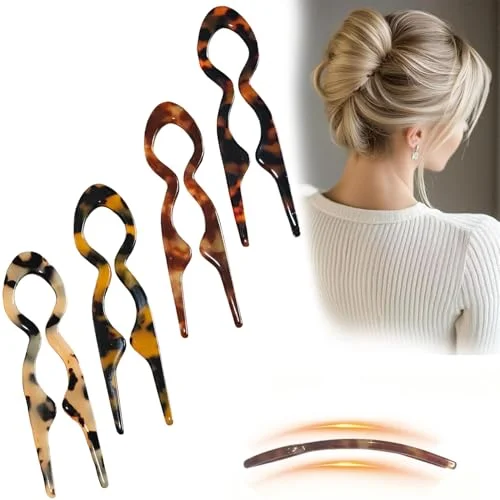
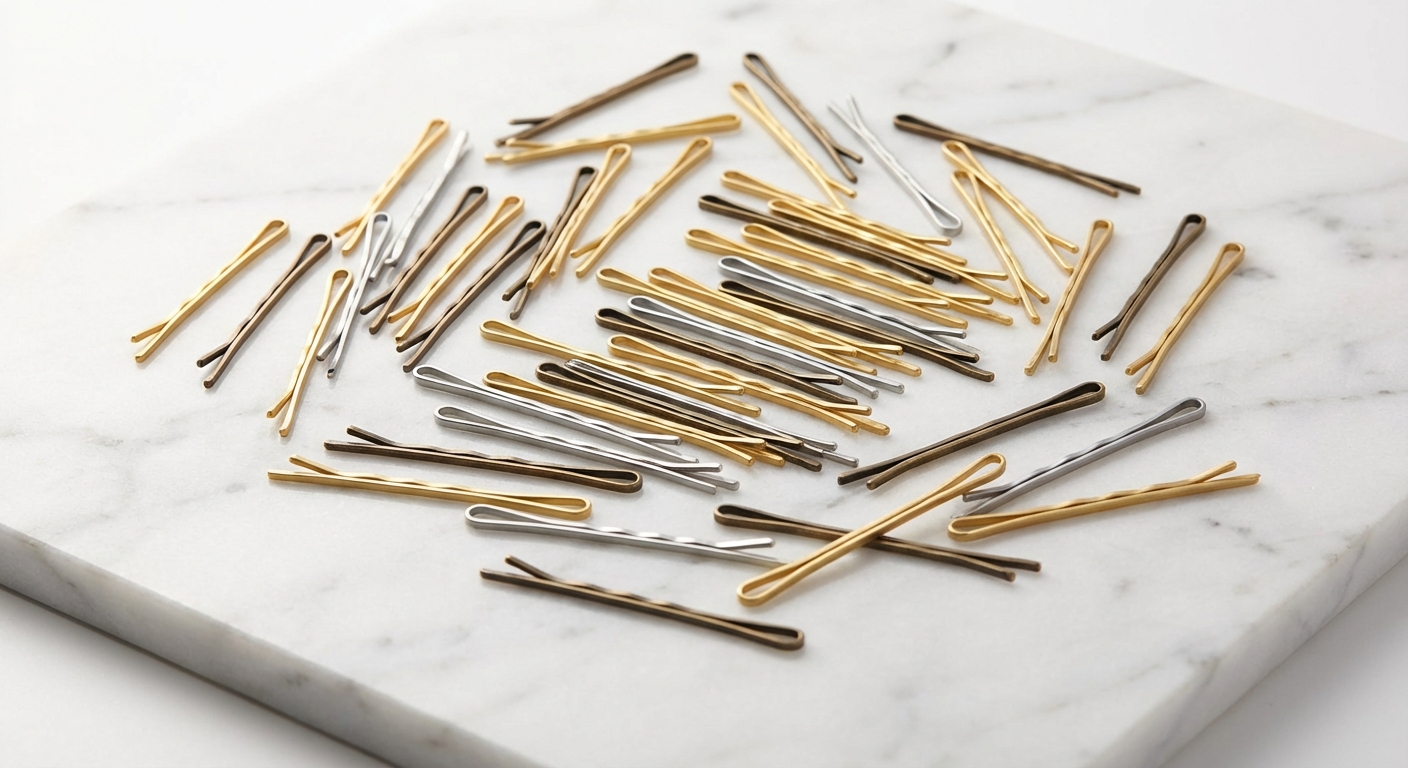
- Multi-pronged bobby pins: More grip points than standard two-prong pins
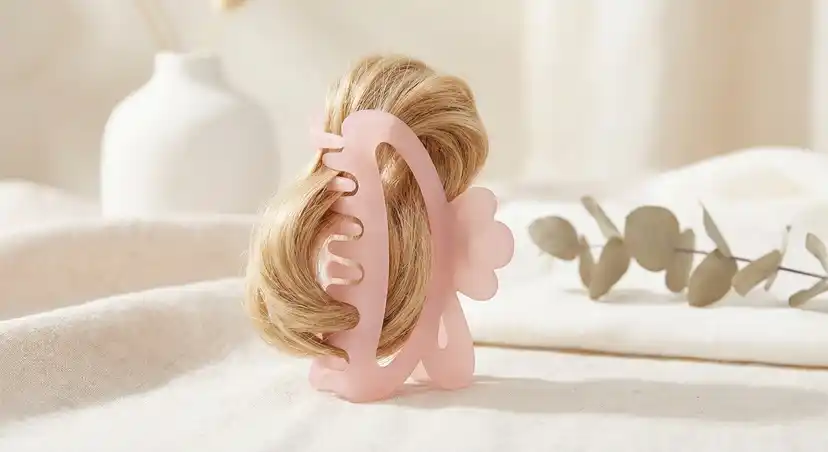
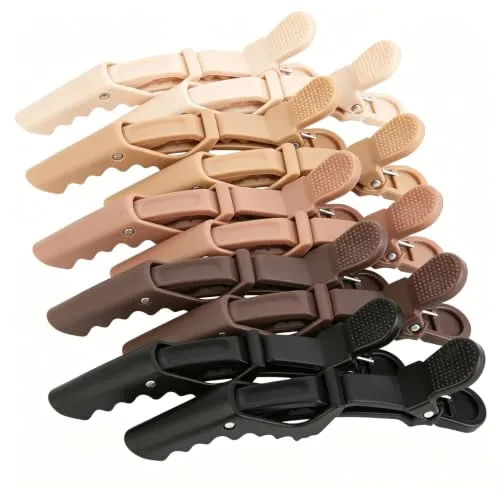
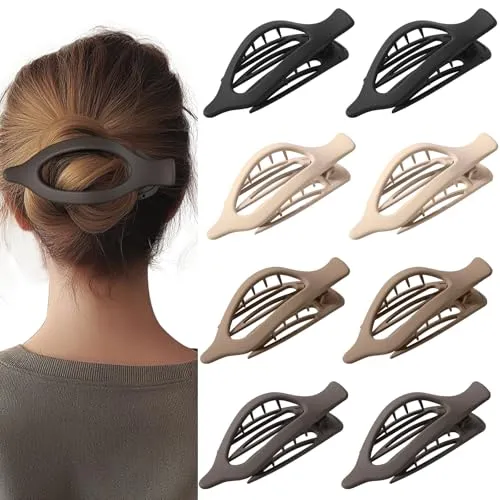
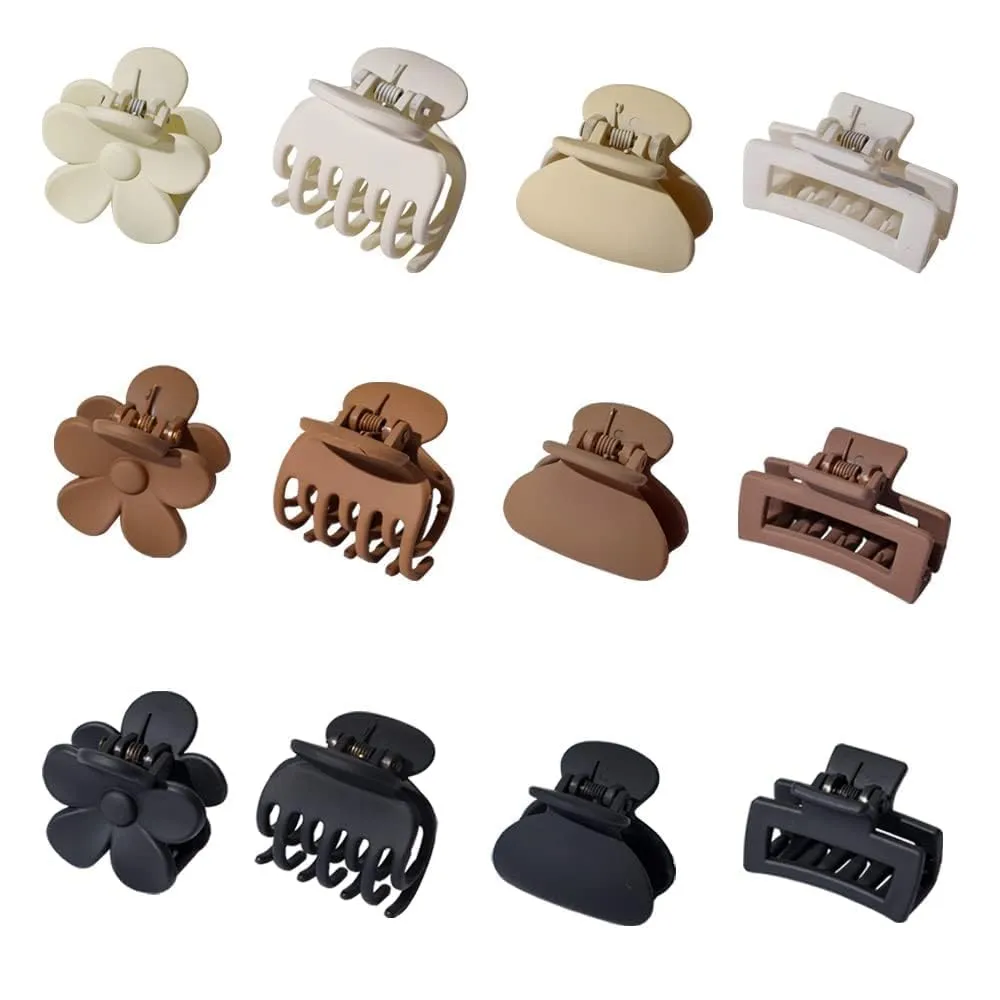
- Claw clips with many teeth: More teeth means more potential hold points
- Spiral or corkscrew shapes: Create grip along the entire length
- Double-wire bobby pins: Grip from both sides
Optimal Spring Tension
For fine hair, spring strength needs careful calibration:
Too weak: The clip simply slides off Too strong: Hair slips through before the clip can close
Just right: A medium tension that closes firmly around the hair bundle, creating compression that holds slippery strands in place.
Test clips by opening and closing them. The ideal spring has steady, even resistance and closes completely with a secure feeling.
Strategic Sizing
Fine hair often needs different sizing than you'd expect:
| Style | Recommended Approach |
|---|---|
| Half-up | Smaller clips that can grip less hair more securely |
| Full updos | Medium clips, but use multiples |
| Accent styling | Mini clips and small pins work well |
| Ponytails | Spiral hair ties rather than standard elastics |
The principle: it's often better to use multiple smaller accessories than one large one, as each creates an individual grip point.
What to Avoid: Accessories That Won't Hold
Certain accessories are almost guaranteed to fail with fine hair. Knowing what to skip saves time and frustration.
Accessories That Slip
Smooth plastic clips: Without texture, these have nothing to grip.
Large claw clips without adequate teeth: Too much space between teeth means fine hair slips through.
Standard bobby pins without grip features: Traditional smooth pins are designed for hair with more natural texture.
Polished metal clips: The slick surface can't create friction with fine hair.
Heavy accessories: The weight overcomes whatever grip they might have.
Products That Make Things Worse
Smoothing serums: These make fine hair even more slippery.
Heavy conditioners: Over-conditioning makes hair too silky to grip.
Silicone-based products: Create a slick coating that defeats accessories.
Too much oil: Natural or applied oils eliminate grip potential.
Common Mistakes
Using accessories on freshly washed hair: Clean, conditioned fine hair is at its slipperiest. Wait a day, or use texture products first.
Skipping prep products: Fine hair almost always needs grip-enhancing products before accessories will hold.
Placing clips too loosely: Fine hair needs clips positioned precisely and firmly—loose placement invites slipping.
Expert Techniques for Fine Hair
Professional stylists have developed specific methods for getting accessories to stay in fine hair.
The Texture Foundation
Creating grip before accessorizing dramatically improves hold:
- Apply dry shampoo or texture spray at the roots
- Work it through with your fingers
- Focus on the specific area where you'll place your clip
- Let it set for a moment before styling
This adds the grip that fine hair naturally lacks.
The Backcomb Base
For styles that need extra security:
- Section the hair where your clip will go
- Gently backcomb the underneath layer only
- Smooth the top layer over the backcombed section
- Position your accessory so it grips the textured area
The hidden texture provides an anchor for accessories.
The Weave Method for Bobby Pins
Standard pin placement doesn't work for fine hair. Try this instead:
- Position the pin where you want it
- Instead of sliding straight in, weave it slightly
- Go under a small section, then over, then under again
- Push the pin flat against your scalp
This weaving creates multiple grip points along the pin's length.
The X-Anchor Technique
When one bobby pin won't hold, use two:
- Insert the first pin at a diagonal angle
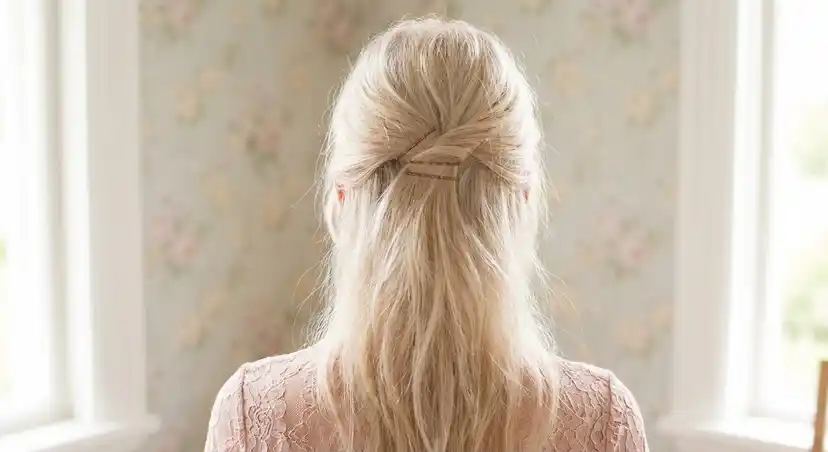
- Insert the second pin crossing over the first to form an X
- Ensure both pins grip the same section of hair
The cross-anchor prevents either pin from sliding out.
The Hairspray Lock
For all-day hold:
- Style your hair with the accessory in place
- Mist hairspray directly on and around the clip
- Hold the spray can 8-10 inches away for even coverage
- Let it dry completely before touching
This creates a tacky surface that helps accessories grip.
Styling Solutions for Fine Hair
These styles are specifically designed to work with fine hair's characteristics.
The Textured Half-Up
Perfect for: Everyday styling that actually stays
- Apply texture spray throughout the crown section
- Use your fingers to gently scrunch and rough up the texture
- Gather the textured section loosely
- Secure with a claw clip that has textured teeth
- Check that the clip is fully closed around the hair
Pro tip: Position the clip higher than you think—gravity works against fine hair.
The Secure Low Twist
Perfect for: Work or occasions when you need reliable hold
- Apply dry shampoo at the nape of your neck
- Gather hair into a low ponytail position
- Use a spiral hair tie for grip
- Twist the tail and coil it around the tie
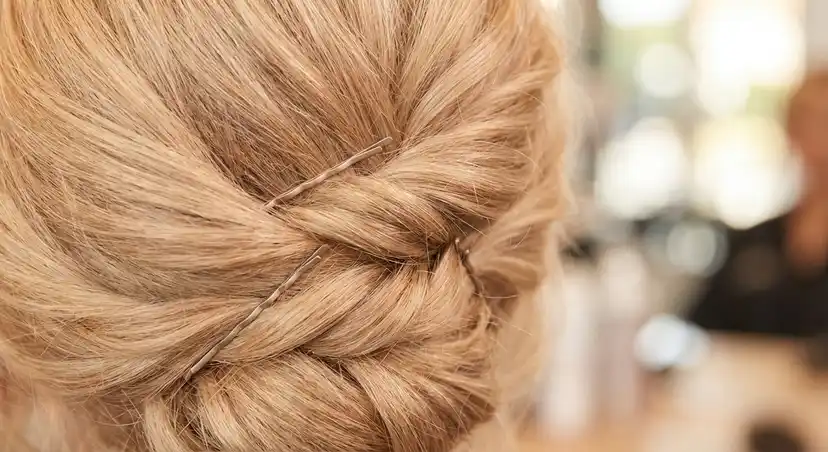
- Secure with multiple small bobby pins using the weave method
Pro tip: Mist with hairspray before inserting each pin.
The Layered Pin Style
Perfect for: When you want visible bobby pins as a design element
- Decide on your pin pattern (parallel lines, scattered, X shapes)
- Apply texture spray to the section you'll pin
- Use the weave method to insert each pin
- Create your chosen pattern
- Finish with light hairspray
Pro tip: Decorative pins are often heavier—use a hidden plain pin beneath for actual hold.
The Double-Clip Method
Perfect for: When one clip won't do the job
- Style hair as desired
- Position first small claw clip at the base of your style
- Position second clip slightly above, overlapping
- Each clip only needs to hold a portion of the hair
Pro tip: Two small clips often hold better than one large one on fine hair.
Product Recommendations for Fine Hair Styling
The right products transform fine hair's ability to hold accessories.
Essential Prep Products
Texture spray: The most important product for fine hair styling. Apply liberally before accessorizing.
Dry shampoo: Adds grip at the roots where you need it most. Use even on clean hair.
Volumizing mousse: Applied to damp hair before drying creates lasting texture.
Hold Products
Working hairspray: Light hold for throughout the day. Reapply as needed.
Strong-hold hairspray: For styles that must last. Use at the end.
Hair powder: Ultra-fine powder at the roots adds incredible grip.
Products to Use Sparingly
Conditioner: Use only on ends, never on roots for fine hair Serums: Only tiny amounts on ends if at all Oils: Generally skip these entirely for styling purposes
Caring for Fine Hair with Accessories
Fine hair requires gentle handling to prevent damage.
Prevent Breakage
Fine hair breaks more easily than coarser types:
- Remove accessories gently: Never yank or pull
- Avoid wearing clips in the same spot daily: This creates weak points
- Choose smooth-edged accessories: Despite needing texture for grip, edges should be smooth
- Don't sleep with clips in: Fine hair wraps and tangles easily
Washing Out Product Buildup
Texture products build up on fine hair:
- Use clarifying shampoo weekly
- Focus on the scalp where products accumulate
- Follow with lightweight conditioner on ends only
Maintaining Accessory Effectiveness
Keep your grip-enhancing accessories working:
- Clean rubberized clips with soap and water
- Replace bobby pins when they lose tension
- Check for worn texture surfaces
Frequently Asked Questions
Why do my bobby pins slip out of fine hair?
Standard bobby pins rely on hair having some natural texture to grip. Fine hair is too smooth. Try pins with textured or rubberized tips, use the weave insertion method, or apply texture spray first.
What's the best claw clip for fine hair?
Look for clips with multiple narrow teeth, rubberized or textured gripping surfaces, and medium spring tension. Smaller sizes often work better than large clips because they can grip the hair more precisely.
Should I avoid heavy accessories entirely?
Not necessarily, but heavy accessories need extra help to stay in fine hair. Use texture products, hairspray, and securing techniques. For very heavy decorative pieces, consider adding hidden bobby pins for support.
How can I make a ponytail holder stay put in fine hair?
Spiral hair ties grip fine hair better than traditional elastics. You can also wrap a small section of hair around the elastic base and secure with a bobby pin—the wrapped hair creates extra friction.
Why do styles fall out of my fine hair by midday?
Fine hair often needs re-application of texture products and a refresh of hairspray. Carry a small texture spray for touch-ups. Also ensure you're using adequate product initially—fine hair absorbs products quickly.
Can fine hair hold heavy updos?
Yes, with proper technique. Use multiple smaller accessories rather than one large one, apply plenty of texture products, backcomb hidden sections for grip, and don't hesitate to use many bobby pins—fine hair needs more anchoring than other hair types.
Conclusion
Fine hair requires a different approach to accessories, but once you understand what works, you can achieve any style with confidence. Remember these key principles:
- Texture is essential: Always prep with dry shampoo or texture spray
- Choose grip-enhanced accessories: Look for rubberized and textured surfaces
- Use proper techniques: The weave method and X-anchor technique make a real difference
- Don't fight the slip: Work with multiple smaller accessories rather than forcing one large one
- Finish with hairspray: That extra grip helps everything stay put
Your fine hair isn't a limitation—it just needs accessories and techniques designed for its unique characteristics. With the right approach, slipping clips become a thing of the past.