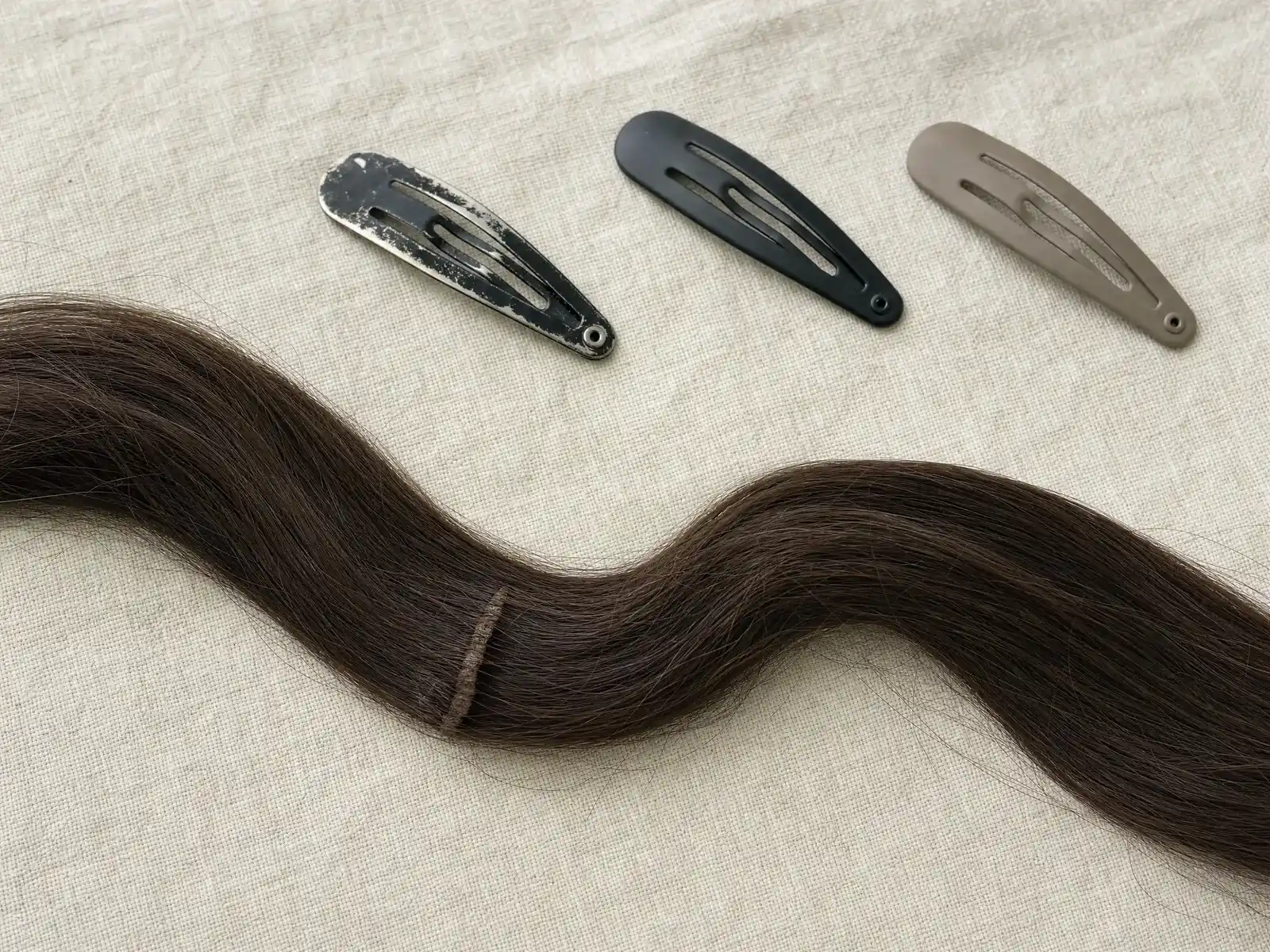
- Do Snap Clips Damage Hair? Three Failure Modes, Not One
- Where the Stress Actually Is: The Bite Line and the Edge
- Risk Factor 1: Clipping the Same Spot Every Single Day
- Risk Factor 2: Clipping Wet Hair
- Risk Factor 3: Too Much Hair in Too Short a Clip
- Warning Signs Worth Looking For
- How to Wear Snap Clips Safely
- Who Should Be More Careful, and When to Ask Someone Qualified
- The Bottom Line
Snap clips are unlikely to damage healthy hair the way a tight elastic does, because the clip presses along a flat line with no tension on the root and no twisting of the fiber.
So do snap clips damage hair? In three situations, yes: a chipped or sharp-edged clip, the same placement every single day, and wet hair. Outside those three, this is one of the gentler things in the drawer. We earn a commission from Amazon links on this page, at no cost to you.
Our complete guide covers wearing snap clips safely alongside sizing and materials. This article is the damage question on its own: where the stress sits, what to look for on your own hair, and when the answer is a professional rather than a different clip.
Do Snap Clips Damage Hair? Three Failure Modes, Not One
A snap clip has no adjustable tension. It is one strip of sprung metal with two stable shapes, so the force it applies is set by the spring and cannot be cranked tighter. That is why it fails differently from a hair tie: breakage comes from the clip's edges, from repetition and from the condition of the hair, not from how hard you pulled.
| Risk factor | What it does to hair | The fix |
|---|---|---|
| Chipped coating or an unfinished edge | Gives the bite line a hard ridge to cut against | Retire the clip; check edges by feel before buying |
| The same half-inch of scalp daily | Loads the same strands in the same place, repeatedly | Move the clip between wears |
| Clipping wet hair | Wet fiber is more prone to stretching and snapping | Wait until hair is at least damp-dry |
| Too much hair in too short a clip | The strip never reaches its closed shape, so load concentrates | Size up instead of squeezing |
| Sleeping in them | Hours of pressure in one spot, plus pillow friction | Take them out |
Everything below is the reasoning behind that table.
Where the Stress Actually Is: The Bite Line and the Edge
Two parts of a snap clip touch hair, and only one of them is a real risk.
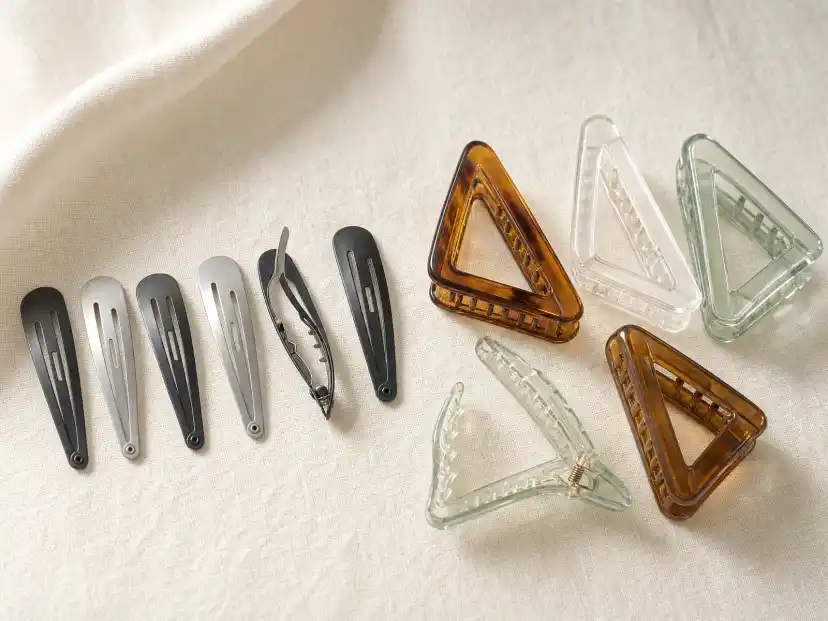
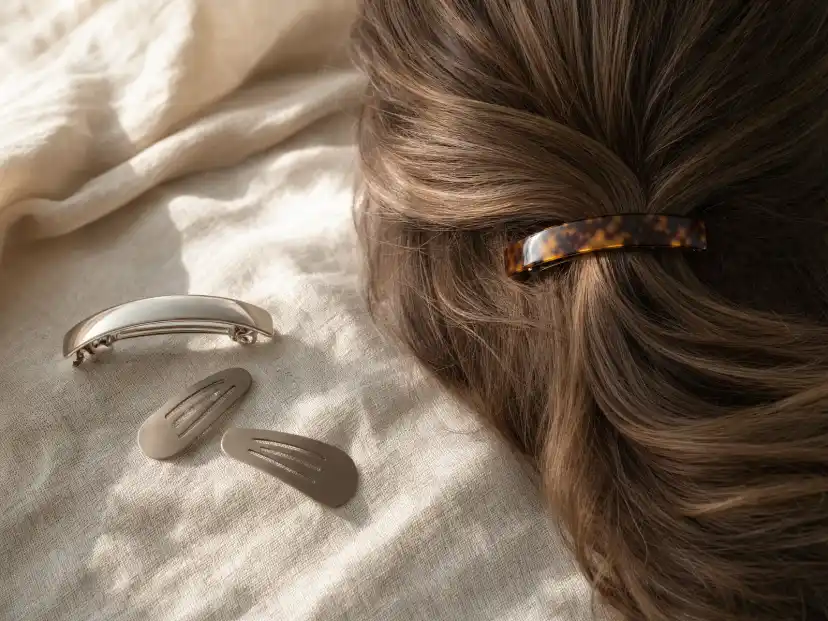
The bite line is the inner bar running down the middle of the strip, pressing hair flat against the outer plate. It spreads its load along one to three inches of contact, which is the best thing about the format: a line does less to any single strand than a knot or an elastic gripping at a point.
The edge is where damage comes from. Where the pressed metal was cut, and where paint or coating has flaked away, the clip presents a hard ridge instead of a rounded one. Philip Kingsley trichologist Zoe Passam writes in the brand's hair accessories guide that "Pins and clips have the potential to damage your hair, so take care when you use them", recommends pins and clips with rubber tips or rubber coating, and warns that the metal "can cut into and break your hair shaft, and can also harm your scalp."
Two things follow:
- Check edges by feel, not by eye. Run a fingertip along the cut edge and down the inner bar. If you can feel a burr, a seam or a lifted flake of coating, hair will find it too.
- A chipped clip is a consumable, not a repair job. At 40 cents a clip in a 20-piece pack, replacing it costs less than the breakage. Coating quality is also what separates the cheap tiers from each other, which is why we handled metal versus plastic snap clips as its own comparison.
Passam gives one more instruction worth repeating: do not leave metal clips in during blow-drying, because the dryer heats the metal and "This metal stays hot even after the dryer is switched off."
Risk Factor 1: Clipping the Same Spot Every Single Day
Repetition is the risk factor nobody counts, because no individual wear feels like anything.
The published guidance on styling damage is about duration and repetition rather than about hardware. The JAMA Dermatology patient page on traction alopecia describes the condition as "caused by prolonged or repetitive tension on the hair". The American Academy of Dermatology's advice on hairstyles that cause hair loss is to "Avoid frequently wearing hairstyles that pull on your hair" and to "Switch up your hairstyle regularly so your hair can recover from tight styles."
A snap clip is not a tight style, so none of that is a verdict on clips. What transfers is the principle: same load, same place, every day is the pattern to break, and clipping a fringe back in the same inch of hairline every morning for years is exactly that pattern.
The fix costs nothing. Move the clip half an inch back, or to the other side, or use two smaller clips on alternate days. If you only ever wear one style, that single placement is doing all the work, and why a hair clip breaks hair covers how repeated load concentrates at one height on the strand.
Risk Factor 2: Clipping Wet Hair
This is the one genuinely well-supported hair-mechanics point on this page, and it has nothing to do with clips specifically.
According to Cleveland Clinic dermatologist Shilpi Khetarpal, speaking to the clinic's newsroom in September 2025, "Hair can be more fragile when it's wet, meaning it's more prone to snapping, stretching or breaking." The same article notes that because wet hair is more fragile, friction against a pillowcase can cause it to break.
Put a fixed-force spring across hair in that state and you are asking a weaker fiber to carry the load it carries dry. Our rule: clip at damp-dry or later. If you need hair off your face straight out of the shower, use a bigger clip loaded lightly rather than a small one loaded fully.
Wet hair is also when a crease sets. A clip left in until the hair dries leaves a dent at the bite line, because the fiber dries into the shape it was held in.
Risk Factor 3: Too Much Hair in Too Short a Clip
Overloading looks like user error and is actually a sizing error.
A snap clip is bistable: arched open, flat closed, with a high-tension midpoint between. Feed in more hair than the strip can close over and the clip parks near that midpoint instead of reaching flat, so the spring pushes hardest at the one narrow point where the bundle is thickest. That is the opposite of the line contact that makes the format gentle.
The symptom is a clip that creeps, pops open, or leaves a sharp crease rather than a soft one. The fix is a longer clip, not a firmer squeeze. The full ladder from 1.2 to 3.5 inches is in snap hair clip sizes explained; the short version is that an oversized clip loaded lightly still latches, while an undersized one never does.
Bangs are where this goes wrong most often, because a full fringe is deeper than it looks from the front. If that is the use case, the sizes and finishes that handle it are in our picks for bangs and fringe.
Warning Signs Worth Looking For
Four signs are worth a monthly look, and none of them needs a mirror you do not own.
- Short broken ends at one consistent height. Breakage from hardware tends to line up, because the clip lands in roughly the same place each time. Random short hairs spread all over may simply be new growth instead.
- A crease that does not fall out. A soft bend that relaxes within an hour is cosmetic. A sharp line still visible next morning means the clip is overloaded, chipped, or was closed on wet hair.
- Tenderness along one part line. The American Academy of Dermatology's test transfers directly to clips: "If your hairstyle feels painful, the style is too tight." Nothing on this page should hurt.
- White nodes on shed strands. Dermatology writing on trichorrhexis nodosa, a shaft problem usually traced to repeated physical or chemical trauma, describes "white knots and fractures along the hair shaft" (Cureus, 2024, a single case report). Treat that as a prompt to ask a professional, not a diagnosis you can make at the bathroom sink.
The AAD also advises checking monthly for broken hairs around the forehead, a receding hairline, or patches where hair has been pulled tightly. For a test you can apply to any clip in the drawer, not just snap clips, we wrote how to tell a safe clip from a damaging one.
How to Wear Snap Clips Safely
Five habits cover almost all of it, and four of them are free.
- Rotate placement. Different spot, different day.
- Clip dry or damp-dry hair. Not fresh out of the shower, and never under a dryer with metal clips in.
- Size up rather than force. A longer clip holding a section loosely beats a short one holding it at full stretch.
- Retire chipped clips. Multipack clips are consumables at well under a dollar each.
- Take them out before bed.
If the clips themselves are the suspect, a gentler swap is cheap. The B.PHNE 20 Pcs Matte Non-Slip Snap Hair Clips run about $7.99 as of November 2026 for 20 clips, or 40 cents each, at approximately 2.1 by 0.7 inches. The maker describes the matte surface and rounded edges as no-crease and lightweight. The coating is the relevant part: in our experience a matte finish grips better than bare plated metal, so the clip may need less hair to hold, and it is softer at the edge.
For fine hair, less hair per clip is the safer arrangement. The Cptots small no-slip snap clips are 1.97 inches (5.0 cm) long and half an inch wide, 20 clips in five colors for about $9.99 as of November 2026, and the maker cites smooth edges intended to prevent hair pulling and damage. At 50 cents a clip you are paying for the finish, not the hold.
The drugstore route is Goody's Snap and Go metal contour clips, six to a pack at about $5.23 as of November 2026, or 87 cents a clip. Goody describes the contour shape as a comfort hold that keeps hair securely in place. At twice the multipack rate the argument is availability, not value.
None of these is a cure. They remove one variable and leave placement, wear time and wet hair to you.
Who Should Be More Careful, and When to Ask Someone Qualified
Three groups should be stricter with all of the above: fine or low-density hair, where one broken strand is a larger share of what you have; chemically treated hair, where the shaft is already compromised; and anyone shedding more than usual, where adding mechanical load is the wrong experiment. Same advice, just tighter. Smaller sections, shorter wear times, coated finishes, no clips in wet hair at all.
There is also a line where this stops being a clip question. Patchy loss, a hairline that looks like it is moving back, scalp pain, stinging or bumps are not things a different accessory fixes. The JAMA Dermatology patient page notes that traction alopecia is "preventable if tension-related hairstyles are discontinued early when hair loss is first noticed", and that "Early on, this does not scar and is reversible" - which is the argument for asking a dermatologist sooner rather than after another year of the same routine. We cover the wider accessory picture in traction alopecia from hair accessories, though that article is not a diagnosis either.
The Bottom Line
Snap clips are low-risk hardware with three specific ways to go wrong, and all three are habits rather than products.
Chipped edges cut. The same placement every day concentrates load. Wet hair is more prone to snapping, so clip it later. Fix those three and the clip itself is close to a non-event, which is more than can be said for a tight elastic.
If you are still working out which clips and sizes to own, our guide to snap hair clips covers the range, and nothing in it costs more than a few dollars to get right.
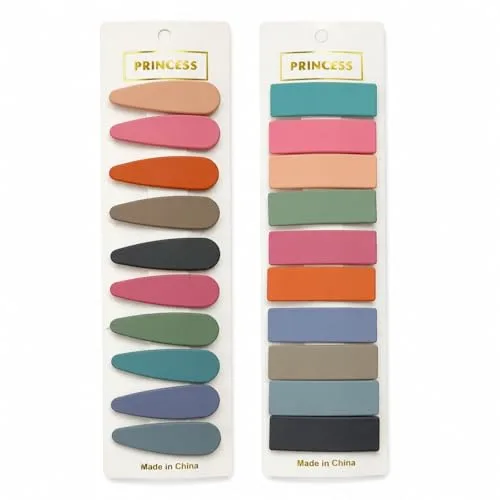
B.PHNE 20 Pcs Matte Non-Slip Snap Hair Clips
Matte coating over the metal and rounded edges - the two features that most directly address the pinch-and-crease complaints that bring people to this question..
We tested dozens of claw clips to find the very best options. Below you'll find our complete ranking, with detailed reviews and real customer feedback for each pick.
The Complete Ranking
Matte coating over the metal and rounded edges - the two features that most directly address the pinch-and-crease complaints that bring people to this question.
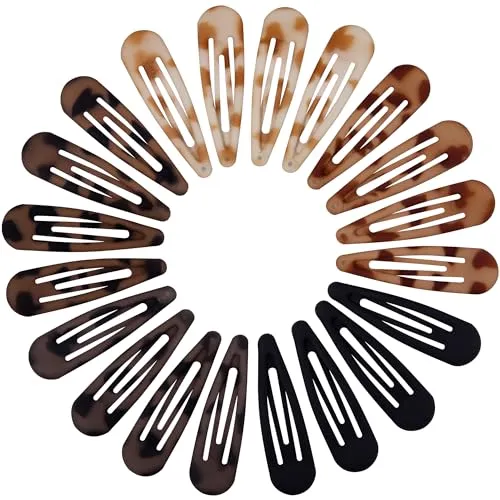
Small, light and smooth-edged. The maker specifically cites smooth edges to prevent hair pulling, and the 1.97-inch size means less hair is loaded into one clip.
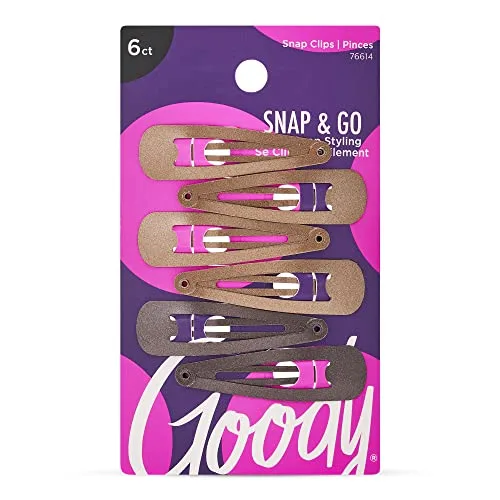
Goody markets the contour shape as pain-free and comfortable for all-day wear. Widely available, so it is an easy swap if your current clips are the problem.
Quick Comparison
A side-by-side look at our top picks
Frequently Asked Questions
Are snap clips bad for your hair?
Can snap clips cause hair loss?
Is it bad to sleep in snap clips?

Donna Miller
Enjoyed This Guide?
Get more hair tips and product recommendations delivered weekly.