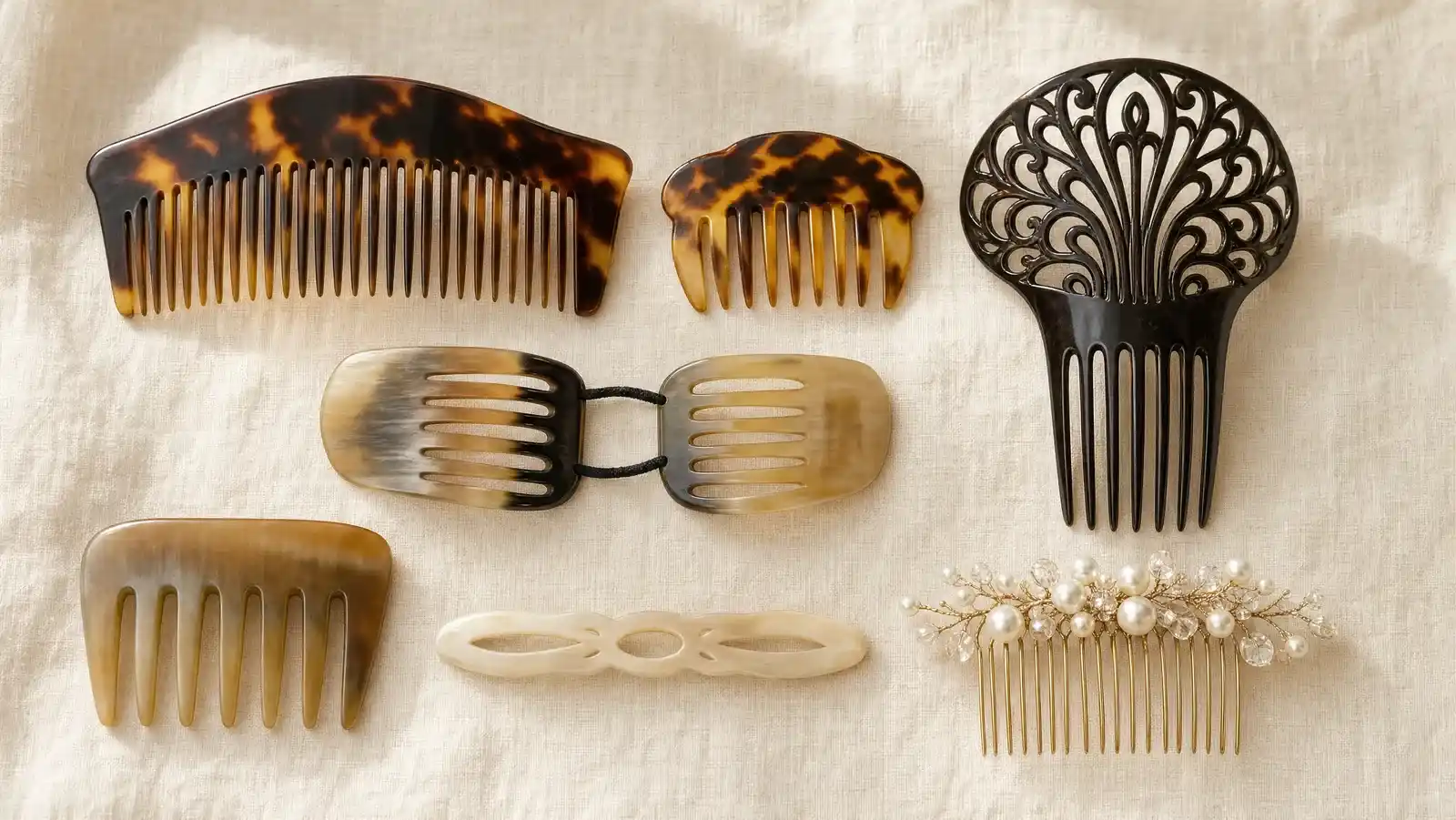
- Types of combs for hair at a glance
- Decorative side hair combs: the curved workhorse
- Interlocking and double combs: the type built for heavy hair
- Tuck combs: an ornament that happens to hold
- Mantilla combs and the Spanish peineta
- Embellished and bridal combs: decoration on a wire branch
- Decorative hair comb slides: the flat bar sold as a comb
- Wide-tooth decorative combs for curls and coils
- Small decorative hair combs under 2 inches: mini and accent combs
- Kushi and kanzashi: the Japanese comb vocabulary
- What the material tells you about the type
- Choosing a type without stressing your hairline
- Which type of decorative hair comb should you buy?
The main types of decorative hair combs are the plain side comb, the interlocking (double) comb, the tuck comb, the tall mantilla comb or peineta, the embellished bridal comb, the flat hair slide, the wide-tooth decorative comb and the mini accent comb. Eight shapes, each built to close around a different amount of hair.
Some links below are affiliate links, which means we may earn a commission at no cost to you.
The reason you cannot shop this category confidently is that sellers use the names interchangeably. "French comb", "side comb", "hair slide" and "tuck comb" all get attached to the same curved piece of plastic, while a genuinely different mechanism — the interlocking pair — hides under the same words. If you want the mechanics rather than the vocabulary, our guide to how decorative hair combs work covers tooth direction, placement and why a comb slides out. This article names the shapes.
Timing is part of it too. Marie Claire headlined its coverage of the shape "The French Comb Trend is 2026's Most Elegant Hair Accessory", and Who What Wear put combs in the headline of its 2026 hair-accessory forecast alongside tassels and French pins. More shapes are arriving, which means more names for things you already own.
Types of combs for hair at a glance
| Type | Typical size | What it holds | Rough price |
|---|---|---|---|
| Side comb, small | 2-3 in | One temple section or a grown-out fringe | $8-12 |
| Side comb, large | 4 in and up | Half the hair, or the seam of a French twist | $9-15 |
| Interlocking / double comb | 5-6 in per half | Long or heavy hair, a full updo | $20-35 |
| Tuck comb | 3-4 in | Finishes a bun or twist that is already pinned | $10-25 |
| Mantilla comb / peineta | Tall crest; historic examples far taller | A veil, anchored into a bun | Varies widely |
| Embellished / bridal comb | 2-4 in | Decoration on a secured style | $12-40 |
| Hair slide | 2-4 in bar | A small section, pressed flat | $8-20 |
| Wide-tooth decorative comb | 3-5 in | Curls and coils, without compressing them | $10-25 |
| Mini / accent comb | Under 2 in | Close to nothing. It is jewellery | $6-12 |
The price column is an approximate street range for each type rather than a sourced average; the only prices we state exactly are the five products below.
Decorative side hair combs: the curved workhorse
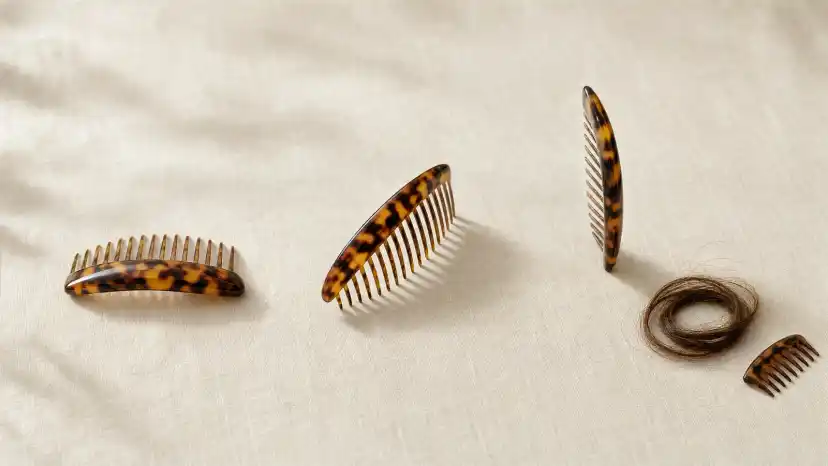
A side comb is the plainest member of the family. One curved spine, one row of teeth, no hinge and no spring. You slide it in above the ear with the teeth pointing back, and the curve holds by pressing against the skull. Nothing clamps shut. That is why a well-sized one disappears after ten minutes, and why a badly sized one is on the floor by lunch.
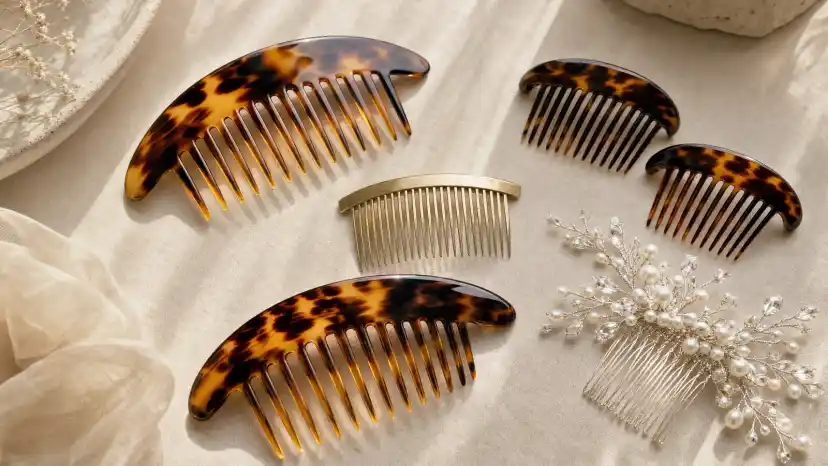
Small decorative hair combs (2-3 inches) are what most people mean by a side comb. They take a temple section, a grown-out fringe, or the front third of a half-up style. The Camila Paris CP2942 is the reference point at 3 inches: tortoise shell, a curved base with interlocking teeth, a listing that states cellulose acetate made in France, marketed for fine and medium hair, about $9.99 as of November 2026.
Large decorative hair combs (4 inches and up) do a different job. The extra span lets the comb cross a seam instead of sitting inside one section, which is exactly what a French twist needs. The Camila Paris AD66/2 is the clean example of the size: 4 inches, sold as a two-pack in tortoise shell, listed as cellulose acetate made in France, marketed for medium to thick hair, French twists, chignons and buns, supplied with a branded drawstring bag, about $9.99 as of November 2026. Camila Paris describes cellulose acetate as a plant-based resin and states that the brand has operated since 1999 — both are the maker's claims, not our measurements.
One caution on specs: the 4-inch AD66/2 and the 3-inch CP2942 advertise the same tooth count in their bullets, which is boilerplate carried between listings. Ignore tooth counts on side combs and read the length.
If you have never managed to keep one in, technique matters more than the comb — how to use a decorative hair comb walks through the push-and-roll that seats the teeth.
Interlocking and double combs: the type built for heavy hair
An interlocking comb is two comb heads joined by a stretch of elastic or a hinge, with the two rows of teeth facing each other. You set the first comb, carry the second across the section, and let the rows mesh so the hair is trapped between them. It is the only type here that closes on itself rather than leaning on your scalp, which is why it is the answer for long, dense or heavy hair that pushes a single comb straight out.
The Camila Paris CP2430 set is the premium example: four pieces at 5.5 inches each in tortoise shell, an interlocking curved design, listed as cellulose acetate made in France, marketed for long, thick, curly and wavy hair, about $31.99 as of November 2026. At roughly three times the price of the single combs above, we would frame it as the expensive version of the mechanism rather than a better-performing one — we have no measured comparison between brands. The listing also disparages the tooth finish of rival materials, and we are not repeating that, because nothing we read supports it.
Tuck combs: an ornament that happens to hold
A tuck comb, or tuck-in comb, runs 3-4 inches with a decorated crest and noticeably shorter teeth than a side comb. You do not build a style with it, you finish one: pin the bun first, then push the comb in at the base so the teeth bite gathered hair and the crest sits where it can be seen.
Historic decorative combs were frequently this shape. The Victoria and Albert Museum holds a tortoiseshell hair comb made in France in 1923-24, recorded as circular and decorated with Egyptian-inspired motifs, under accession number T.119-1972 — ornament mounted above a short row of teeth.
Who it suits: anyone whose hair is heavy enough that a comb alone slides, since the pins carry the structural load and the comb only has to stay put.
Mantilla combs and the Spanish peineta
The tall comb worn under a veil has a proper name: the peineta. According to Wikipedia's entry on the peineta, it is a large head ornament worn in Spain and the wider Hispanic world, "held to the hair by a row of teeth and usually worn under a mantilla" — a veil worn over the head and shoulders. The same entry says the word descends from the Spanish verb peinar, "to comb", traces the origin of the peineta to 19th-century Spain, and notes that it was once made of tortoiseshell but is now usually made of synthetic materials such as acrylic or plastic.
The scale these reached is worth knowing. Per the same entry, a larger derivative called the peinetón became popular among elite women in Buenos Aires and Montevideo between the mid-1820s and mid-1830s, reaching up to 120 centimetres (about 3 feet 11 inches) in height and width at the height of the fashion.
For shopping purposes: a listing that says "mantilla comb" generally means a tall decorative crest intended for a veil, a wedding or a flamenco costume, not a comb for a Tuesday. Treat it as occasion wear, seat it in a bun that is already secured, and do not expect the reverse — a 2-inch accent comb will not carry a veil.
Embellished and bridal combs: decoration on a wire branch
The embellished comb is the occasion type: pearls, crystals or fabric florals wired onto a branch above a short comb head. The ULTIMUTE set is a representative example of how the category is sold — five pieces, one hair comb plus four hair pins, in gold, with rhinestones, crystals and pearls mounted on adjustable copper wire that the listing states can be bent to adjust position, marketed for brides, bridesmaids, prom and parties, about $14.99 as of November 2026. The durability language on listings like this ("not easy to rust and fade") is marketing copy, and we have no basis to confirm it.
The practical point about the whole type: a wire branch has very little grip of its own. The comb head is short, the weight sits high, and the hold comes from the style underneath. Pin first, add the comb second, and use the set's pins to tie the arrangement into hair that is already anchored. Our roundup of best decorative French hair pins for weddings covers the occasion category in more detail.
Decorative hair comb slides: the flat bar sold as a comb
A hair slide is a flat decorative bar with a few short teeth on the underside, or a bar with a pin that passes through the hair behind it. It presses a section flat against the head instead of gathering it into a curve, so it suits sleek middle parts, a swept fringe and anything you want to look deliberate rather than voluminous.
Slides blur into barrettes because the hardware overlaps, which is why the same object appears in both aisles. If what you are actually looking at is a clasp rather than a row of teeth, types of barrettes explained is the better guide — it separates French, automatic and snap mechanisms.
Wide-tooth decorative combs for curls and coils
A wide-tooth decorative comb has fewer, deeper, rounder teeth with wide gaps between them. The logic is simple: a fine-tooth comb has to compress a curl pattern to get a grip on it, while a wide-tooth comb passes between coil groups and takes hold of several of them at once. Some wearers with curls and coils report that the fine-tooth versions flatten the pattern at the point of contact and leave a visible dent when the comb comes out.
Depth matters as much as spacing here. Teeth need to be long enough to reach past the curl volume to the hair underneath, so look for 3-5 inches of comb with teeth that actually look substantial in the photographs rather than a wide-set row of stubs.
Small decorative hair combs under 2 inches: mini and accent combs
Below about 2 inches, a comb stops being structure and becomes jewellery. The UKSKS set is the honest version of this: four combs at 2.1 inches each in tortoise shell and leopard patterns, listed as cellulose acetate with teeth polished round and smooth, curved and marketed for thick or fine hair, about $8.99 as of November 2026. The listing's promise that it will not pull or break hair is generic marketing, so keep it hedged.
Use them the way they are built to be used: in pairs to frame the face, as an accent on a bun held by pins, or to tidy the short layers above the ear. Asking a 2.1-inch comb to hold half a head of hair is the single most common reason people decide decorative combs "do not work" on them.
Kushi and kanzashi: the Japanese comb vocabulary
Japanese decorative combs are kushi, and the broader family of ornamental hairpins is kanzashi. According to the Japan Tourism Agency's multilingual commentary for the Kushi Kanzashi Museum in Ome, Tokyo, the museum holds more than 4,000 traditional hair accessories, with around 400 on display at a time, spanning the Edo period (1603-1867) to the Showa era (1926-1989). The same source says early combs made of tortoiseshell "could cost as much as a house, and were a statement of wealth", that Edo-period hair styles "became larger and more ornate", and that "as Japan modernized in the Meiji era (1868-1912), hair ornaments became smaller and less showy" as European hairstyles were taken up.
Worth saying plainly: kushi and kanzashi are specific objects with a documented history, not a decorative style. When a listing calls a generic moulded comb a "kanzashi comb", it is borrowing the word, and the shape you receive is usually a tuck comb or an accent comb.
What the material tells you about the type
Most combs in this guide are cellulose acetate. According to Wikipedia's entry on cellulose acetate, the material is made from purified cellulose from wood pulp or cotton linters treated with acetic acid and acetic anhydride, is hypoallergenic, can be dyed although it needs special dyes because it does not accept the dyes used for cotton and rayon, and is the material plastic eyeglass frames are frequently made from. Two of its properties matter at the bathroom sink: the same entry notes that acetate is hydrophilic, so it absorbs liquid and loses strength when wet, and that it is prone to melting. Practical conclusion: do not leave an acetate comb in a steamy shower, in a hot car or next to a curling iron.
Metal behaves in the opposite way. It keeps whatever shape you bend it into, which can be an advantage on a wire-branch bridal piece and a problem on a comb you want to spring back. We compare the two in metal vs acetate French hair pins, and look at the acetate question against cheaper moulded plastic in acetate vs plastic claw clips and hair health.
Choosing a type without stressing your hairline
Every comb here holds by tension, so picking a type is partly a hair-health decision. According to the American Academy of Dermatology, buns, ponytails and up-dos that are tightly pulled can cause traction alopecia when they are too tight, and its guidance on the warning sign is blunt: "If your hairstyle feels painful, the style is too tight." The AAD also advises against frequently wearing hairstyles that pull on your hair, and suggests checking monthly for broken hairs at the forehead and a receding hairline.
Translated into comb choices:
- Size up instead of tightening down. If a 3-inch comb only holds when you force it, the fix is a 4-inch comb, not more pressure.
- Use the mechanism built for your density. An interlocking pair closes on the hair; a single comb braces against the scalp. Heavy hair in a single comb is how you end up over-tightening.
- Move the placement. Setting the same comb in the same spot above the same temple every day concentrates the pull in one line.
- Keep mini combs decorative. They are not a structural hold, and using them as one means pushing them in harder than they are built for.
If you want the detail on the risk itself, we go through it in traction alopecia from hair accessories.
Which type of decorative hair comb should you buy?
If you own none, start with two plain side combs: one around 3 inches for temple sections and one at 4 inches for twists and half-ups. That pair covers most decorative hair comb styles you will actually wear on a weekday, and it costs less than a single occasion piece.
From there, buy by problem. Long or heavy hair that ejects a single comb needs an interlocking pair. A wedding needs an embellished comb plus pins, because the comb alone will not hold. Curls want a wide-tooth shape with teeth deep enough to reach past the pattern. A sleek part wants a slide. A bun you have already pinned wants a tuck comb or a mini comb, purely for how it looks.
The deciding factor is almost always how much hair the teeth have to close around, not how good the crest looks in the photograph. Our full walkthrough of choosing a decorative hair comb takes that from the section you are holding to the comb that fits it.
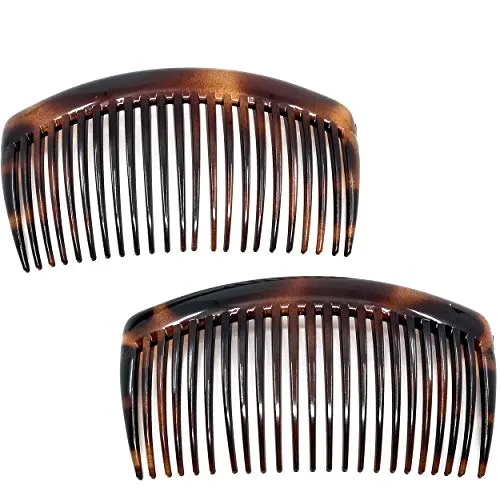
Camila Paris AD66/2 Large French Side Combs (2 Pack)
The 4-inch reference point for the large side-comb category: long enough for a twist, still curved to the scalp..
We tested dozens of claw clips to find the very best options. Below you'll find our complete ranking, with detailed reviews and real customer feedback for each pick.
The Complete Ranking
The 4-inch reference point for the large side-comb category: long enough for a twist, still curved to the scalp.
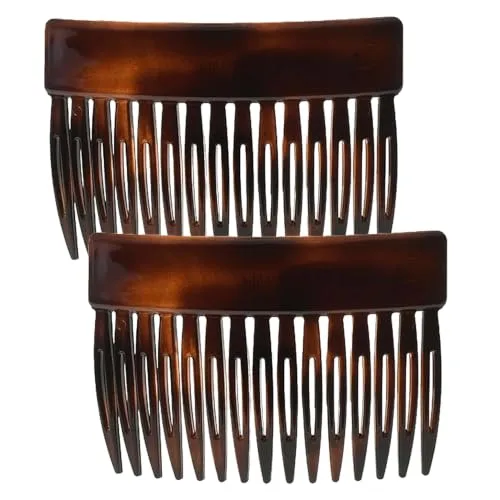
The 3-inch version of the same idea, which is the size most people mean by a plain side comb.
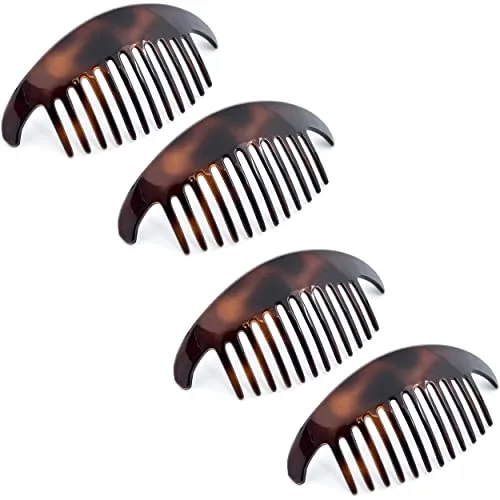
Interlocking combs are the mechanism to understand if you have long or heavy hair. At 5.5 inches and 31.99 this is the premium example of the type.
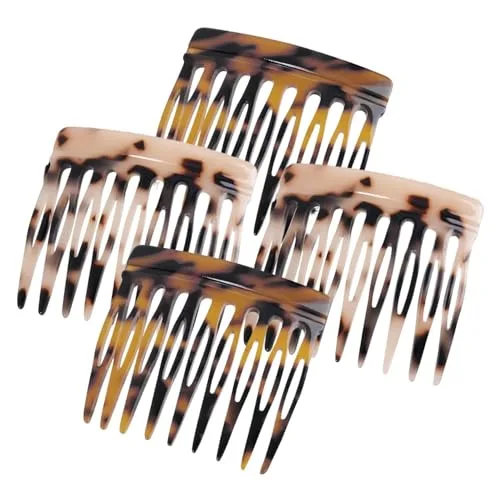
At 2.1 inches these are the decorative-accent end of the range rather than a structural hold.
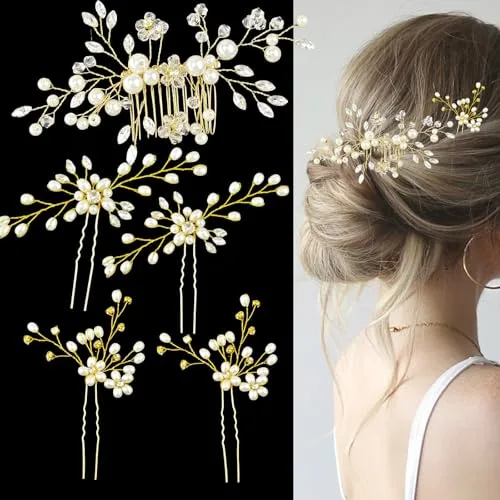
An embellished comb plus four pins, which is how the occasion category is usually sold.
Quick Comparison
A side-by-side look at our top picks
Frequently Asked Questions
What are decorative hair combs called?
What size decorative hair comb do I need?
Are decorative hair combs bad for your hair?

Donna Miller
Enjoyed This Guide?
Get more hair tips and product recommendations delivered weekly.