Your clip collection probably contains both hair protectors and hair destroyers—can you tell which is which?
From a distance, most claw clips look similar. But the details that matter for hair health aren't visible in a glance: the smoothness of edges, the alignment of teeth, the quality of the spring, the way the material ages.
This guide teaches you exactly how to assess any clip for hair safety—whether you're evaluating new purchases or auditing your current collection.
For comprehensive hair protection strategies, see our complete guide to protecting your hair from damage.
The Quick Assessment Checklist
Use this for any clip:
| Test | Safe | Damaging |
|---|---|---|
| Finger along all edges | Completely smooth | Any roughness |
| Teeth inspection | Even, smooth, aligned | Sharp, uneven, broken |
| Spring test | Snaps back firmly | Weak, stiff, or jerky |
| Closure test | Teeth meet evenly | Gaps or misalignment |
| Weight assessment | Appropriate for hair | Too heavy for your hair |
| Material check | Smooth, quality feel | Rough, brittle, cheap |
If any test fails, the clip is potentially damaging.
Test 1: The Finger Test
This is your most important assessment tool.
How to Do It
- Take the clip in your hand
- Run your finger slowly along every edge
- Run your finger along every tooth
- Run your finger along the inside surfaces
- Run your finger along the hinge area
What You're Looking For
Safe: Everything feels completely smooth. Your finger glides without catching on anything.
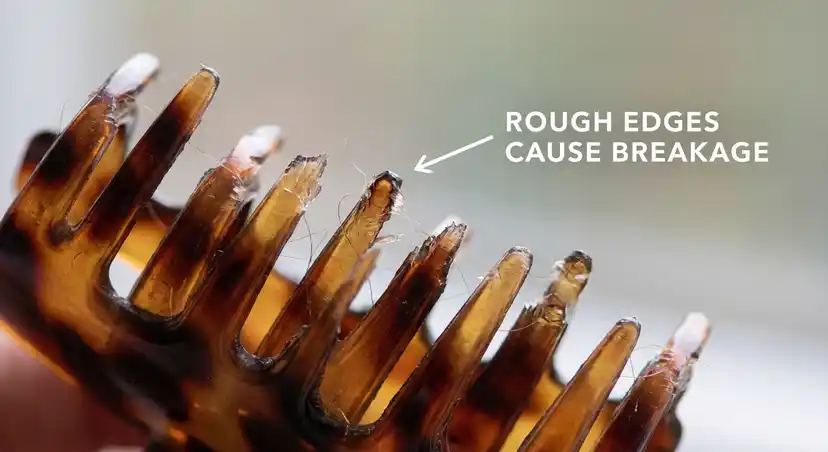
Damaging: Any roughness, bumps, ridges, sharp edges, or points where your finger catches.
Why This Works
Your finger is far less sensitive than your hair. If your finger detects roughness, the roughness will absolutely damage hair. Hair cuticles are microscopic—they catch on imperfections your finger barely notices.
Common Failure Points
- Molding seams: Lines where plastic mold pieces met
- Tooth tips: Sharp or rough points
- Hinge area: Often rough where mechanism works
- Edge of decorative elements: Where decoration meets clip body
Test 2: Teeth Inspection
Teeth are the primary contact point with your hair.
What to Check
Tooth tips: Should be rounded or at least smooth, not pointed or sharp.
Tooth spacing: Should be even. Uneven spacing creates uneven grip.
Tooth alignment: Both sides should meet when closed. Misalignment pinches hair.
Tooth condition: No cracks, chips, or breaks. Any damage = sharp edge.
Signs of Safe Teeth
- All tips same shape and smoothness
- Even spacing throughout
- Perfect alignment when clip closes
- Consistent construction on both sides
Signs of Damaging Teeth
- Pointed tips that could catch
- Visible cracks or chips
- One side offset from the other
- Missing or broken teeth
- Rough edges where teeth meet clip body
Test 3: Spring Assessment
Spring quality affects how much tension you need—and tension affects damage.
How to Test
- Open the clip fully
- Release slowly
- Note how it closes
- Open and close repeatedly
What You're Evaluating
Resistance: Should be firm but not harsh. A good spring opens with moderate effort and closes with confidence.
Smoothness: Opening and closing should feel smooth, not jerky or gritty.
Consistency: Should feel the same every time you open and close.
Return: When released, should close on its own with steady tension.
Spring Problems That Cause Damage
| Problem | Why It's Bad | Result |
|---|---|---|
| Too weak | Forces you to twist tighter | Tension damage |
| Too strong | Crushes hair at contact | Compression damage |
| Jerky action | Creates sudden stress | Stress points |
| Inconsistent | Unpredictable grip | Overcompensation |
Test 4: The Closure Test
How teeth meet when closed matters for even grip.
How to Test
- Close the clip slowly
- Watch where teeth meet
- Note if all teeth contact together
- Look for gaps
What to Look For
Safe: All teeth from both sides meet simultaneously. No gaps between teeth when fully closed.
Damaging: Some teeth meet before others. Gaps visible when closed. One side offset from other.
Why Alignment Matters
Misaligned teeth create:
- Uneven pressure distribution
- Pinching in some areas
- Gaps where hair slips and gets caught
- Need for tighter overall grip
Test 5: Weight Assessment
Weight relative to your hair matters for long-term comfort and stress.
How to Assess
- Hold the clip
- Consider your hair type and volume
- Imagine wearing for 8 hours
General Guidelines
| Hair Type | Appropriate Clip Weight |
|---|---|
| Fine/thin | Lightweight only |
| Medium | Light to moderate |
| Thick | Can handle heavier |
| Damaged | Lighter than you think |
Signs a Clip Is Too Heavy
- Creates constant awareness when worn
- Pulls on scalp noticeably
- Requires tighter styling to stay put
- Causes headaches with extended wear
Test 6: Material Quality
Material determines long-term safety, not just initial safety.
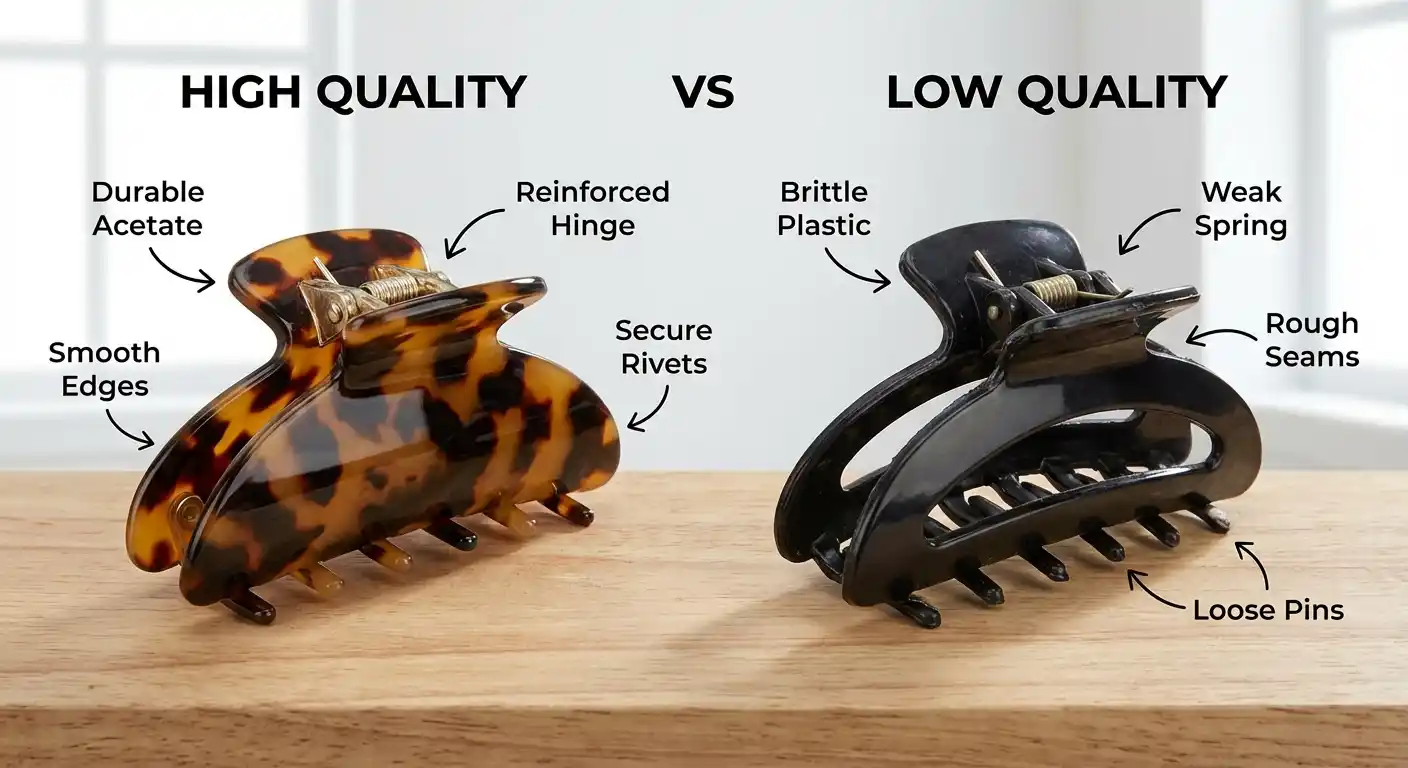
High-Quality Materials
Cellulose acetate: Plant-based, polishes smooth, stays smooth Quality metal: Smooth, doesn't degrade, no rough coatings Premium plastics: Smooth finish, well-manufactured
Lower-Quality Materials
Cheap plastic: May be rough, definitely degrades over time Poorly coated metal: Coating chips, reveals rough underneath Brittle acrylic: Cracks and creates sharp edges
How to Tell Quality
| Indicator | Quality | Cheap |
|---|---|---|
| Feel | Smooth, solid | Rough, light |
| Appearance | Consistent finish | Visible seams, uneven |
| Flexibility | Some give | Either too rigid or too flimsy |
| Weight | Appropriate, deliberate | Too light (hollow) or too heavy |
| Price | Generally correlates | Under $5 suspect |
For material comparison, see acetate vs. plastic claw clips.
Test 7: The Wear Assessment (For Clips You Already Own)
Even safe clips become unsafe over time.
Check Regularly For
Developed roughness: Run the finger test on old clips Degraded finish: Surface becoming dull, rough, or chalky Weakened spring: Less tension than when new Cracking: Any visible cracks = immediate discard Loose teeth: Teeth that wiggle or have gaps at base
When to Replace
- First sign of roughness
- Spring no longer holds confidently
- Any visible damage
- After a fall on hard surface (hidden damage possible)
- If hair catches during use
Real-World Examples
Common Safe Clip Characteristics
A clip that's likely safe:
- From a reputable brand
- Smooth throughout when tested
- Even, aligned teeth
- Confident spring tension
- Quality materials (often acetate or quality plastic)
- $15+ price point (though not always)
Common Damaging Clip Characteristics
A clip that's likely damaging:
- Dollar store or unknown brand
- Rough edges or seams
- Misaligned or uneven teeth
- Weak or jerky spring
- Cheap, brittle plastic
- Very low price point
The Tricky Middle Ground
Many clips fall in between:
- Reputable brand but old/worn → May have degraded
- Budget brand but new/quality → May be fine
- Good material but poor construction → Still damaging
- High price but overpriced → Quality doesn't match cost
The solution: Test every clip regardless of brand, price, or age.
Building a Safe Clip Collection
Audit Current Clips
- Gather all your clips
- Test each one using the full checklist
- Separate into "keep" and "discard"
- Be ruthless—any doubt means discard
Buying New Clips
- Research before purchasing (reviews mentioning comfort/safety)
- Inspect immediately upon arrival
- Return anything that doesn't pass tests
- Invest more in daily-use clips
Maintaining Safety
- Inspect clips weekly
- Store properly (not loose in bags)
- Replace at first sign of wear
- Retire clips before they damage
For recommendations, see best no-damage claw clips for everyday wear and best claw clips for damaged hair.
FAQ
Can I fix a clip that fails the tests?
Generally no. You can't un-roughen plastic or realign teeth. A failing clip should be discarded and replaced.
Are expensive clips always safe?
Not always. Quality correlates with price but doesn't guarantee safety. An expensive clip that's worn out or poorly designed can still damage hair. Test every clip.
How often should I test my clips?
Weekly or biweekly inspection is reasonable. Also test after any drop, before each use if hair is fragile, and any time you notice unusual breakage.
What about decorative clips?
Same tests apply. Decorative elements often have additional edges and attachment points to check. Run the finger test over every surface, including decorative parts.
My clip passed all tests but still seems to damage my hair—why?
Possible causes beyond the clip: technique issues (twisting too tight, same position daily), hair is already damaged and extra sensitive, or hidden clip damage not detected by visual/finger tests. See why your hair clip might be breaking your hair.
Related Articles
- The Complete Guide to Pain-Free Hair Styling
- Best Claw Clips for Sensitive Scalps
- Best Claw Clips for All-Day Comfort
- The Complete Guide to Protecting Your Hair from Damage
- Acetate vs. Plastic Claw Clips
- Best No-Damage Claw Clips for Everyday Wear
- Why Your Hair Clip Might Be Breaking Your Hair
- Best Breakage-Preventing Claw Clips
- Best Claw Clips for Damaged Hair
- Best Gentle Claw Clips for Thinning Hair
- How to Use a Claw Clip Without Damaging Your Hair
- How to Reduce Tension & Pressure When Wearing Clips
- Traction Alopecia from Hair Accessories
- Signs Your Hair Routine Is Causing Damage
- Claw Clips vs. Hair Ties for Hair Health
- How to Recover from Hair Accessory Damage
- How to Protect Your Hair While You Sleep
- Best Silk & Satin Hair Accessories for Hair Health
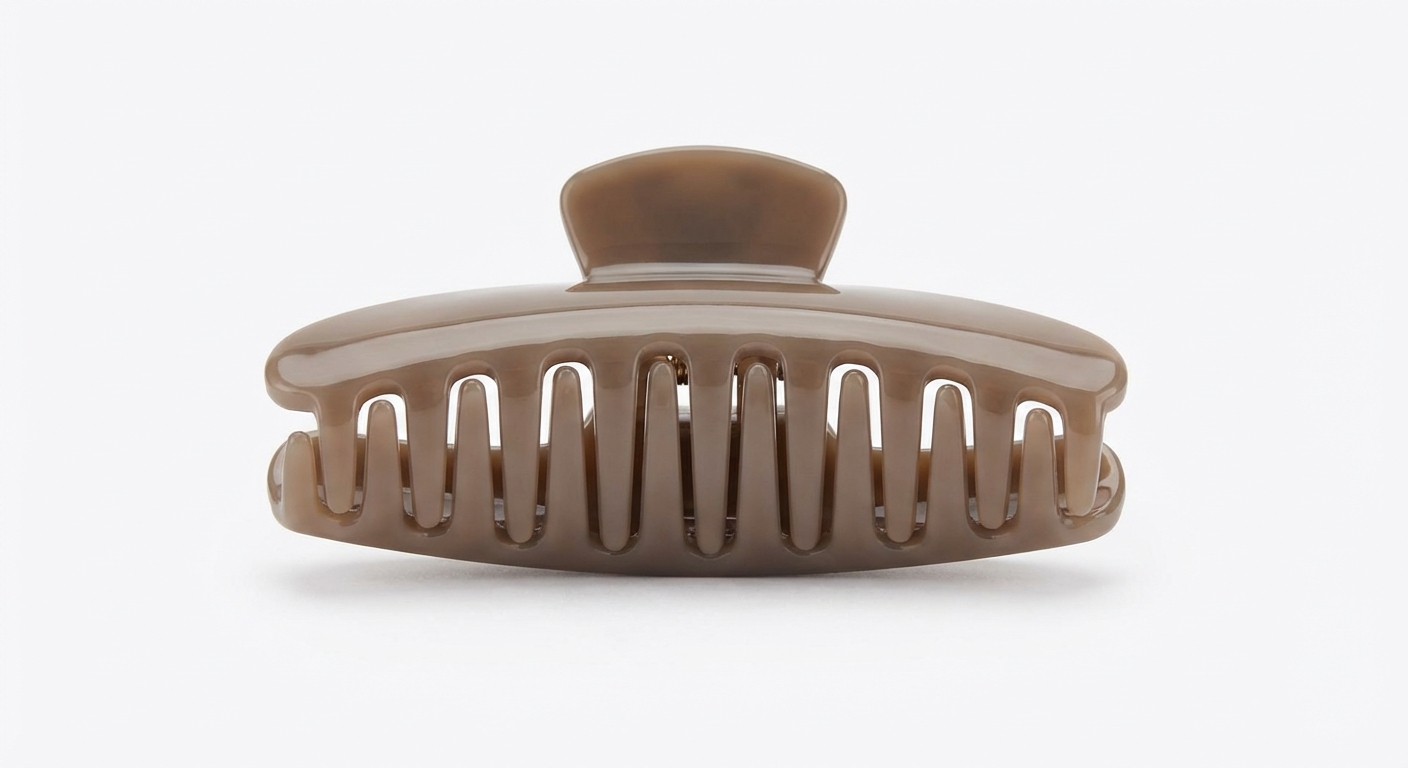
France Luxe Jaw Clip with Double Row Teeth
Passes every safety test in this guide. Smooth acetate with no rough edges, properly aligned teeth, strong spring that doesn't over-grip, and quality construction that won't degrade quickly.
“Ran every safety test from this article. This clip passed them all....”
We tested dozens of claw clips to find the very best options. Below you'll find our complete ranking, with detailed reviews and real customer feedback for each pick.
The Complete Ranking
France Luxe Jaw Clip with Double Row Teeth
“Ran every safety test from this article. This clip passed th...” — Verified Buyer
Passes every safety test in this guide. Smooth acetate with no rough edges, properly aligned teeth, strong spring that doesn't over-grip, and quality construction that won't degrade quickly.
“Ran every safety test from this article. This clip passed them all.”
— Verified Buyer
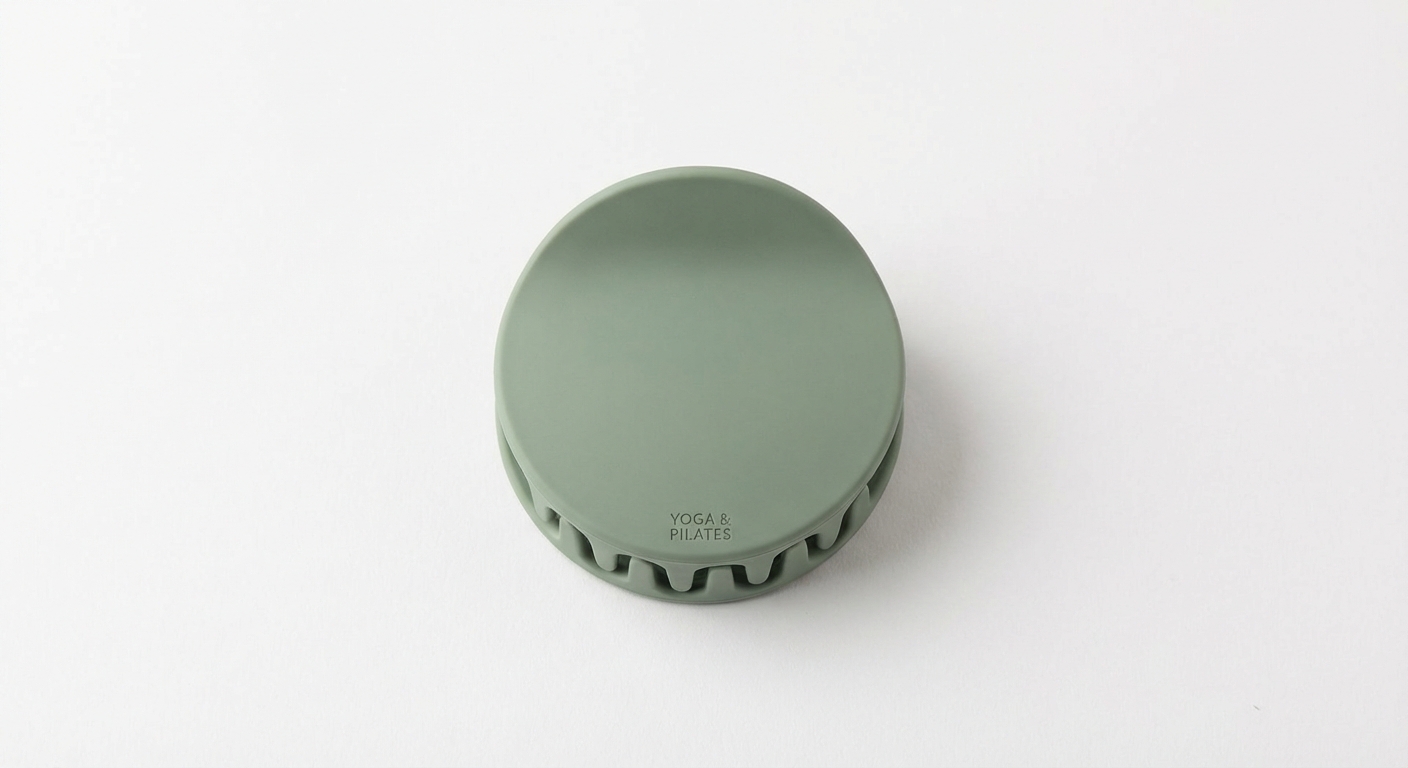
TELETIES Medium Flat Round Clip
“Smooth everywhere. This is what safe clips feel like....” — Verified Buyer
Another example of safe construction. Smooth edges, flexible teeth that won't snap hair, and flat back that eliminates pressure points. Quality you can verify yourself.
“Smooth everywhere. This is what safe clips feel like.”
— Verified Buyer
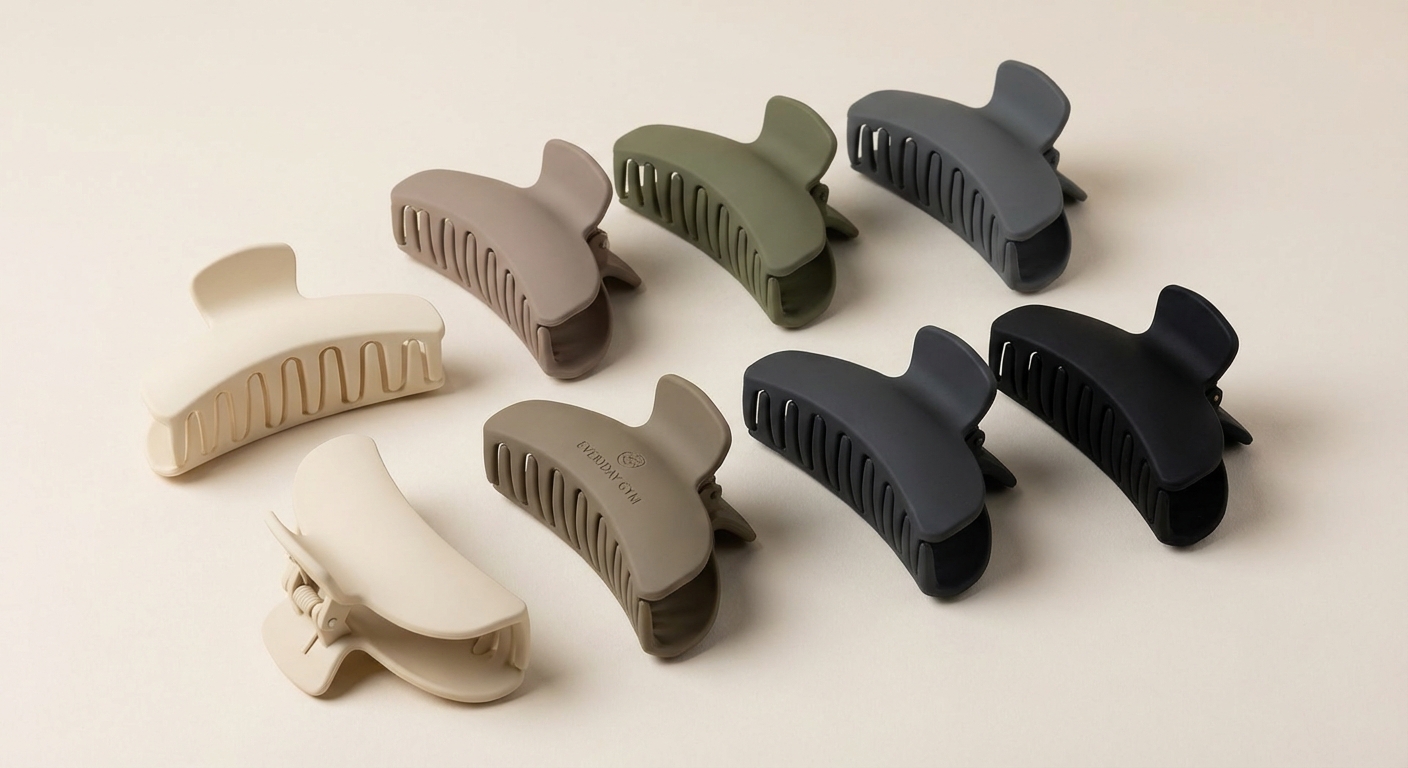
TOCESS 8 Pack Big Hair Claw Clips
“Did the finger test—smooth all around. Safe budget option....” — Verified Buyer
Budget clips that still pass the safety tests. Smooth matte finish, properly constructed teeth, and metal springs that maintain appropriate tension. Verify yourself with the finger test.
“Did the finger test—smooth all around. Safe budget option.”
— Verified Buyer
Ran every safety test from this article. This clip passed them all.
Quick Comparison
A side-by-side look at our top picks
Frequently Asked Questions
Not all clips are created equal
The finger test reveals truth
Cheap isn't always bad; expensive isn't always good

Donna Miller
Enjoyed This Guide?
Get more hair tips and product recommendations delivered weekly.