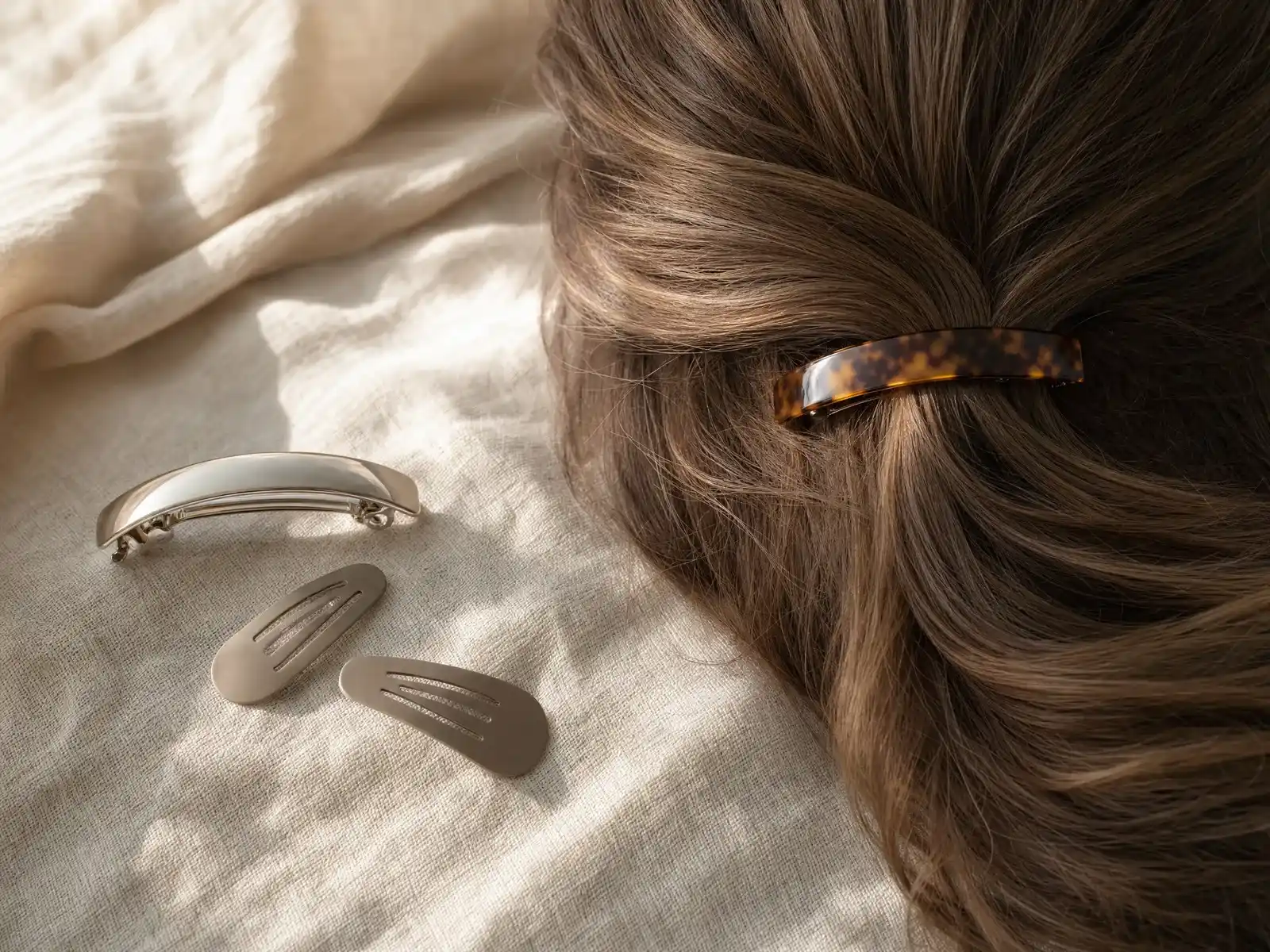
- Do barrettes damage hair? What actually causes the harm
- Warning signs your barrette is doing damage
- Which barrette designs are gentlest — and why
- Habits that matter more than the clip you buy
- Why hair barrettes hurt after a few hours
- Who should be most careful with barrettes
- The bottom line: are barrettes safe for hair?
Short answer: barrettes are not inherently bad for your hair. A clasp does not damage a hair fibre on contact. Damage comes from four specific behaviours: clamping too tight, clipping the exact same spot every day, sleeping in the clip, and ripping it out of a tangle. Fix those and the barrette itself is rarely the problem.
Best Claw Clips is reader-supported. When you buy through links on our site, we may earn an affiliate commission at no extra cost to you.
People usually ask "are barrettes bad for hair" after finding a little cloud of short broken hairs where their clip sits, and the internet answers with either "clips are fine, relax" or "clips are destroying your hairline." Neither is useful. In our experience behind the chair, two people can wear the same 3-inch barrette daily and only one of them ends up with a fringe of broken stubs at the clip line — and the difference is almost always technique and placement, not the accessory. If you want the full playbook, we cover how to wear barrettes without damage in our main guide.
Do barrettes damage hair? What actually causes the harm
There are two different problems people lump together, and separating them is the whole answer.
Breakage happens along the hair shaft. A strand snaps partway down because the cuticle — the overlapping outer scale layer — has been worn thin. According to a review of hair cosmetics in the International Journal of Trichology, splitting occurs when the cuticle is damaged and weakened, and too few remaining cuticle layers can no longer hold the ends of the fibre together. The follicle itself is not involved, which makes this a hair-shaft problem rather than a hair-loss one.
Traction is a scalp problem. Sustained pull on the follicle itself, repeated over months, is what dermatologists call traction alopecia. According to the American Academy of Dermatology, hairstyles that pull on your hair can cause hair loss, and the AAD specifically names tightly pulled buns, ponytails and up-dos alongside braids and extensions.
A barrette sits much closer to the "breakage" end of that spectrum than a tight ponytail does, because it grips a section rather than gathering the whole head into one anchor point. But it is not immune, and the mechanism is worth understanding.
Friction is the slow one
Hair damage from grooming is cumulative, not dramatic. Per the Journal of Investigative Dermatology Symposium Proceedings, weathering is the progressive degeneration of the cuticle and later the cortex from routine everyday wear and tear, with extrinsic factors including friction and hair combing. A 2020 review in the Indian Dermatology Online Journal describes the same process as chronic mechanic-chemical strain that weakens, weathers and separates the layers of the cuticle.
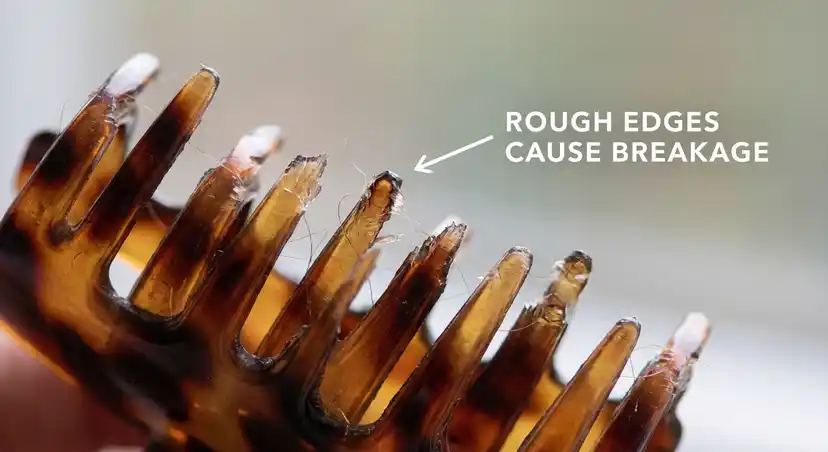
That is exactly what a rough clasp edge does, a fraction at a time. Every open-and-close cycle drags metal across the same band of fibre. One day: nothing. Months of the same daily cycle: a visible line of short broken hairs.
Are barrettes safe for hair compared with other accessories?
Ranked by the amount of sustained pull they put on the follicle, a barrette sits low. The AAD's list of hair-loss-associated styles is dominated by things that hold the whole head under constant tension: cornrows, locs, tight braids, tightly pulled buns, ponytails and up-dos, extensions and weaves, and rollers worn to bed. A barrette does none of that. It holds a section against the head with a spring and lets the rest hang free, and you can remove it in one second the moment it feels tight.
Where a barrette can be worse than an elastic is at the contact edge. An elastic loops around hair; a metal clasp closes onto it. That is a shearing action on a narrow band, which is why edge finish and grip width matter far more on a barrette than they do on a hair tie.
Warning signs your barrette is doing damage
Check for these once a month, in good light, with the section unclipped.
- Short, blunt-ended stubs at the clip line. One to three inches, standing up in a halo. Shed hairs are full length with a pale bulb; broken hairs are neither.
- Soreness or a headache after wearing. Pain is information. The AAD lists pain from tightly pulled hair, stinging on the scalp, crusts and scalp tenting as signs your style is too tight.
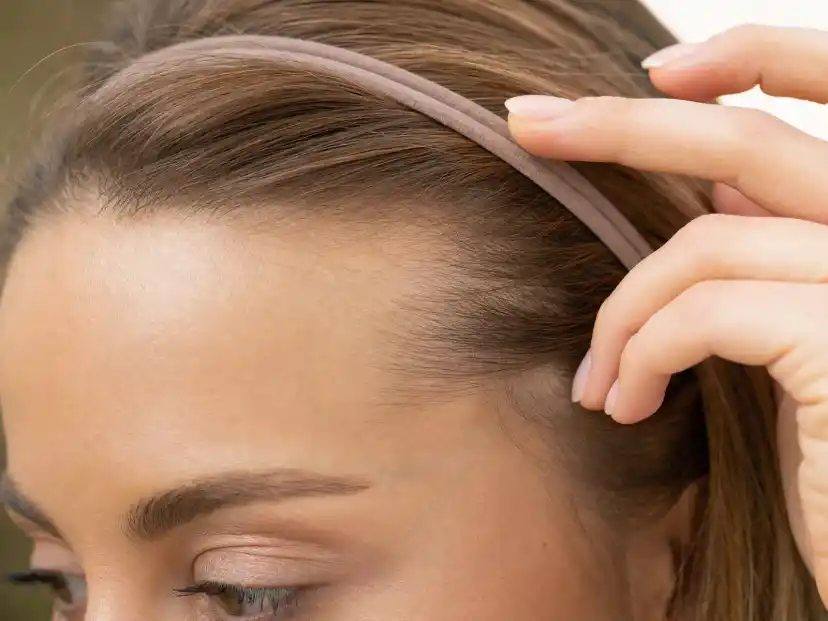
- A part or hairline that looks wider than it did. The AAD also flags broken hairs around the forehead, a receding hairline, and patches of hair loss where hair is pulled tightly as early warning signs.
- A crease that will not brush out. Usually harmless denting, but a sharp crease means the clasp is loading one narrow line instead of spreading the hold.
If you see any of the scalp signs, the AAD's advice is blunt: change your hairstyle immediately. Timing matters here. According to StatPearls, a clinical reference hosted on the National Institutes of Health's NCBI Bookshelf, traction alopecia follows a biphasic pattern in which early-stage disease is non-scarring and reversible, while chronic cases can result in permanent scarring alopecia. Caught early, the outlook is very different from caught late. If you are worried, see a dermatologist rather than waiting it out.
Which barrette designs are gentlest — and why
Three physical features do most of the work.
Edge profile. A rolled or domed closing edge has no sharp lip to abrade the cuticle as the clasp shuts. A stamped clasp with an exposed seam does. This is the reason we still keep the Goody Classic Metal Domed Barrettes in the kit drawer: the domed shape closes flat against the head with nothing to dig in.
How the clasp distributes tension. A barrette that grips across its full width loads a wide, shallow band of hair. One that pinches at a single point concentrates the same force into a fraction of the area. The tooth-shaped inner bar that DF DUALFERV specifies on its Acetate French Tortoise Barrettes is a good example of the wide-grip approach in an inexpensive clip.
Surface finish. Slick beats textured. Damaged fibre already has higher surface friction — the International Journal of Trichology review notes that damage which weakens the fibre also increases inter-fibre friction, leading to breakage — so a smooth acetate or coated body gives the hair something to slide against instead of catch on.
One more design note: size the clip to the section, not the other way around. Forcing a thick section into a small clasp is how you get tearing on removal. For bangs, flyaways and baby hairs, small snap clips like the Cptots 1.97-inch barrettes ask far less of the hair than a full-size clasp does.
Habits that matter more than the clip you buy
Honestly, this is the section that changes outcomes.
- Rotate placement. Do not put the barrette in the same spot on the same part line every day. The AAD recommends switching up your hairstyle regularly so your hair can recover. Our styling piece on 12 easy ways to style hair with barrettes exists partly for this reason — variety is a hair-health tool, not just an aesthetic one.
- Detangle before clipping, never after. Open the clasp fully and lift it away from the head. If it catches, stop and free the section with your fingers.
- Fix a slipping clip instead of re-clipping it. A barrette that slides down gets yanked back up five times a day, and each re-clip is another friction cycle on already-loaded hair. If yours will not stay put, work through why barrettes keep slipping rather than tightening your grip.
- Be deliberate about wet hair. Texture changes the calculus here. The International Journal of Trichology review notes that combing takes less work on wet hair for highly coiled textures, while for wavy to straight hair the reverse holds. If your hair is straight or wavy, our rule is to let it dry before clamping a section into a clasp.
- Take it out before bed. Hours of pressure plus hours of pillow friction is a combination worth avoiding, and you cannot feel the pull while asleep — the AAD lists styles that require rollers worn to bed among those associated with hair loss.
- Clip loosely enough to slide a fingertip under the section. If you cannot, it is probably too tight.
Why hair barrettes hurt after a few hours
Soreness is often a tension problem, and it usually has one of three common causes we can fix in about a minute.
Too much hair in the clasp. An over-stuffed barrette has to spring open against the section all day, and all of that return force lands on the hair at the two ends of the clasp. Take out a third of the section and the ache generally goes.
The clip is anchored on the part line. Sitting a clasp directly on a part concentrates pull on the hairs at the edge of that part — the same hairs that are already the most exposed. Move it half an inch off the parting.
A spring that is simply too strong for your hair. Clasp tension is a fixed property of the clip. If a 3-inch French barrette hurts on fine hair no matter how you place it, that clip is not for you, and no technique will fix it.
Treat pain as a stop signal rather than a break-in period. The AAD's guidance is to change your hairstyle immediately if you notice pain from tightly pulled hair, stinging, crusts or tenting of the scalp — a headache you are enduring is a style you have already worn too long.
Who should be most careful with barrettes
Some hair asks for more caution.
- Fine or low-density hair. Less fibre in the section means the same clasp force is carried by fewer strands.
- Chemically treated hair. Bleach, permanent colour and straighteners weaken the fibre before you clip anything. The International Journal of Trichology review notes that chemical damage from bleaches, dyes and straighteners weakens hair and increases inter-fibre friction, leading to breakage.
- Mature hair. A 2015 study of age-dependent cuticle damage in the Journal of Cosmetic Dermatology, which examined hair from women aged 10 to 70, found that the cuticle becomes gradually less resistant to daily grooming stress.
- Anyone with an existing traction problem. If you have already been told you have traction alopecia, the StatPearls guidance is that management involves discontinuing hairstyles that exert prolonged tension. That is a conversation for your dermatologist, not a clip you can shop your way out of.
The bottom line: are barrettes safe for hair?
Yes — for most people, worn sensibly, a barrette is one of the lower-risk ways to get hair off your face. It applies less sustained whole-head tension than a tight elastic, uses no heat, and changes nothing chemically.
The risk is not in the object. It is in the four habits: too tight, same spot daily, worn to bed, pulled through tangles. Choose a smooth, rolled-edge or wide-grip clasp, size it to the section, move it around, and check your clip line once a month for short blunt stubs. If you want the full breakdown of styles, sizes and placements, start with our guide to barrettes — and if something hurts while you are wearing it, take it out. Your scalp is telling you the truth.
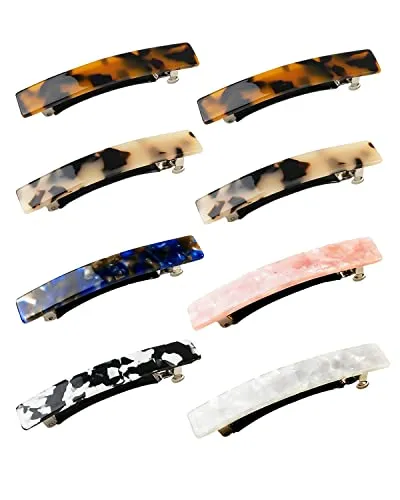
DF DUALFERV Acetate French Tortoise Barrettes (8 Pcs)
Eight 3-inch acetate rectangle barrettes on a metal spring. The tooth-shaped inner bar spreads its grip across the full width of the clasp instead of pinching one spot, which is the single biggest factor in whether a barrette leaves a crease or a snag.
“The acetate body is smooth enough that hair slides out of it rather than catching, and the wide toot...”
We tested dozens of claw clips to find the very best options. Below you'll find our complete ranking, with detailed reviews and real customer feedback for each pick.
The Complete Ranking
DF DUALFERV Acetate French Tortoise Barrettes (8 Pcs)
“The acetate body is smooth enough that hair slides out of it...” — Verified Buyer
Eight 3-inch acetate rectangle barrettes on a metal spring. The tooth-shaped inner bar spreads its grip across the full width of the clasp instead of pinching one spot, which is the single biggest factor in whether a barrette leaves a crease or a snag.
“The acetate body is smooth enough that hair slides out of it rather than catching, and the wide tooth bar holds a half-up section without a hard pressure point.”
— Verified Buyer
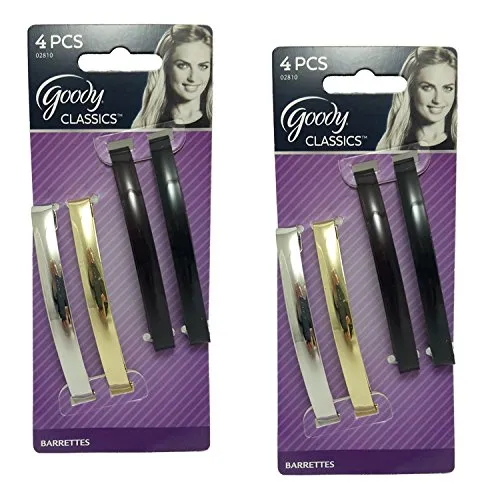
Goody Classic Metal Domed Barrettes, 3.25 in (2 Packs of 4)
“The classic domed shape has outlasted decades of hair trends...” — Verified Buyer
A drugstore staple: 3-1/4-inch domed metal barrettes with no exposed seam along the closing edge. The domed profile is the reason these are worth naming in a damage conversation — a rolled edge has nothing sharp to abrade the cuticle as the clasp closes.
“The classic domed shape has outlasted decades of hair trends because it closes flat against the head and does not dig in.”
— Verified Buyer
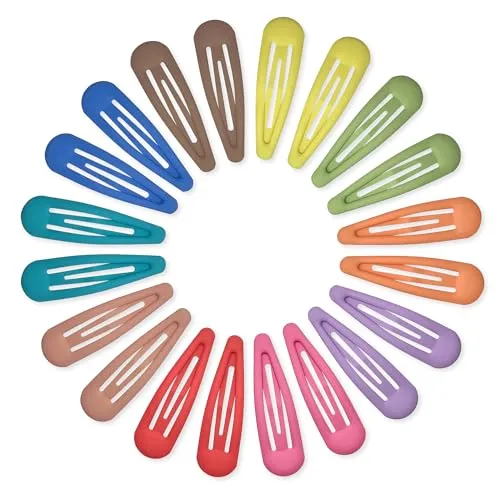
Cptots Small No-Slip Metal Snap Barrettes, 1.97 in (20 PCS)
“The maker specifies smooth edges to prevent hair pulling, an...” — Verified Buyer
Twenty 1.97-inch snap clips in a water-drop shape. For bangs, baby hairs, and flyaways these ask far less of the hair than a full-size clasp: a small clip on a small section is the lowest-tension way to pin hair back.
“The maker specifies smooth edges to prevent hair pulling, and at under two inches these are sized for the small sections where tension does the least harm.”
— Verified Buyer
The acetate body is smooth enough that hair slides out of it rather than catching, and the wide tooth bar holds a half-up section without a hard pressure point.
Quick Comparison
A side-by-side look at our top picks
Frequently Asked Questions
The one habit behind most clip-line breakage
Clip damage vs. ordinary shedding
Never take a barrette out of a tangle

Donna Miller
Enjoyed This Guide?
Get more hair tips and product recommendations delivered weekly.