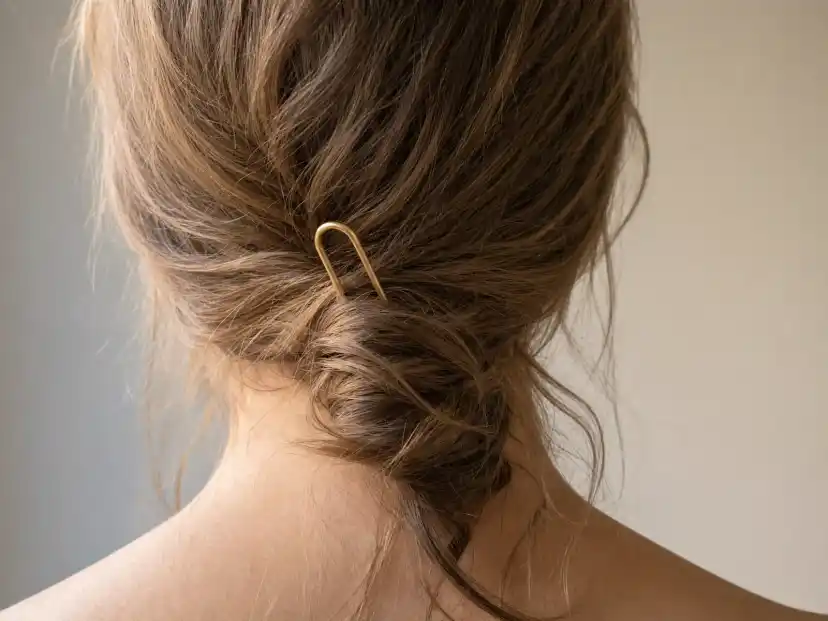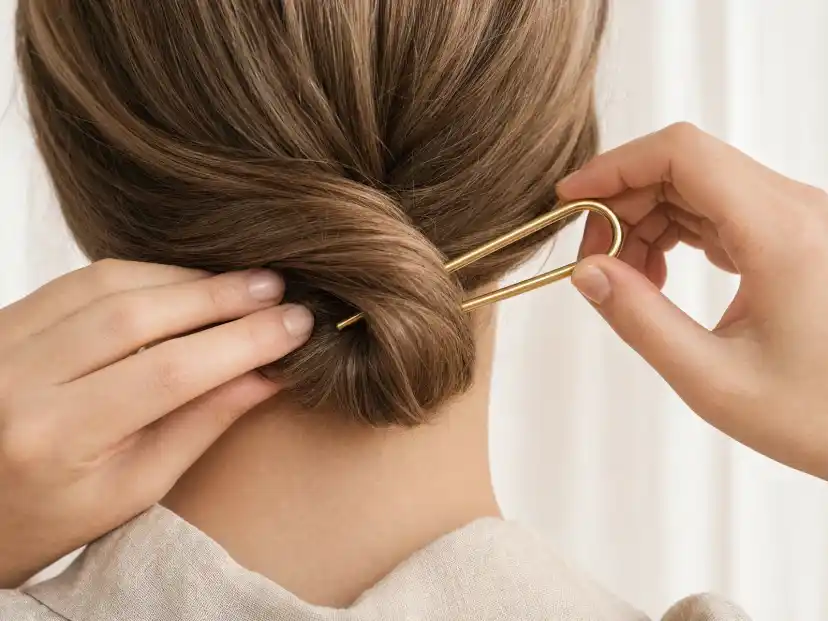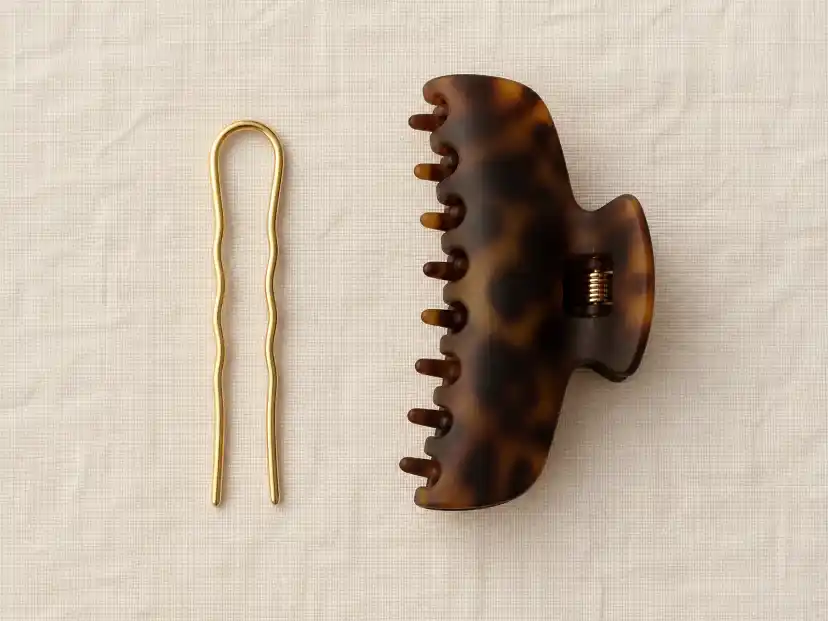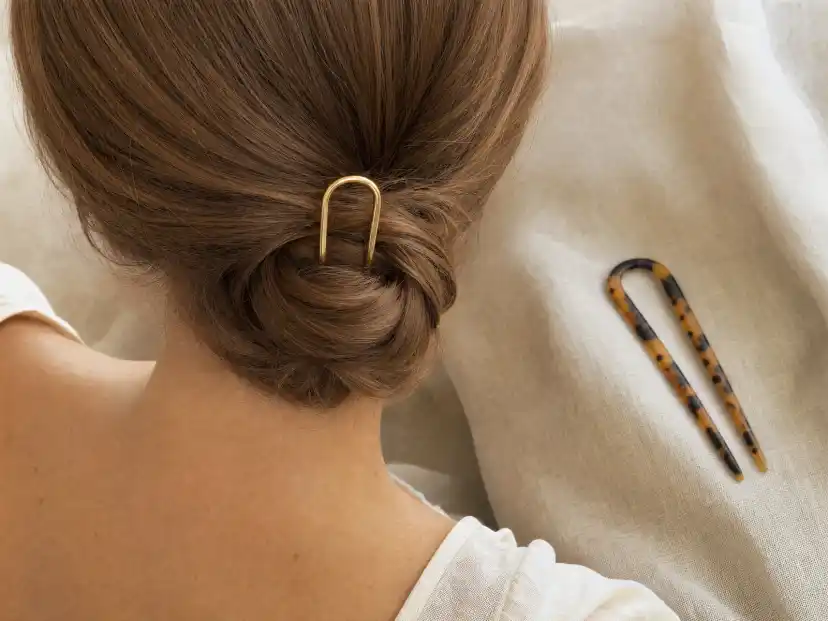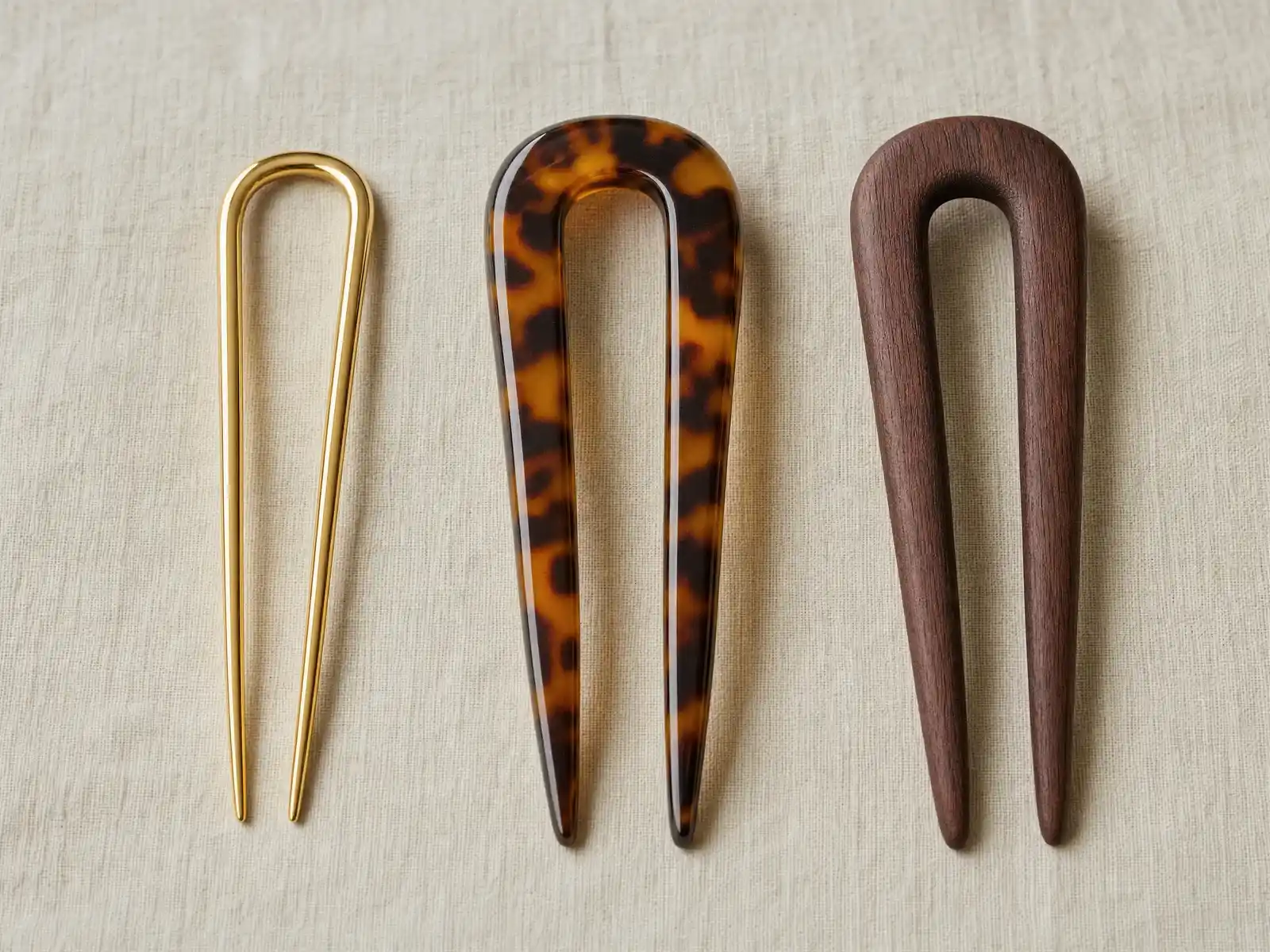
- What a french hair pin is made of: alloy, acetate and wood
- Thickness at equal strength: the metal french hair pin wins
- Weight: acetate and a wood french hair pin win the long day
- Surface friction: matte wood grips, polished metal slides
- Warmth and comfort against the scalp
- How each material fails: metal bends, acetate and wood snap
- Price and looks
- Which french hair pin material should you buy?
- The honest answer: most daily wearers own more than one
Short answer: buy a metal french hair pin if your hair is fine or slippery and you need the slimmest prong that will not bend. Buy acetate for all-day wear or while you are still learning. Buy wood if your hair is heavy and slides out of everything else. No material wins outright.
Best Claw Clips is reader-supported. When you buy through links on our site, we may earn an affiliate commission at no extra cost to you.
Most french hair pins are sold on colour: gold, tortoiseshell, rosewood. But material is not a finish. It sets how thin the prongs can be, how much weight hangs off your head at 5pm, how much the surface grips, and what you are left holding the day you sit on it. Six axes, six separate winners.
What a french hair pin is made of: alloy, acetate and wood
Three materials cover almost everything sold as a French hair pin.
Metal is nearly always a zinc alloy rather than steel or brass. Kitsch describes its single gold pin as zinc alloy with a smooth anti-rust finish; hisial lists its six-pack as a durable alloy with a smooth electroplated surface. Seller descriptions, not measurements, but alloy under electroplate is standard at this price.
Cellulose acetate is the one people get wrong, because it looks like plastic and gets called plastic. It is a plastic. It is not a petroleum one. Coucou Suzette, which manufactures acetate accessories, puts it plainly: acetate belongs to the plastics family, but is made from wood or cotton, not petroleum like its other cousins. Tegen Accessories, a UK retailer, adds that acetate is not poured into a mould for mass production but cut from sheet, shaped and polished. What that difference means for your hair is covered in acetate vs plastic claw clips.
Wood is the outlier, the only one not made to a spec. Psiriol's two-pack is one rosewood pin and one green sandalwood pin at a listed 4.9 inches.
Thickness at equal strength: the metal french hair pin wins
This is the axis metal owns, and it is a stiffness argument, not a strength one.
A prong has to do one thing: not bend while it levers your hair down into the twist. Alloy is far stiffer than a cellulose sheet or a sanded length of rosewood, so a metal prong can be slimmer and still hold its line — and a slimmer prong reaches into the tighter, smaller twist that fine or shoulder-length hair produces, where a thicker acetate prong cannot find room. JUNYI, a hair-accessory manufacturer, makes the same point at material level: metal provides strong hold in slim formats such as bobby pins and U-pins, while plastic is lighter and easier to mould into complex shapes.
Read it off the listings. hisial's alloy pins are 3.9 inches, HYFEEL's acetate forks 4.3 inches, Psiriol's wooden pins 4.9 inches. The softer the material here, the more length the seller adds to cover the bulk it needs to stay rigid.
If your hair is fine or your twist is small, this axis decides it alone — see our best french hair pins for fine hair round-up.
Verdict on thickness: metal, and it is not close.
Weight: acetate and a wood french hair pin win the long day
A pin rarely falls out because it was too weak. It falls out because gravity has had nine hours to work on it, and every gram levers itself out of the twist while you nod, walk and lean back.
This is where the metal advantage reverses. JUNYI has plastic as the lighter option and metal as the strong one in slim formats: alloy buys thinness with mass, acetate and wood buy lightness with bulk. Acetate is the lightest of the three in our experience, and the pin we reach for on a day that starts at 7am and ends at a dinner. JUNYI also notes that wood distributes pressure more evenly in wider accessories such as hair forks and bun pins, which is why a broad wooden fork carries more hair than its weight suggests.
Heavy hair compounds this, since the pin fights the hair's weight as well as its own. Sizes and pin counts for that case are in best french hair pins for thick hair.
Verdict on weight: acetate first, wood second. Metal is the one you notice by mid-afternoon.
Surface friction: matte wood grips, polished metal slides
A French pin holds by geometry: the half-turn wraps hair around the near prong. Friction is what stops that geometry unwinding.
- Polished metal is the slickest of the three. hisial markets its smooth electroplated surface as a feature, and it is one: a slick prong goes in without snagging and comes out without tearing. It also comes out on its own.
- Acetate sits in the middle. Tegen Accessories says acetate is polished until it is exceptionally smooth so it will not catch on or break your hair. Good for your cuticle, moderate for grip.
- Matte wood grips hardest. Nothing about a sanded, unlacquered prong wants to slide. JUNYI's caution is the flip side: poorly sanded teeth, rough edges or unsealed grain can catch on hair, so finish quality matters more with wood. Curl Centric recommends wooden hair sticks on the grounds that they are natural and cause little to no damage.
Verdict on friction: wood, then acetate, then metal. If your complaint is slipping, start here rather than buying a longer pin.
Warmth and comfort against the scalp
Metal conducts heat quickly and the other two do not, which is why a metal pin feels cold going in on a February morning while acetate and wood reach skin temperature almost at once.
The second difference is edge quality: a plated metal edge lies against your scalp for hours and is harder, less forgiving, than a polished acetate one. Fine hair notices first.
No material buys you out of tension, though. The American Academy of Dermatology lists tightly pulled buns, ponytails and up-dos among the hairstyles that pull hard enough to cause hair loss, and names pain, stinging, crusts and tenting as signs a style is too tight. Its advice is blunt: if your hairstyle feels painful, the style is too tight, and you should switch up your hairstyle regularly so your hair can recover. A wooden pin twisted brutally tight is worse for you than a metal pin worn sensibly.
Verdict on warmth and comfort: acetate and wood, with acetate slightly ahead on edge finish.
How each material fails: metal bends, acetate and wood snap
This is the axis nobody weighs before buying and everybody weighs afterwards.
Metal fails gradually and recoverably. An alloy pin springs out of true at the curve of the U, usually after being sat on or crushed in a bag, and the prongs stop meeting. hisial says its pins are not easy to deform, a seller claim rather than a test result. What matters is what happens next: a bent alloy pin can usually be squeezed back into shape and used again.
Acetate and wood are more likely to fail suddenly. Neither has much give, so when one lets go it breaks rather than bends, usually at the bend of the U. Tegen Accessories disputes that for acetate, arguing its flexibility means it does not go brittle or snap. HYFEEL says its thicker acetate pin does not break easily and Psiriol says its wood will not break or warp, both sellers addressing exactly the failure we would worry about.
Care changes the odds. A-Hjort, which sells acetate accessories, advises against leaving them in a hot car, in direct sun or close to heaters, and keeping them away from perfume, hairspray and strong detergents. JUNYI warns that unsealed wood may absorb moisture, and that repeated exposure to water can cause swelling, cracking or surface roughness, so a wooden pin is a poor choice straight out of the shower.
Verdict on failure: metal. A failure you can bend back beats a failure you sweep up.
Price and looks
The spread is narrower than the materials suggest. The two wooden Psiriol pins are the cheapest option outright, the six hisial alloy pins are 7.99 dollars with a storage box, as of September 2026, and the acetate three-pack is the most expensive of the four. Per pin, metal in a multipack is the cheapest way in; a single premium metal pin is the dearest.
Looks split just as cleanly. Metal reads as jewellery, and it is the only one that finishes convincingly in gold or silver. Acetate carries pattern in a way the others cannot: Tegen notes the patterns are created inside each sheet of cellulose acetate rather than painted on afterwards, so the design will not flake off, scratch or fade. Wood reads matte and natural.
Once a pin carries pearls, crystals or a carved finial, the base material stops being the main variable. That is a separate decision, handled in decorative french hair pins for weddings.
Verdict on price and looks: split. Wood is cheapest, metal is cheapest per pin and dressiest plain, acetate gives the most pattern for the money.
Which french hair pin material should you buy?
Buy metal if your hair is fine or slippery and your twist is small. The slim prong is what you are paying for. The single Kitsch pin is 9.93 dollars, down from a list price of 13.99 dollars, as of September 2026, and Kitsch describes it as zinc alloy with a smooth anti-rust finish that glides through hair without snagging.
Buy acetate if you wear a pin all day, or you are learning. It is the lightest, the warmest against the scalp and the most forgiving of a clumsy first attempt. The HYFEEL three-pack is 12.99 dollars as of September 2026; HYFEEL lists them at 4.3 inches in cellulose acetate and markets them as a comfortable light hold that does not damage hair.
Buy wood if your hair is heavy, or nothing else stays put. Matte grip is the only real answer to a pin that keeps travelling. The Psiriol two-pack is 6.79 dollars as of September 2026 buys one rosewood and one green sandalwood pin at a listed 4.9 inches, marketed for thick, curly or long hair. Keep it away from wet hair.
The honest answer: most daily wearers own more than one
We would like to hand you a single winner. The materials will not allow it: the pin that gets into the tightest twist is also the heaviest and the slipperiest, and the pin that grips best is the one you should not use on damp hair.
So people who wear these daily stop choosing. They keep metal for freshly washed, slippery hair and a small twist, acetate for the fourteen-hour days, and wood for when the hair is heavy or air-dried and nothing else holds. Between them that is roughly the price of one mid-range claw clip. If you are still deciding which shape and length to put that money into, our guide to the types of french hair pins explained covers the formats before the materials.
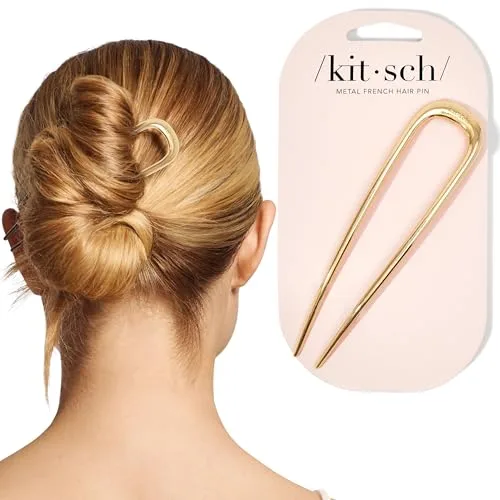
Kitsch French Hair Pin (Gold)
Zinc alloy, one pin. The thin-and-strong end of the trade-off: metal gets into a tight twist that a thicker acetate pin cannot reach.
We tested dozens of claw clips to find the very best options. Below you'll find our complete ranking, with detailed reviews and real customer feedback for each pick.
The Complete Ranking
Zinc alloy, one pin. The thin-and-strong end of the trade-off: metal gets into a tight twist that a thicker acetate pin cannot reach.
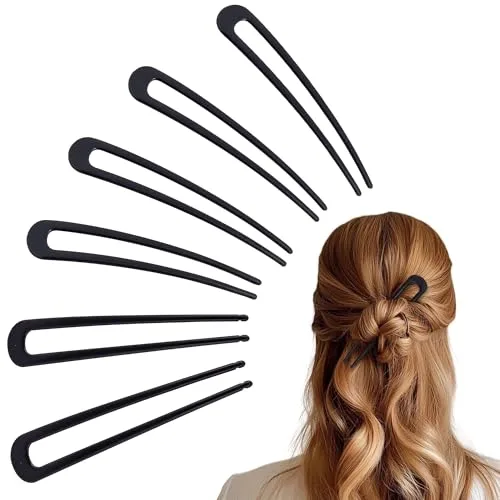
Six alloy pins at 3.9 inches with a storage box. The cheapest way to see whether metal suits your hair before buying a single premium pin.
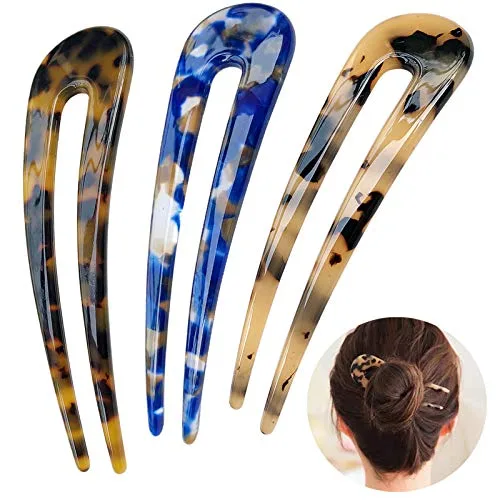
Cellulose acetate at 4.3 inches. Thicker and lighter than metal, warmer against the scalp, and the material most people find more forgiving to learn on.
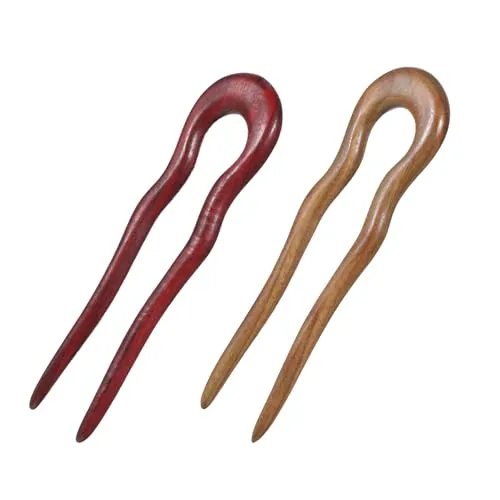
Rosewood and green sandalwood at 4.9 inches. The longest and grippiest of the three materials, with a matte surface that does not slide the way a polished pin can.
Quick Comparison
A side-by-side look at our top picks
Frequently Asked Questions
Is cellulose acetate just plastic with a nicer name?
Which material holds fine, slippery hair best?
What actually happens when a French hair pin breaks?

Donna Miller
Enjoyed This Guide?
Get more hair tips and product recommendations delivered weekly.