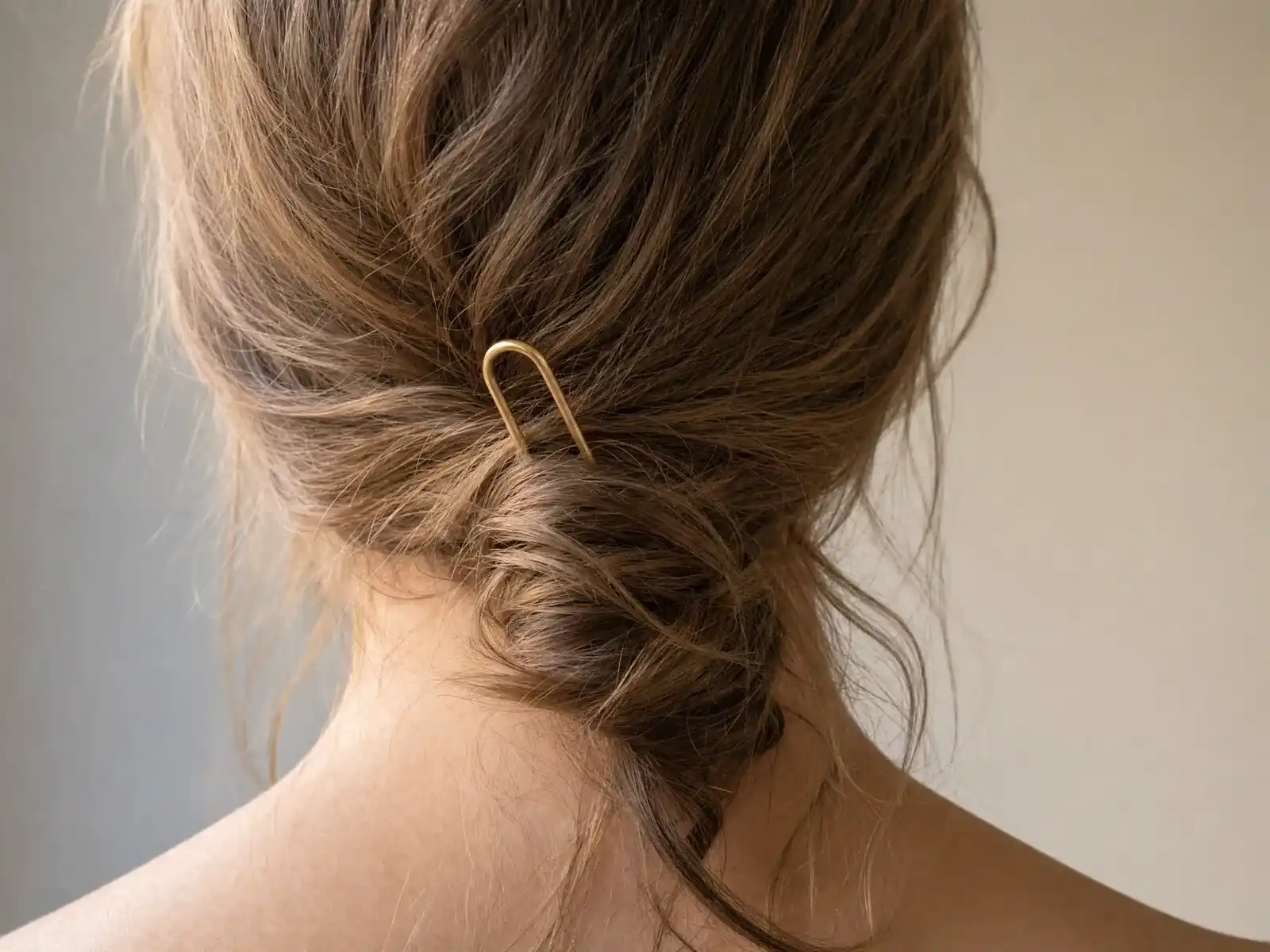
- Why a French hair pin slips out, mechanically
- Fix 1: Rotate the pin instead of pushing it straight in
- Fix 2: Twist tighter before the pin goes anywhere near it
- Fix 3: Take a smaller bite of hair on the scoop
- Fix 4: Insert up and under, not down and in
- Fix 5: Push the pin flat against your head to finish
- Fix 6: Size up, because a short pin cannot span a big bun
- Fix 7: Give clean, slippery hair something to grip
- Fix 8: Match the pin's curve to the back of your head
- When it is the pin, not you
- The bottom line: how to keep a French hair pin in place
Short answer: a French hair pin slips out because it was pushed straight in like a bobby pin instead of rotated. The pin holds by wrapping hair around one prong and levering the other under the twist. Skip that half-turn, or twist too loosely for the prongs to bite into, and nothing is locking anything.
Best Claw Clips is reader-supported. When you buy through links on our site, we may earn an affiliate commission at no extra cost to you.
If your French hair pin keeps falling out, the diagnosis is nearly always the same, and it is not the pin. Below are eight fixes in the order we would actually try them, cheapest and most likely first — seven cost nothing. If the tool is new to you, read the basics of french hair pins first, then come back when it still will not hold.
Why a French hair pin slips out, mechanically
A bobby pin clamps: two flat legs squeeze a section of hair between them. A French pin cannot. It is an open U, so there is nothing to squeeze with.
What holds it up is leverage against the hair underneath it. As you rotate the pin inside a twist, hair wraps around the near prong while the far prong levers down through the bun. The pin ends up trapped, because the straight path it entered by no longer exists.
Every fix below answers one test: does it make the pin's path less straight, or give the prongs something denser to lever against?
Fix 1: Rotate the pin instead of pushing it straight in
Why it happens: a pin that goes in and comes out along one axis is held only by friction on two smooth prongs, and friction alone soon loses to gravity.
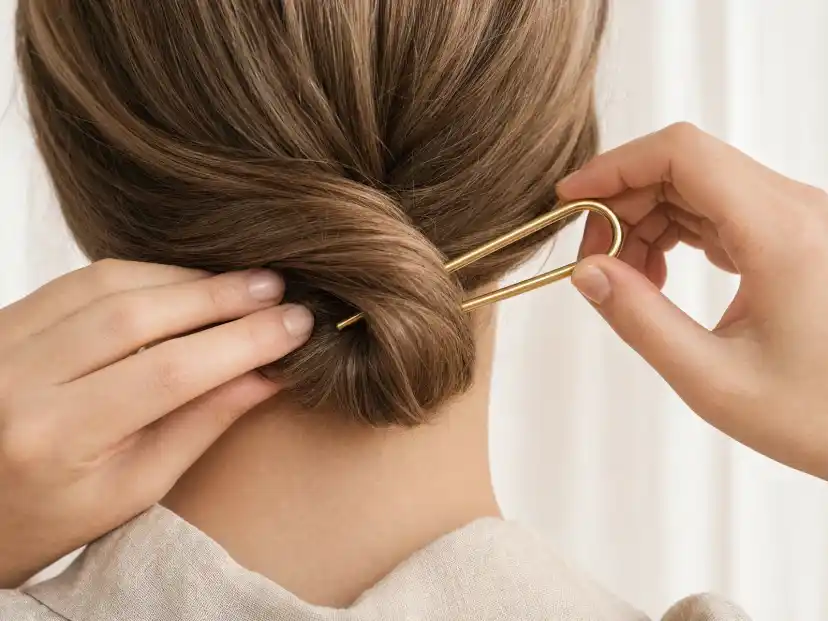
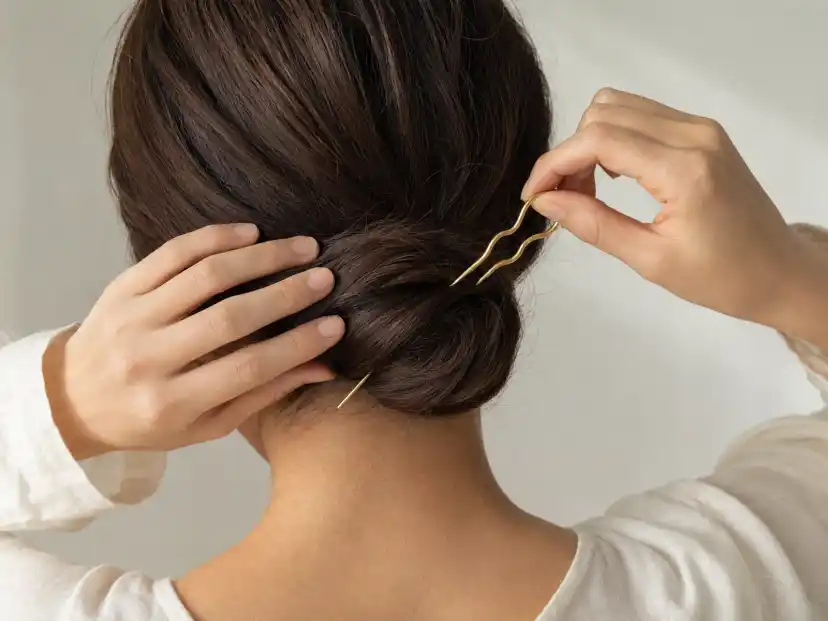
Do this: slide one prong into the outer surface of the twist and, once most of it is buried, rotate the pin roughly a half-turn before you push it home. Van Hong, the stylist and Mint Tools cofounder quoted by Glamour South Africa, describes scooping the pin closer to the scalp, rotating it 180 degrees or until you feel resistance, then pushing it back into the twist; Glamour is blunt that sticking the pin in without that rotation will cause it to fall. Teleties sums the motion up as stab, hook and flip.
If that is unfamiliar, how to use a french hair pin walks through it step by step. In our experience it fixes more slipping than the other seven combined.
Fix 2: Twist tighter before the pin goes anywhere near it
Why it happens: the prongs do not grip hair so much as structure, and a loose bundle has none, so the pin slides down the strands. Aviva Jansen Perea, writing for Day Rate Beauty, puts it plainly: a pin can only do so much if the style underneath it is not structured.
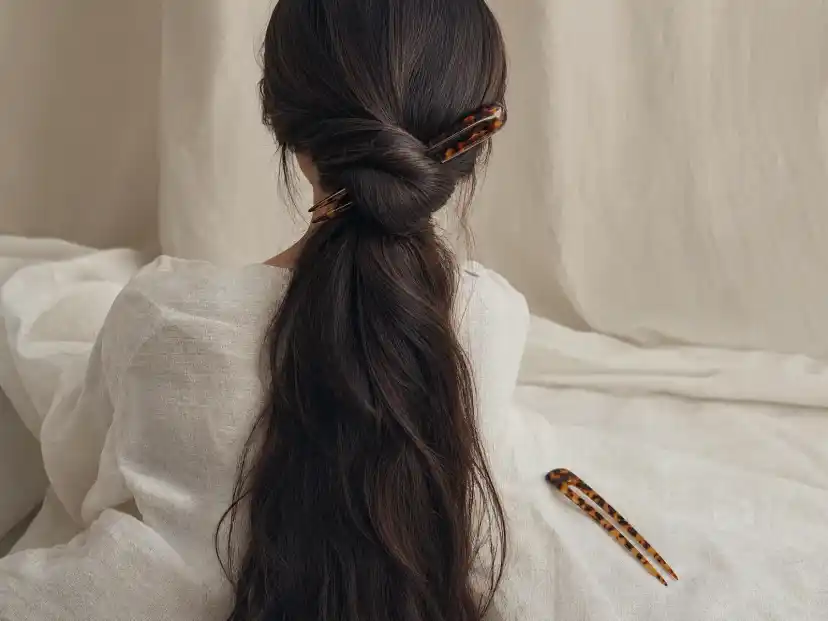
Do this: twist the length until the rope turns in on itself against your head, then coil it. It should feel like something you could tug on. Teleties gives the same fix for slippage — create extra tension by twisting more firmly, because the pin relies on tension to grip.
Tighter is not the same as painful. The American Academy of Dermatology says that if your hairstyle feels painful, it is too tight, and lists pain from tightly pulled hair, stinging, crusts and scalp tenting as reasons to change a style immediately. The tension belongs in the twist, not at your hairline.
Fix 3: Take a smaller bite of hair on the scoop
Why it happens: a prong loaded with a thick fistful cannot complete its rotation, and a pin that cannot rotate cannot lock. Nearly everyone overloads it at first.
Do this: on the scoop, pick up a thin section from the underside of the twist, close to the scalp. Teleties advises exactly that — position the pin close to the scalp and catch a small section of hair underneath — and calls that anchoring the thing that prevents slipping. Take half of what you took last time.
A correct half-turn tightens progressively. If it jams, back the pin out and take less.
Fix 4: Insert up and under, not down and in
Why it happens: aimed downward into the body of the bun, the prongs travel through loose hair and emerge at the bottom having crossed nothing. Gravity does the rest.
Do this: send the pin in shallow, run it under the twist, and bring the tips out through the far side so the prongs cross the coil rather than run alongside it. Perea makes the same point for Day Rate Beauty: a hairpin is not meant to be pushed straight through hair like a needle, it should weave, and the anchor point it must reach is the base of the style, near the scalp.
Fix 5: Push the pin flat against your head to finish
Why it happens: a pin left standing proud of the head is a lever, with your hair as the fulcrum and every head movement as the input.
Do this: after the rotation, follow the curve of your skull so the prongs travel parallel to it, and finish with the pin lying flat. Van Hong's instruction via Glamour South Africa is to hold the pin almost flat against your head as you slide it in; Teleties describes the final move as flipping the pin inward toward your scalp to lock the twist securely in place.
Fix 6: Size up, because a short pin cannot span a big bun
Why it happens: the prongs have to cross the whole coil to trap anything. Stop halfway and the pin is merely resting in hair. Perea's list of reasons a hairpin falls out ends on exactly this: a pin too short for a dense or heavy bun will never reach the anchor point.
Do this: match length to volume rather than to taste. TEMUR, the celebrity hairstylist quoted by PureWow, recommends small pins of one to two inches for short hair and larger three- to four-inch pins for long, thick or curlier strands. Van Hong told Glamour South Africa that the classic French pin suits fine to medium textures especially well, and that thicker hair may require two pins.
Two pins crossing at a slight angle are worth trying before you buy anything longer.
Fix 7: Give clean, slippery hair something to grip
Why it happens: friction is half the mechanism, and fresh conditioner strips most of it away. This is why the pin that held all day on Thursday is on the floor by Friday lunchtime.
Do this: style on day-two hair where you can, and build grip where you cannot. TEMUR's advice via PureWow is that those with finer hair apply texture or hairspray to build grip and prevent the pin slipping out. Teleties suggests teasing, texturising spray or powder alongside tighter twists and smaller sections, and Carmen Rodriguez, writing for Olivia Paisley, recommends a light mist of dry shampoo or sea salt spray on straight hair.
If that cause sounds familiar, it should: why your claw clip keeps falling out reaches the same diagnosis for a different accessory. Curly and textured hair is the easy case — Teleties notes that natural texture holds the pin well, so smoothing it out works against you.
Fix 8: Match the pin's curve to the back of your head
Why it happens: a head is round and most pins are not. A pin sitting on a tangent touches only at the prong tips, leaving its middle as a handle for your hair to push against. This is the French hair pin that will not stay in however well you twist.
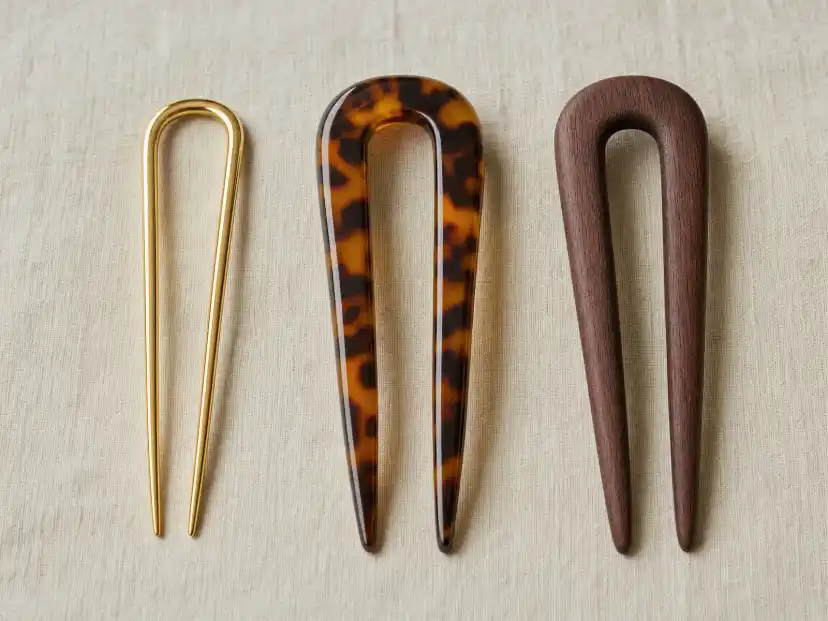
Do this: check the orientation first, because that is free. Van Hong's guidance via Glamour South Africa is that if the pin is curved, position it so that it curves upward or away from your head, not toward it. Then look at the pin itself. Material changes how it behaves against the skull — Carmen Rodriguez notes for Olivia Paisley that metal pins offer durability and a sleek finish, while plastic and cellulose acetate are lightweight and gentle on sensitive scalps — which we weigh up in metal and acetate french hair pins.
When it is the pin, not you
Seven of the eight fixes above are free and resolve most cases we see. Hardware is still a real variable, though, and three failures point at the pin rather than the hand. One caveat before you spend: no pin is slip-proof — all three will slide out of loose, freshly washed hair — so match the tool to the failure you are having.
If it slides down and out of a heavy bun, go longer. The Tiefebene Prestige four-pack is the longest option we list, at a stated 4.33 inches in cellulose acetate, for 9.99 dollars as of September 2026. Tiefebene describes an inner dual-tooth structure that, in the seller's words, locks hair firmly in place, preventing loose strands or slippage, and markets the set for thick hair. That is the listing's claim, not a measurement of ours.
If it will not sit flat, go shorter and curved. Twoheadpig's curved acetate pins come four to a pack at a listed 3.2 by 1.1 by 0.2 inches, also 9.99 dollars as of September 2026. The seller describes a serrated anti-slip design and a curved angle for a better head fit, and pitches them at fine hair. On a smaller twist, a short pin that follows the skull will out-hold a long one that bridges it.
If a bulky pin cannot get deep enough, try metal. The Kitsch French Hair Pin is a single zinc alloy pin at 9.93 dollars as of September 2026. Kitsch says it glides through hair without snagging, with ergonomic curves said to distribute tension evenly. The listing publishes no length, so we would buy it to solve a bulk problem, not a length one.
The bottom line: how to keep a French hair pin in place
Rank the causes by what they cost you. Rotate the pin, twist tighter, take less hair on the scoop, travel under the coil rather than through it, finish flat. Those five are free, and between them they account for nearly every French pin we have watched fall out. Only once all five are in place is length, grip or curve worth changing.
Then practise on a day you are going nowhere. The lock is a feeling more than a technique, and most people recognise it after a few attempts. For sizes, materials and which pin suits which hair, our complete french hair pin guide has the full picture.
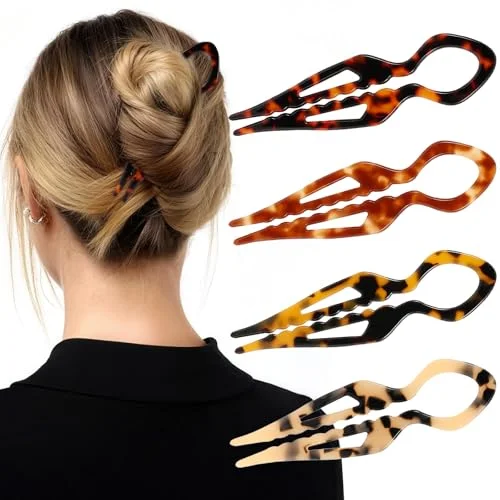
Tiefebene Prestige French Hair Pins, 4.33 in (4 Pack)
The longest pin here at 4.33 inches, and the one whose seller specifically claims an inner tooth structure aimed at slippage.
We tested dozens of claw clips to find the very best options. Below you'll find our complete ranking, with detailed reviews and real customer feedback for each pick.
The Complete Ranking
The longest pin here at 4.33 inches, and the one whose seller specifically claims an inner tooth structure aimed at slippage. Length is the single biggest lever when a pin will not hold.
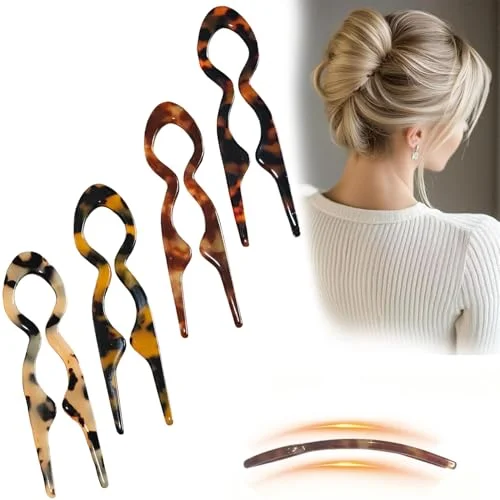
A short 3.2-inch pin with a curved body. When the problem is a pin levering away from the back of the head rather than sliding down, curvature matters more than length.
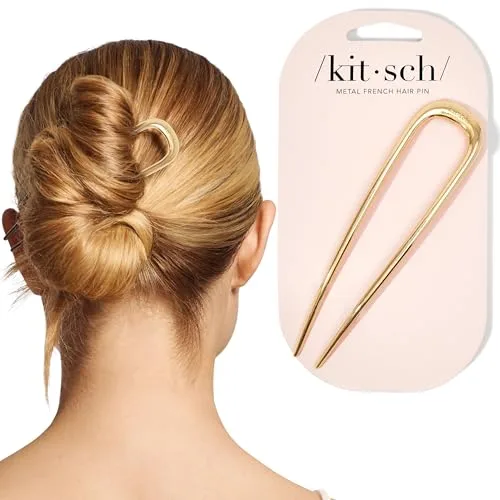
A single alloy pin. Metal is thinner than acetate at the same strength, so it slips into a tighter twist — useful when a bulky acetate pin cannot get deep enough to catch.
Quick Comparison
A side-by-side look at our top picks
Frequently Asked Questions
It holds for ten minutes, then slides out. Why?
Does a longer French pin always hold better?
Why does it only slip out on freshly washed hair?

Donna Miller
Enjoyed This Guide?
Get more hair tips and product recommendations delivered weekly.