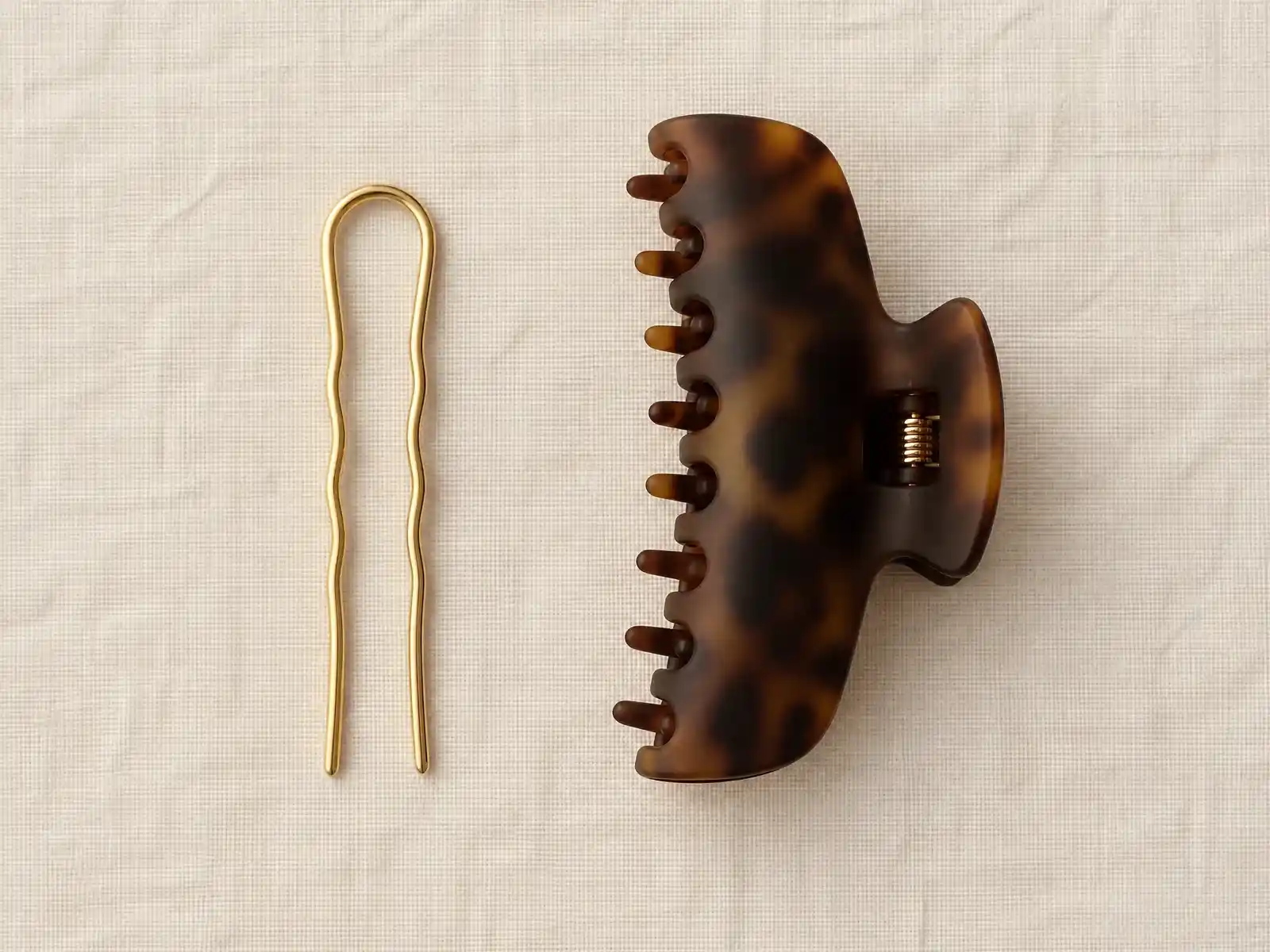
- Hair fork vs claw clip: how each one actually holds
- Speed and the learning curve: the claw clip wins outright
- Creasing and hair health: the French pin wins
- Weight and all-day comfort: the pin disappears, the claw does not
- Hair volume and length: where french pin or claw clip flips
- French hair pin versus claw clip: the five-axis scorecard
- French hair pin vs claw clip: which should you buy?
- The honest conclusion: most people should own both
Short answer: in a French hair pin vs claw clip contest there is no single winner, because the two fail for opposite reasons. The claw clip clamps from the outside and wins on speed and forgiveness. The French pin locks from inside the twist and wins on all-day security, comfort and a crease-free finish. Pick by task, not by loyalty.
Best Claw Clips is reader-supported. When you buy through links on our site, we may earn an affiliate commission at no extra cost to you.
The comparison usually gets flattened into a vibe check: the claw is casual, the pin is polished. That is no help at 3pm, when the clip is creeping down the back of your head on a train. Once you know what a french hair pin is at a mechanical level, the question stops being a matter of taste. These are two different machines. There are five axes where one of them clearly beats the other, and working out which axis you care about today is the entire decision.
Hair fork vs claw clip: how each one actually holds
A claw clip is a spring clamp. Two toothed jaws, a metal spring, a hinge. The teeth bite the outside of the hair mass, the spring supplies the pressure, and the bulk of your hair stops the clip sliding down. TOCESS lists the construction of its 4.33-inch jumbo clips as a matte rubber coating over a metal spring, and says the coating grips without snagging. That is the whole mechanism, which is why a claw clip behaves the same on your first attempt as on your hundredth.
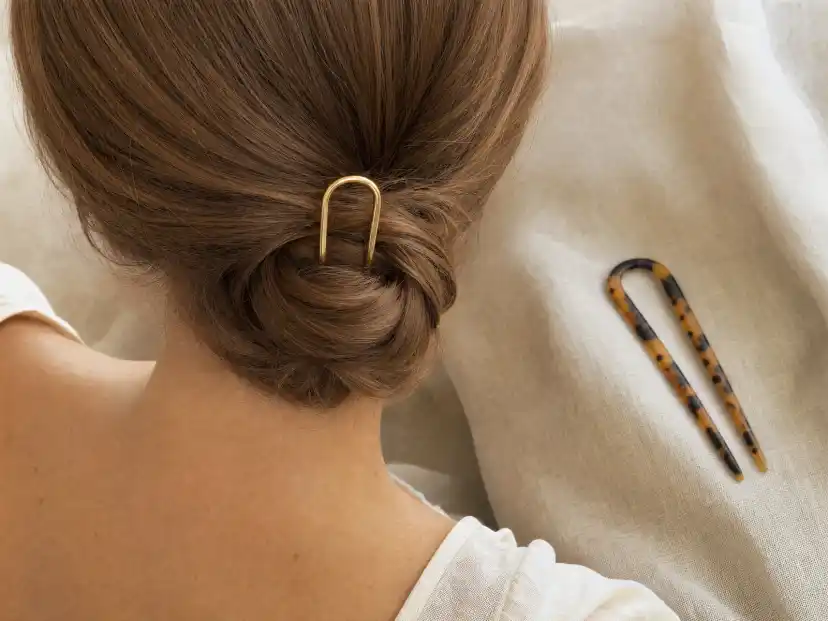
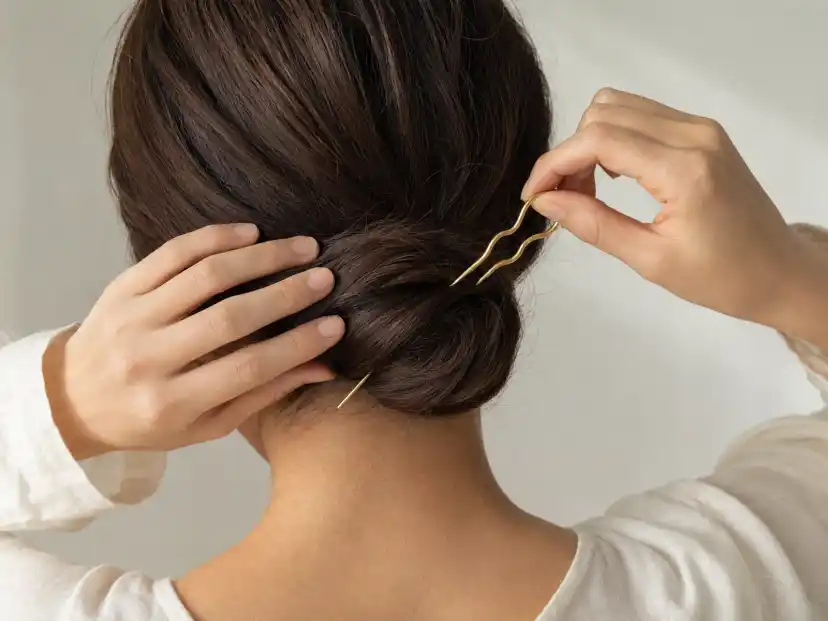
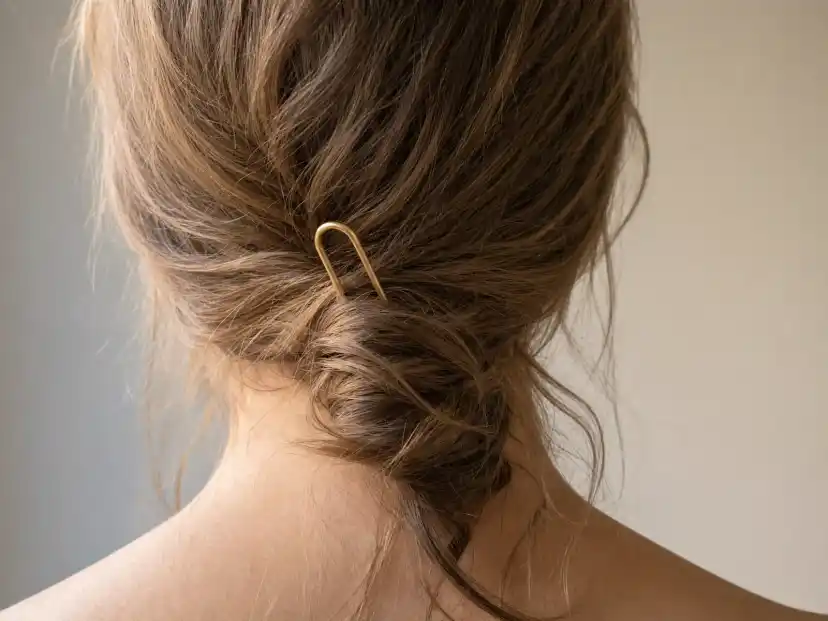
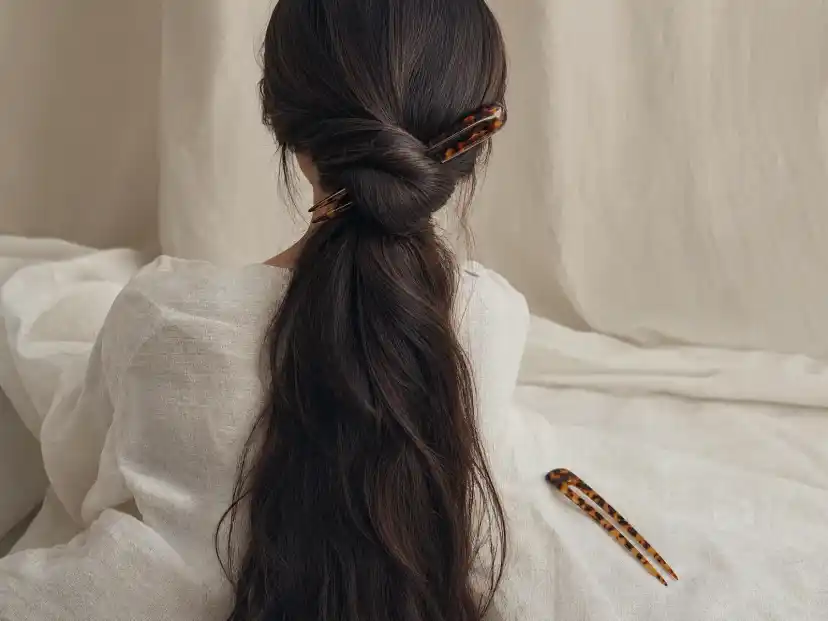
A French pin, also sold as a hair fork, has no spring, no hinge and nothing to press against. Aviva Jansen Perea, who describes twenty years of doing hair professionally and writes for Day Rate Beauty, a company that sells hairpins, puts the difference in one line: a hairpin "holds from within the style rather than clamping around it from the outside." You twist the hair, slide one prong in at a shallow angle, rotate the pin roughly half a turn, then push it home. The rotation wraps hair around the near prong and levers the far prong down through the bun, so the straight path the pin came in by no longer exists. It is trapped by geometry, not squeezed.
That one difference drives everything below. A clamp applies force at a single place, from outside, whether or not the hair underneath is arranged. A pin applies force along two prongs, from inside, and only if the hair underneath is arranged. If the clamp side of the family is the newer one to you, our ultimate guide to claw clips covers sizes, teeth and spring strength before you weigh them against anything else.
Verdict on mechanism: a draw. Neither design is better in the abstract; the four axes below are where it gets decided.
Speed and the learning curve: the claw clip wins outright
This one is not close, and pretending otherwise would be dishonest.
JunYi Beauty, a hair-accessory manufacturer that publishes its own version of this comparison, times a claw clip bun at ten to fifteen seconds and a correctly inserted French pin style at two to five minutes. It says a claw clip "produces consistent results from the first attempt", while a French pin typically takes five to ten uses before the technique becomes reliable. Those figures come from a company that sells both formats, so treat them as a manufacturer's estimate rather than a measurement, though they match what we see when we put each accessory in a beginner's hand.
The claw clip has no failure mode you can be bad at. Gather, twist, clamp. The pin has exactly one, and it is the half-turn. Skip the rotation and the pin is on the floor within a minute, which is why most people who say they cannot get on with French pins have simply never been shown the wrist movement. It is ten minutes of practice, once. If you want those ten minutes now, how to use a french hair pin walks through the insert, scoop and rotate in order.
Verdict on speed: claw clip. For the school run, the gym bag and the twenty seconds between a video call and the front door, nothing beats a clamp you cannot use wrongly.
Creasing and hair health: the French pin wins
Everything a claw clip does well comes from concentrating force in one spot, and that is also the bill. Perea's description is precise: a claw clip "grips the hair at one concentrated point from the outside, which can create a crease or dent where the teeth press in, particularly on finer or more fragile hair." A French pin has no jaws to press with, so there is nothing to imprint.
Two situations widen the gap.
- Damp hair. Cleveland Clinic dermatologist Shilpi Khetarpal, MD, says "hair can be more fragile when it's wet, meaning it's more prone to snapping, stretching or breaking." A crease pressed into hair that then dries under the clip is the one you cannot brush out, and in our experience that is the dent people blame on the clip's brand.
- The same spot, every day. Any accessory parked in one position for hours leaves some impression. Moving the anchor point between wears costs nothing and does more than any material upgrade.
Neither format is exempt from tension. The American Academy of Dermatology lists tightly pulled buns, ponytails and up-dos among the styles that pull hard enough to cause traction alopecia, and names pain from tightly pulled hair, stinging on the scalp, crusts and tenting as signs a style is too tight. Its advice is to switch up your hairstyle regularly so your hair can recover. A French pin twisted brutally tight is worse for your scalp than a claw clip worn loose, so the pin's advantage here is real but conditional.
Verdict on creasing and hair health: French pin, with the caveat that the pin punishes over-tightening more than the claw does.
Weight and all-day comfort: the pin disappears, the claw does not
A claw clip stands proud of the head, and that has consequences past hour four. TELETIES, in its own guide to choosing between flat, claw and snap clips, points out that claw clips "tend to get placed higher so they don't work with head gear", and that if you want to rest your head back you "have to take the claw hair clip out and find somewhere to store it while you rest your head". A French pin lies flat along the skull once it is pushed home, so headrests, aeroplane seats, helmets and sofa cushions all stay available to you.
There is a pressure argument too. Teva's Life Effects site notes that, like a tight hairstyle, restrictive headwear may cause an external compression headache. A clip is not headwear, but it is a spring holding a load against your scalp all day, and the heavier and stiffer that clip is, the more it behaves like one.
Hold also decays differently. Perea's observation is that "a claw clip that feels secure in the morning can work its way loose by afternoon as the hair settles and the spring compresses slightly from sustained tension." A pin has no spring to relax. Once the half-turn is in, it either held from the start or it did not.
Material matters more than price here. HYFEEL lists its acetate forks at 4.3 inches, and we find a long acetate pin the easier thing to forget about for nine hours: less mass on the back of your head than a plated metal pin or a jumbo clamp.
Verdict on comfort: French pin, and not narrowly.
Hair volume and length: where french pin or claw clip flips
Weight is the axis that surprises people, because it works backwards from intuition. Perea's argument is that "the heavier the hair, the more tension there is in the style, which actually helps the pin stay in place rather than fighting against it", while for a claw clip "the spring can only hold so much weight before the clip starts to slip or snap open." She also notes that most plastic claw clips have a limited lifespan before the spring weakens or the clip snaps entirely. Thick hair is what kills claw clips.
There is a ceiling on the pin side too. JunYi Beauty argues that on very thick hair the outward pressure of a dense section can overcome a single pin's frictional hold over time, and recommends a large claw with a reinforced spring for anyone who wants single-accessory hold on a lot of hair. Our own read sits between the two: on genuinely heavy hair, one pin is under-specified and one jumbo claw is over-loaded, so the reliable answer is two pins, or one pin into a tighter, smaller base.
Length flips the result again. JunYi Beauty rates the French pin poor on hair above chin length, on the grounds that there is not enough length to build a twist for the pin to anchor in. So as hair gets shorter the clamp gets easier while the pin gets harder — we go through where that line actually falls in french hair pins on short hair.
Verdict on volume and length: split. The pin gets better as hair gets heavier. The claw gets better as hair gets shorter.
French hair pin versus claw clip: the five-axis scorecard
- Hold mechanism: draw. Leverage and friction against a spring clamp, each good at what it is for.
- Speed and learning curve: claw clip, decisively. Seconds versus minutes, and no technique to acquire.
- Creasing and hair health: French pin, as long as you do not over-tighten it.
- Weight and all-day comfort: French pin. It lies flat, it has no spring to relax, and headrests still work.
- Volume and length: split. Pin for heavy hair, claw for short hair.
French hair pin vs claw clip: which should you buy?
Buy the claw clip if your problem is time, water or sweat. Wet hair after a shower, a gym session, a school run, a five-second fix before the delivery driver reaches the door. The TOCESS 4.33-inch clips come eight to a pack at 6.99 dollars, down from a list price of 8.49 dollars, as of August 2026. That is the right way to buy claw clips: in quantity, spread across bags and cars, treated as consumable because the spring eventually goes.
Buy the French pin if your problem is the look, the day length or the crease. A polished low chignon, a nine-hour desk day, a wedding, an updo heavy enough to make a clamp let go by lunchtime. The single Kitsch metal pin is 9.93 dollars as of August 2026, and Kitsch describes it as zinc alloy with a smooth anti-rust finish that glides through hair without snagging. A rigid metal pin is the easiest thing to feel the rotation in, which is why we would learn on one.
Buy acetate instead if your hair is fine, bleached or snag-prone, or if you would rather have spares while you learn. The HYFEEL three-pack is 12.99 dollars as of August 2026. HYFEEL lists them at 4.3 inches in cellulose acetate and markets them as a comfortable light hold that does not damage hair, and describes the pin as thick enough not to break easily.
The honest conclusion: most people should own both
A comparison that will not pick a side on any axis is useless. One that picks an overall side is dishonest.
So own both. It is not a loyalty question. The claw clip is your fast, wet, forgiving, throw-it-in-a-bag option. The pin is your polished, flat, all-day, crease-free option, and it is the one that gets better as your hair gets heavier. If the second half of that is the half you are missing, our guide to french hair pins is where to start, and the half-turn is a ten-minute investment that pays out for years.
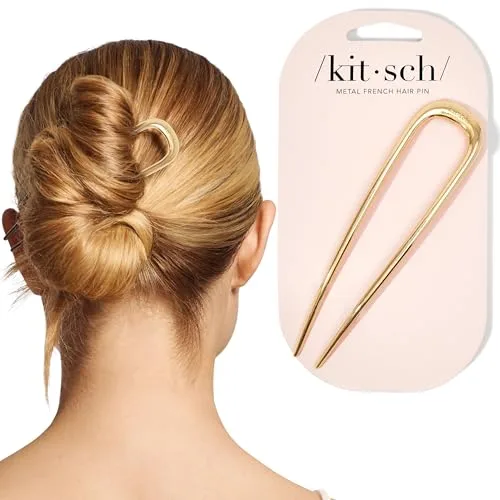
Kitsch French Hair Pin (Gold)
A single alloy pin, and the fairest metal representative of the format: nothing clamps, so the hold comes entirely from the half-turn you put into it..
We tested dozens of claw clips to find the very best options. Below you'll find our complete ranking, with detailed reviews and real customer feedback for each pick.
The Complete Ranking
A single alloy pin, and the fairest metal representative of the format: nothing clamps, so the hold comes entirely from the half-turn you put into it.
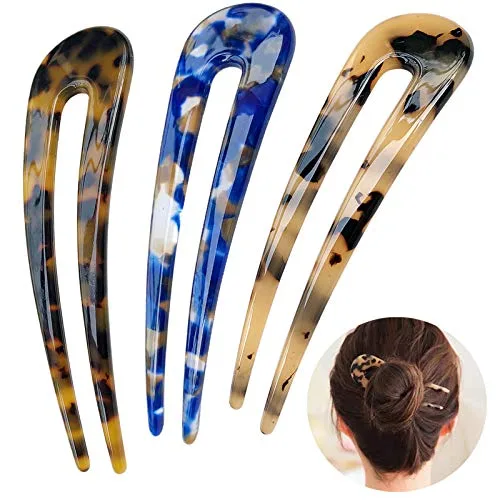
The acetate side of the same format at 4.3 inches. Longer and lighter than the metal pin, and the version most people find easier to learn on.
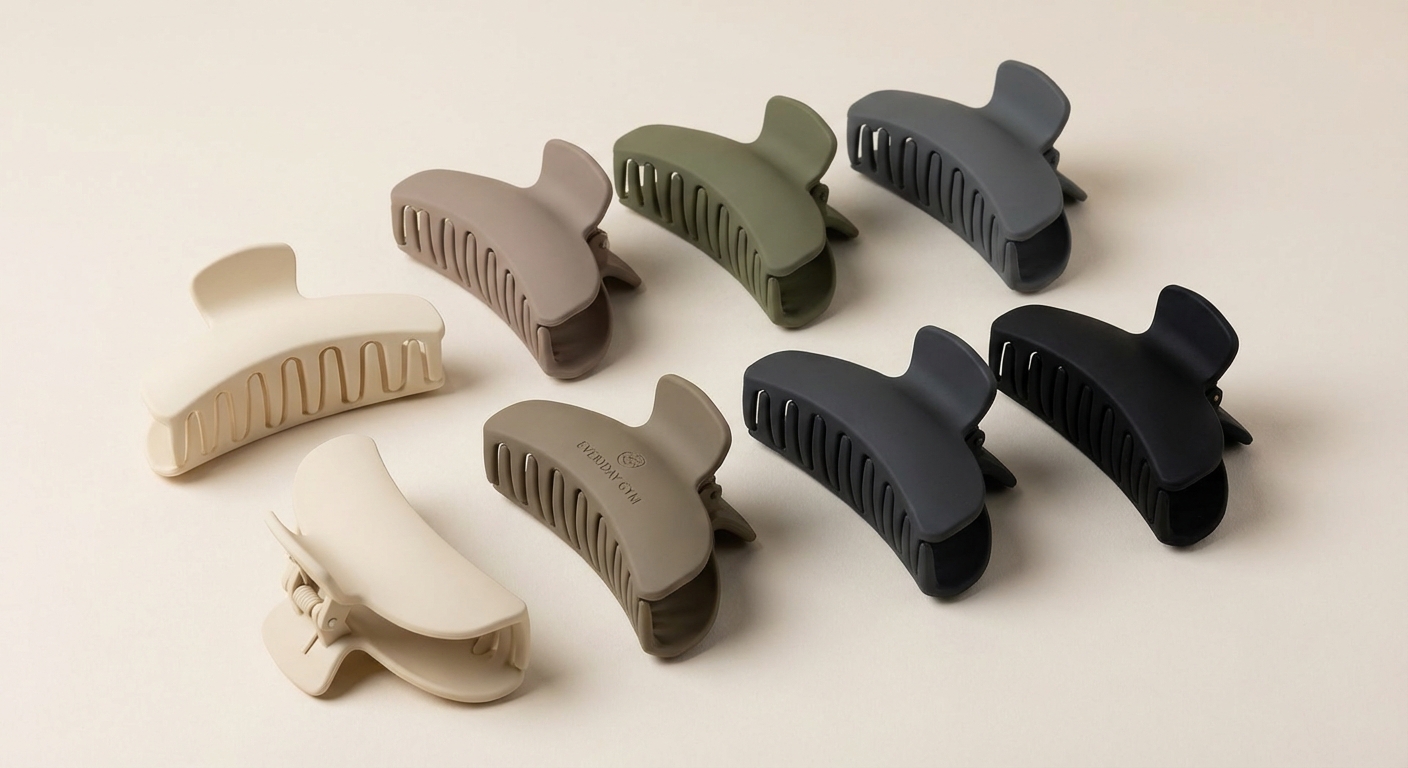
A 4.33-inch jumbo claw as the clamp-side comparison. Matte rubber over a metal spring, and the format that wins on speed and loses on creasing.
Quick Comparison
A side-by-side look at our top picks
Frequently Asked Questions
Which one holds heavy hair for longer?
Why does a claw clip leave a crease when a French pin does not?
Do I actually have to choose one?

Donna Miller
Enjoyed This Guide?
Get more hair tips and product recommendations delivered weekly.