- Why Fine Hair Slides Out of a Standard Clip
- The Grip Features That Actually Work in Sectioning Grip Clips
- HH&LL Matte Anti-Slip Alligator Clips: Best Overall for Grip
- Scunci No-Slip Grip Mini Jaw Clips: Sectioning Clips Small Enough to Fill
- REVLON Double Grip Hair Clips: Comb Teeth Without the Snag
- TRU BARBER Hair Grippers: Best for Damp or Freshly Washed Hair
- FUATY Grip Sectioning Clips: Best for At-Home Colour Work
- Technique: Clip Placement for Fine Hair
- Which Non Slip Sectioning Clips We Would Buy
Fine hair does not slide out of a sectioning clip because the clip is too weak. It slides out because the section is too small to fill the jaw.
We may earn a commission from links on this page, at no cost to you.
The fix for non slip sectioning clips on fine hair runs opposite to instinct: you want a smaller clip with teeth that rake, not a stronger one that clamps. A 4.5-inch salon croc closed on a thin section grips a narrow stripe down the middle and lets everything either side float free, and no amount of spring pressure changes that geometry.
So this guide ranks on three things only: jaw size, tooth design, and surface friction. The five below have at least two of the three, and we say plainly which were built for fine hair and which are general-purpose clips that happen to work. If you want the whole category first - shapes, lengths, materials - our guide to how to choose hair sectioning clips covers it across every hair type.
Why Fine Hair Slides Out of a Standard Clip
A clip holds hair by pressing it between two faces. The spring provides the force, but that force only reaches the hair if the hair is thick enough to hold the jaws apart. Below that threshold the teeth close onto each other, the spring load lands on plastic instead of on your hair, and the section sits in the remaining gap under almost no pressure at all. It is not gripping. It is parked.
This is a volume problem, not a strength problem: what matters is the volume of the closed jaw against the volume of the compressed section. Fine hair loses that comparison twice - narrower strands, and a section that compresses flatter.
Two words worth separating. Carol's Daughter's hair-type guide defines fine and coarse by the diameter of the individual strand - roughly 50 microns against roughly 120 - and notes that "thin" is a different trait, meaning density. The same guide describes fine hair as fragile and prone to breaking, and says updos on longer fine hair can slip because of the smooth texture. You can have a lot of fine hair and still lose it out of a clip.
The instinctive fix makes things worse. If a clip will not hold, the natural response is to clamp harder, take a bigger section, or pull the clip tight against the scalp. All three load the roots instead of the mid-lengths. The American Academy of Dermatology's page on hairstyles and hair loss is blunt about where that leads: pulling styles can cause traction alopecia, the hairline is usually the first place it shows, and the AAD's stated rule of thumb is that "if your hairstyle feels painful, the style is too tight." It advises changing a style straight away if you notice pain, stinging, scalp crusts, or tenting of the scalp.
A sectioning clip worn for twenty minutes during a blow-dry is not a six-week braid, and we are not suggesting otherwise. But it is the same mechanism at a smaller scale, and it is a good argument for choosing clips that hold through friction and tooth geometry rather than spring force. Our broader notes on scalp tension live in the pain-free styling guide.
Fine hair is at its most slippery immediately after washing, which is also when it is least able to take force: a review of hair-fiber cohesion in the Journal of Cosmetic Science describes wet-state failure as generally involving fractures or broken bonds in the fiber's water-loving internal layers, such as the endocuticle, and says wet cuticle loss mainly results from internal rupture of cuticle cells. Clamping wet fine hair hard is the worst-case combination.
Everyday hold is a separate purchase. If what you want is something to wear out of the house, our picks for claw clips sized for fine hair deal with that instead.
The Grip Features That Actually Work in Sectioning Grip Clips
Four features move the needle. Everything else on a package is decoration.
- A smaller jaw. The single biggest factor, and the cheapest. A mini or standard-size clip closes properly on a section that a jumbo croc only pinches. Our claw clip size guide works through the same length-versus-volume maths for everyday clips.
- Interlocking or comb teeth. Interlocking teeth mesh past each other so hair is forced to zigzag rather than slide along a straight channel. Comb teeth go further: they rake into the section as the clip closes, collecting strands the jaw would otherwise miss.
- Surface friction on the jaw face. A bare glossy plastic face has very little grip against a smooth cuticle. Matte coatings, silicone bands and moulded grip dots all raise friction, which is the one variable you can increase without increasing pressure. Coating behaviour is also the practical half of the metal-versus-plastic tradeoff - though stylist guides split on bare metal, some rating it the slipperiest face of all and others preferring metal on fine hair, so treat the coating as the variable you can actually judge.
- A light spring, not a strong one. Heavy springs are sold for thick hair and do nothing useful on a section that cannot resist them - they just concentrate force on a narrow line.
One more thing to check: a flat jaw. Pure Spa Direct's sectioning guide for stylists states that sectioning clips should hold hair securely without creating tension or leaving marks, and fine hair marks easily because there is less fiber to distribute the pressure across. If a visible dent is your main complaint rather than slipping, flat-jaw clips that avoid dents are the more direct answer.
HH&LL Matte Anti-Slip Alligator Clips: Best Overall for Grip
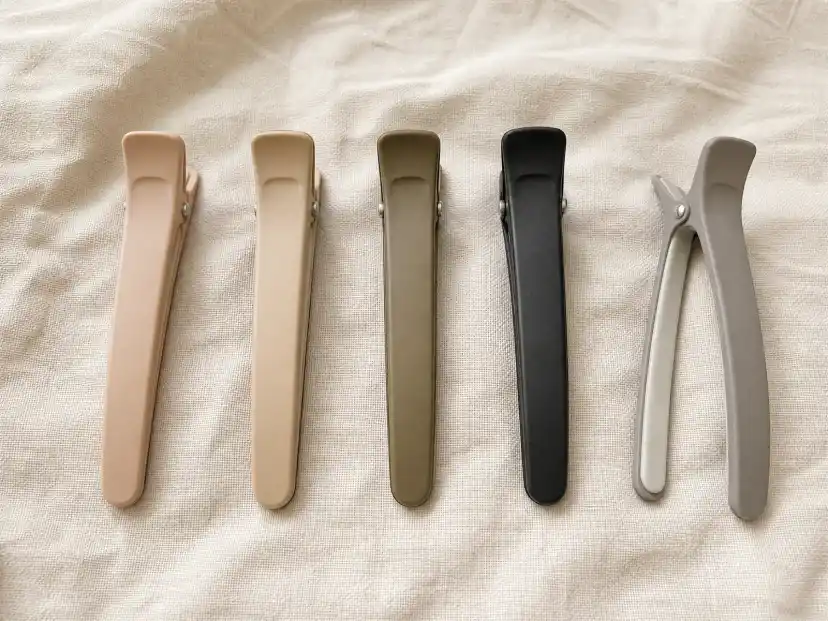
Ten clips for $6.99 as of October 2026, and the reason to buy them is the jaw face. HH&LL describes a matte anti-slip coating added for extra grip, rather than the bare glossy plastic most alligator clips ship with. On freshly washed fine hair that coating is likely doing more work than the teeth are.
HH&LL also states an upgraded dual metal spring design for stronger clamping force, describes the teeth as substantial enough to grip without snagging or pulling, and textures the handles with non-slip points for wet or product-covered hands - a detail that sounds trivial until you have conditioner on your fingers.
The tradeoff: this is not a fine-hair clip. It is marketed for fine, long, thick and curly hair alike, and the stronger dual spring is aimed squarely at the dense end of that range - the opposite of what fine hair wants. You are buying the coating and accepting the spring; take narrower sections than the clip looks capable of and that mismatch should stop mattering. Check the current price on Amazon.
Scunci No-Slip Grip Mini Jaw Clips: Sectioning Clips Small Enough to Fill
Five clips - two black, three tortoise - at $4.50 as of October 2026, down from a $4.87 list price. These are the most genuinely fine-hair-appropriate clips here, and the reason is size. Scunci describes no-slip grip technology for any hair type and fits the clips with interlocking teeth, but the mini jaw is the real feature: a thin section fills it completely instead of rattling around inside a salon-length clip.
Scunci markets them for holding hair while cutting or styling, which is the right use: on short fine hair or a fringe they hold where a full-size clip cannot find purchase.
The tradeoff: a mini clip genuinely cannot hold a large or thick section, and no technique gets around that - these are for fine or short hair and nothing else. Five to a pack is thin provision too: a four-quadrant part plus sub-sections wants eight or more, so plan on two packs.
REVLON Double Grip Hair Clips: Comb Teeth Without the Snag
Six clips for $4.49 as of October 2026, and mechanically this is the most interesting cheap clip in the category. REVLON describes patented double grip clips combining comb teeth, which the maker credits for extra hold, with no-slip grip dots on the jaw face. That is two of our three criteria in one drugstore product: rake plus friction.
The hold comes from two places at once. Comb teeth gather the section as the jaw closes, so the clip arrives already full; grip dots then stop the bundle sliding along the face.
The tradeoff: REVLON markets these for thin or thick hair and describes all-day hold, which is the brand's phrasing rather than a measurement - treat it as a claim, not a spec. They are also a fixed size with a fixed spring, so there is no adjusting for a particularly fine or dense section. At well under a dollar a clip, easy to forgive.
TRU BARBER Hair Grippers: Best for Damp or Freshly Washed Hair
Two grippers for $5.49 as of October 2026, and they are not clips. A gripper is a pad that presses hair flat against the head, which sidesteps the whole jaw-volume problem: there is no spring to overcome, no jaw to fill, and nothing for a thin section to slide out of. For holding a damp fringe off your face while you work underneath, it is the most reliable mechanism here.
TRU BARBER states they are safe on dry or damp hair, describes them as holding large sections without slipping, pinching or pulling, and calls them light and non-snagging.
The tradeoff, and it is a real one: a gripper holds hair down, not up. It cannot lift a section off the head and park it out of your way, which is the core job of a sectioning clip. Buy them as a supplement to clips, not a replacement.
FUATY Grip Sectioning Clips: Best for At-Home Colour Work
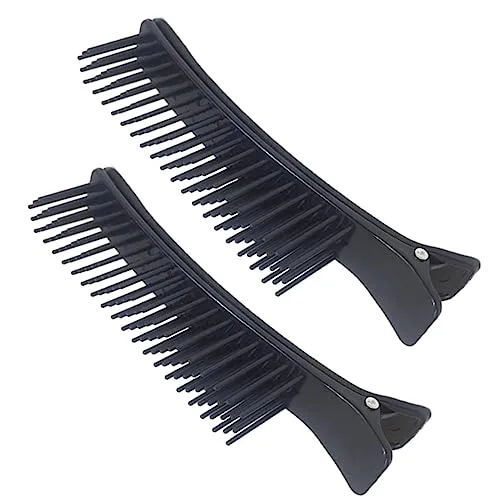
Two clips listed at $8.99 as of October 2026, reduced from $13.99 - that 36 percent discount is time-bound, so check it before you count on it. The design is a sectioning clip with a brush-like comb top half, which rakes through the section as it closes. FUATY describes it as holding hair hands-free without an assistant, and states it can section as much or as little hair while providing non-slip grip.
The reason it lands on a fine-hair list is the comb. For foiling, root touch-ups or extension placement, what you need is a clean parting line that stays put, not a strong clamp - and a clean line is exactly what fine hair makes difficult. FUATY markets them for colouring, foiling and bleaching, and as a comb attachment for a flat iron.
The tradeoff: by far the most expensive option per clip, and only two per pack. This is a specialist tool for colour work. If you are sectioning for a blow-dry, the Revlon six-pack does more for half the money.
Technique: Clip Placement for Fine Hair
Three habits matter more than which of the five you buy.
Twist the section before you clip it. A flat ribbon of hair presents almost no cross-section to a jaw. A half-turn twist converts the same hair into a rounder bundle with genuine volume, and the clip closes on shape rather than on pressure. The highest-leverage change here, and it costs nothing.
Clip at the root, not the mid-length. A section is thickest where it leaves the scalp, so that is where the jaw has most to grip; clipping halfway down a tapered section guarantees the thinnest part ends up between the teeth. Keep the clip resting on the hair rather than pulled snug against the scalp.
Take smaller sections and own more clips. Pure Spa Direct's stylist guide to sectioning describes the standard four-quadrant method - a centre parting from the front hairline over the apex to the nape, then a second parting from ear to ear, with each of the four quadrants secured by a clip - and then sub-dividing further for precision work, including a separate nape section about an inch above the hairline. The same guide notes that nape hair is fine and often fragile and processes differently from crown hair - fine hair is not evenly distributed even on one head.
On fine hair, more sections mean each clip is closing on a bundle that actually fills it. Four jumbo clips will lose; ten small clips will not.
Which Non Slip Sectioning Clips We Would Buy
For most people with fine or slippery hair the HH&LL matte anti-slip clips are the default: ten for under seven dollars as of October 2026, with the coating that matters most on freshly washed hair, accepting a spring aimed at a denser customer. If your hair is very fine or short, the Scunci mini jaw clips are the only genuinely size-appropriate pick here. The Revlon double grip clips are the best mechanism for the money. Add the TRU BARBER grippers only for damp hair, and the FUATY clips only if you colour at home.
What none of them will do is overcome bad placement. Twist first, clip at the root, and take narrower sections than feels necessary - then the cheapest clip on this page holds. For the rest of the category, including sizes, shapes and materials we have not covered here, start with our sectioning clip buying guide.
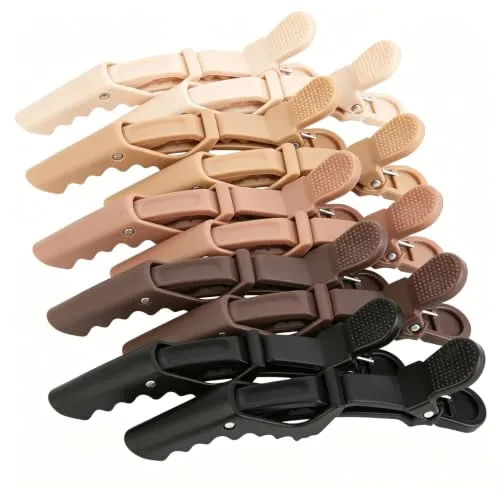
HH&LL Matte Anti-Slip Alligator Sectioning Clips (10 Count)
An alligator clip with a matte anti-slip coating on the jaw rather than a bare plastic face, plus a dual spring. The coating is the part that matters on slippery, freshly washed hair.
“A matte jaw face raises friction against the hair itself, which is the one variable that helps slipp...”
We tested dozens of claw clips to find the very best options. Below you'll find our complete ranking, with detailed reviews and real customer feedback for each pick.
The Complete Ranking
HH&LL Matte Anti-Slip Alligator Sectioning Clips (10 Count)
“A matte jaw face raises friction against the hair itself, wh...” — Verified Buyer
An alligator clip with a matte anti-slip coating on the jaw rather than a bare plastic face, plus a dual spring. The coating is the part that matters on slippery, freshly washed hair.
“A matte jaw face raises friction against the hair itself, which is the one variable that helps slippery sections without asking for more spring pressure.”
— Verified Buyer
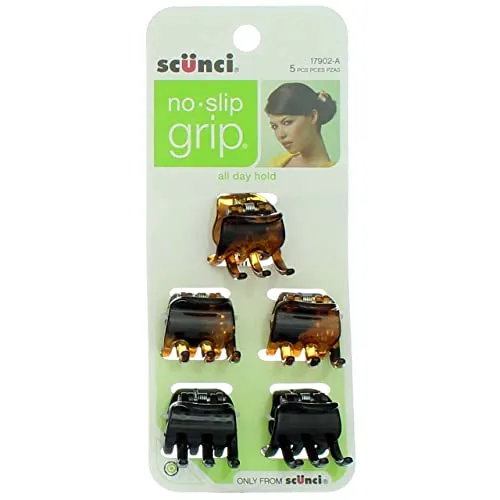
Scunci No-Slip Grip Mini Jaw Clips (5 Count)
“The mini jaw is the feature, not a compromise: a thin sectio...” — Verified Buyer
Mini jaw clips with interlocking teeth. The small jaw is the point: a fine section fills a mini clip completely, where it would float loose inside a 4.5-inch salon clip and slide straight out.
“The mini jaw is the feature, not a compromise: a thin section fills it completely instead of floating loose inside a salon-length clip.”
— Verified Buyer
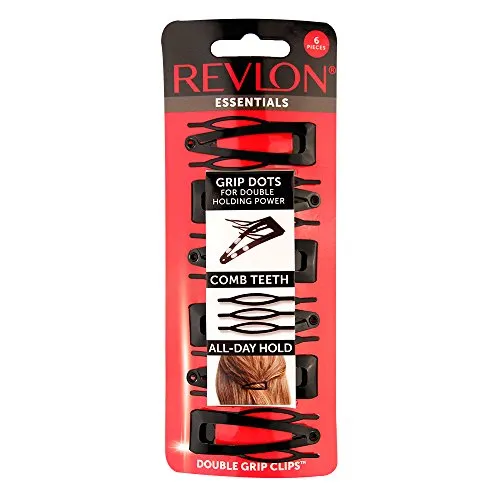
REVLON Double Grip Hair Clips (6 Count)
“Comb teeth plus grip dots mean the hold comes from two mecha...” — Verified Buyer
The drugstore standard, and the mechanism is unusually well suited to fine hair: comb teeth that rake into the section plus grip dots on the jaw face, so it holds on hold rather than on clamping force.
“Comb teeth plus grip dots mean the hold comes from two mechanisms at once, so neither one has to be cranked up to compensate.”
— Verified Buyer
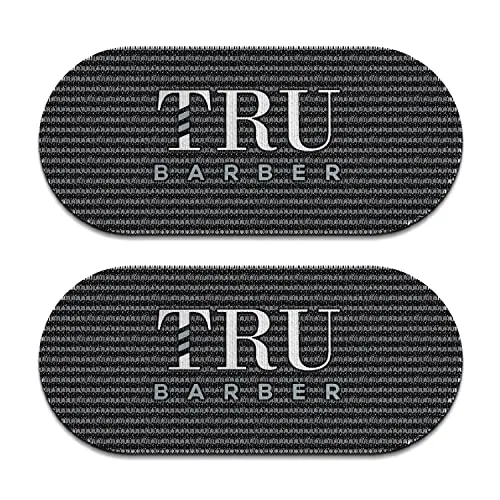
TRU BARBER Hair Grippers (2 Pack)
“With no spring and no jaw, there is no clamping force to get...” — Verified Buyer
Not a jaw clip at all - a gripper pad that presses hair flat against the head, so there is no spring tension to overcome and nothing for fine hair to slip out of. Best on damp hair.
“With no spring and no jaw, there is no clamping force to get wrong - the limitation is that it holds hair down rather than up.”
— Verified Buyer
FUATY Grip Sectioning Clips (2 Pack)
“The comb top rakes hair into the clip rather than waiting fo...” — Verified Buyer
A sectioning clip with a brush-like comb top that rakes through the section and holds it hands-free. Built for foiling and extension work, where you need a clean parting line more than a strong clamp.
“The comb top rakes hair into the clip rather than waiting for the jaw to find it, which is the right mechanism for a parting line that has to stay clean.”
— Verified Buyer
A matte jaw face raises friction against the hair itself, which is the one variable that helps slippery sections without asking for more spring pressure.
Quick Comparison
A side-by-side look at our top picks
Frequently Asked Questions
Why do sectioning clips slip out of fine hair?
What size sectioning clip works best for fine hair?
Should you twist a section before clipping it?

Donna Miller
Enjoyed This Guide?
Get more hair tips and product recommendations delivered weekly.