- Why Hair Accessories Cause Headaches: The Science
- The Three Types of Clip-Related Pain
- Material Matters: How Clip Construction Affects Comfort
- Positioning Principles for Pain-Free Styling
- The Best Clip Shapes for All-Day Comfort
- Building a Headache-Free Styling Routine
- Special Considerations
- Quick Reference: Pain-Free Styling Rules
- Troubleshooting Common Problems
- When to See a Doctor
- FAQ
- Related Articles
If your hair accessories give you headaches, you're not alone—and you're not imagining it.
Millions of people experience real, measurable pain from hair clips, ponytails, and updos. The medical term is "external compression headache," and it's a recognized condition caused by sustained pressure on the scalp.
The good news? Once you understand why certain clips cause pain—and which ones don't—you can style your hair all day without discomfort. This guide covers everything: the science behind styling-related pain, the positioning techniques that prevent it, and the specific clips designed for maximum comfort.
This is your complete resource for pain-free hair styling.
Why Hair Accessories Cause Headaches: The Science
Understanding the mechanism helps you prevent it. Hair accessory headaches fall into three categories, each with different causes and solutions.
External Compression Headaches
The International Headache Society classifies external compression headache as a distinct condition caused by "continued stimulation of cutaneous nerves by the application of pressure."
What happens:
- A clip creates sustained pressure on your scalp
- That pressure compresses cutaneous nerves (sensory nerves in the skin)
- The compressed nerves send pain signals to your brain
- The longer the pressure continues, the more intense the pain
Characteristics:
- Pain develops gradually (often after 30-60 minutes)
- Worsens the longer you wear the accessory
- Resolves within an hour of removing the pressure source
- Location corresponds exactly to where the clip sits
Learn more about this specific condition in our external compression headaches from hair clips guide.
Tension-Type Headaches
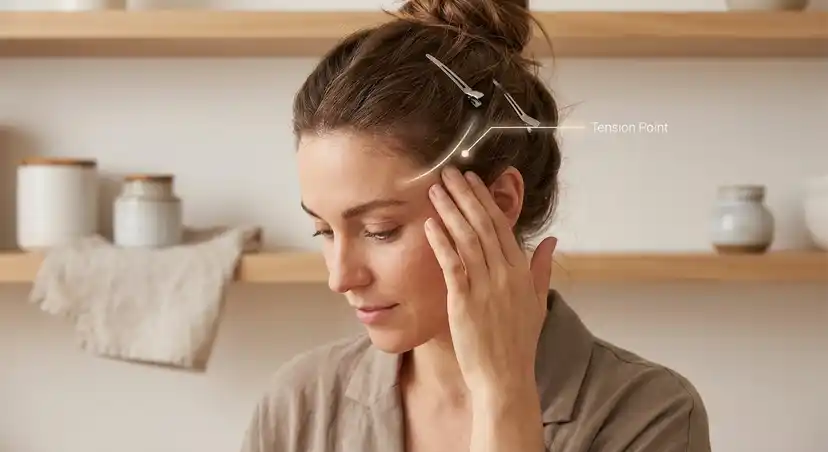
Tight hairstyles can trigger or worsen tension headaches by:
- Creating constant pulling on scalp muscles
- Keeping neck and scalp muscles in sustained contraction
- Compounding existing stress-related tension
- Restricting blood flow to scalp tissues
Characteristics:
- Band-like pressure around the head
- Can feel like "tightness" rather than sharp pain
- Often accompanied by neck and shoulder tension
- May persist even after removing the accessory
Referred Pain Patterns
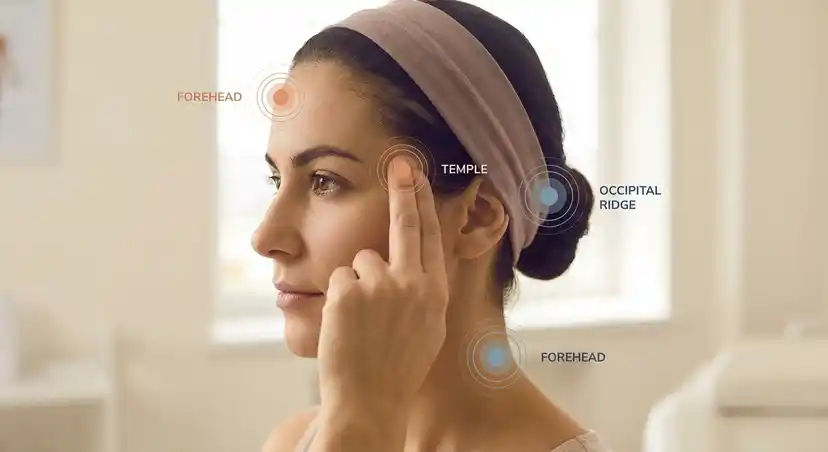
The scalp contains branches of the trigeminal nerve, the main sensory nerve for the face. Pressure on certain scalp points can cause:
- Pain that radiates to the forehead
- Pain behind the eyes
- Pain in the temples
- Even toothache-like sensations
This explains why a clip at the back of your head can cause pain at your temples—the nerves are connected.
The Three Types of Clip-Related Pain
Different clips cause different types of discomfort. Identifying your pain type helps you find the right solution.
Type 1: Pressure Point Pain
Cause: A single point of concentrated pressure, usually where the clip mechanism (hinge or clasp) presses against the scalp.
What it feels like:
- Sharp, localized pain
- A "hot spot" you can point to exactly
- Immediate awareness that something is pressing
- Relief when you slightly shift the clip
Solution: Choose clips with flat backs, padded hinges, or designs that distribute pressure across a larger area. Avoid clips where the mechanism sits directly against your scalp.
See our guide to best claw clips for all-day comfort for pressure-free options.
Type 2: Tension/Pulling Pain
Cause: The weight of the clip, combined with hair pulled tight, creates sustained pulling on hair follicles and scalp.
What it feels like:
- Diffuse scalp tenderness
- Sensation of pulling or tugging
- Pain that spreads across an area rather than one spot
- "Scalp fatigue" by end of day
Solution: Lightweight clips, looser styling, lower positions that work with gravity rather than against it.
Learn positioning techniques in our guide on how to position hair clips to avoid headaches.
Type 3: Nerve Pathway Pain
Cause: Clip positioned directly over a superficial nerve, compressing it against the skull.
What it feels like:
- Pain that radiates or spreads
- Numbness or tingling in addition to pain
- Pain that seems disproportionate to the pressure
- Specific "bad spots" that always hurt
Solution: Learn your scalp's sensitive zones and avoid placing clips over them. Everyone's nerve patterns differ slightly, so mapping your own sensitivities is key.
Material Matters: How Clip Construction Affects Comfort
The material your clip is made from significantly impacts comfort. Here's what to know:
Acetate: The Comfort Champion
Acetate is a plant-based plastic that:
- Feels warmer and more comfortable than rigid plastic
- Has natural flexibility compared to brittle acrylics
- Has smooth, rounded edges (no sharp pressure points)
- Is lightweight for its strength (less pulling)
Best for: Sensitive scalps, all-day wear, migraine sufferers
Premium pick: The France Luxe Couture Jaw Clip uses high-quality French acetate with exceptionally smooth, polished surfaces.
For a deep dive, see acetate vs. plastic claw clips for hair health.
Standard Plastic: Variable Comfort
Acrylic and other plastics:
- Stay rigid regardless of temperature
- May have sharper molded edges
- Hold their shape firmly (can be good or bad)
- Range widely in quality
Comfort depends on: Design more than material—some plastic clips are very comfortable, others aren't
Metal: Use with Caution
Metal clips:
- Create concentrated pressure points
- Conduct cold (uncomfortable in winter)
- Can have sharp edges
- Are often heavier
Best for: Short-term wear, decorative purposes, styles where clip doesn't touch scalp
Positioning Principles for Pain-Free Styling
Where you place your clip matters as much as which clip you choose.
The Pain-Free Zones
These areas typically tolerate clips well:
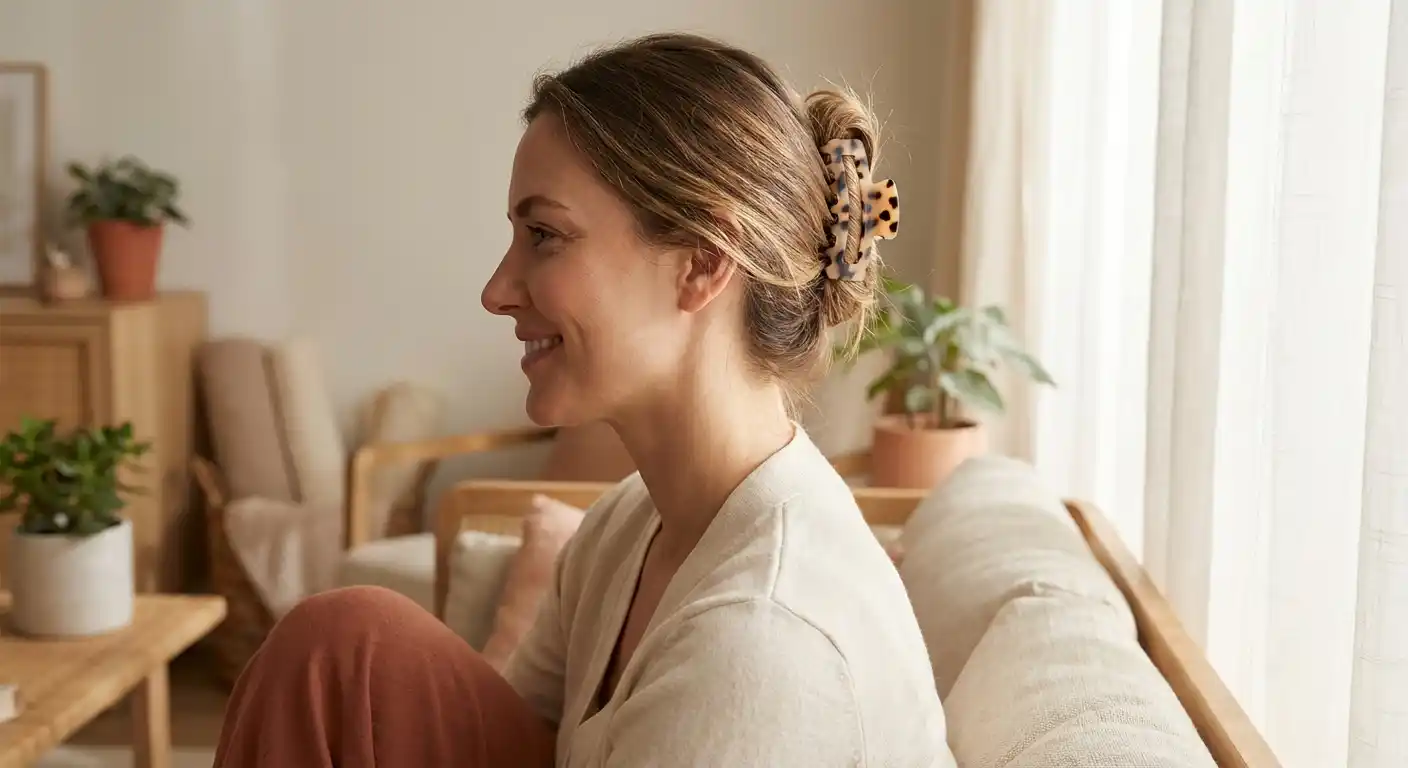
Lower nape:
- Fewer superficial nerves
- Gravity supports the style (less tension needed)
- Clip doesn't press when you recline
- Natural resting position for hair
Behind the ears (low):
- Padded by hair and natural tissue
- Away from major nerve pathways
- Comfortable for side styles
Crown (with caveats):
- Can work if clip doesn't create pressure point
- Must be positioned to avoid nerve pathways
- Best for styles that don't require tight gripping
The Danger Zones
These areas commonly cause pain:
Temples:
- Superficial temporal artery and nerve run here
- Very thin tissue over bone
- Any pressure quickly becomes painful
High on crown (center):
- Vertex of skull has less tissue padding
- Common site for tension headache radiation
- Many people have sensitivity here
Base of skull (occipital region):
- Occipital nerves exit here
- Pressure can trigger severe headaches
- Avoid clips that press into this hollow
Over the ears:
- Thin skin, close to bone
- Sensitive nerve endings
- Even light pressure causes discomfort
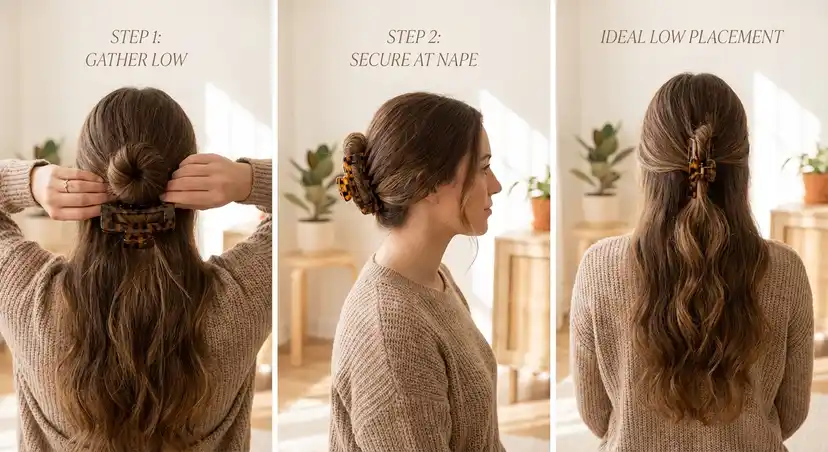
The Low-Nape Technique
The most reliably comfortable position:
- Gather hair loosely at the nape
- Create a very loose twist
- Position clip horizontally across the twist
- Clip should sit below the occipital bump
- No hair should be pulled tight
This position works with gravity, avoids nerve-dense areas, and distributes weight naturally.
For step-by-step positioning guides, see how to position hair clips to avoid headaches.
The Best Clip Shapes for All-Day Comfort
Certain clip designs inherently create less discomfort.
Flat-Back Clips: The Pain-Free Revolution
Traditional claw clips have a rounded or bulky back that creates a pressure point. Flat-back designs:
- Distribute pressure across a larger area
- Don't dig in when you recline
- Sit closer to the head without protruding
- Allow you to lean against chair backs and headrests
Best for: Office workers, drivers, anyone who reclines, migraine sufferers
Our top pick: The TELETIES Flat Round Clip is purpose-built with a completely flat back that eliminates pressure points.
See our guide to best flat claw clips for driving and reclining.
Flexible/Bendable Clips
Rigid clips can't adapt to your head's contours. Flexible clips:
- Bend to match your head shape
- Reduce concentrated pressure points
- Move with you instead of against you
- Often lighter than rigid equivalents
Best for: Sensitive scalps, irregular head shapes, all-day wear
Explore options in our best flexible claw clips guide.
Lightweight Mini Clips
Heavy clips pull on follicles. Lightweight minis:
- Create almost no tension
- Can be repositioned easily
- Work well for half-up styles
- Multiple small clips beat one heavy clip
Best for: Fine hair, sensitive scalps, frequent repositioners
Budget-friendly option: Mini Matte Jaw Clips (12 Pack) weigh almost nothing and are gentle on sensitive scalps.
Wide-Tooth Distributed-Grip Clips
Closely spaced teeth concentrate force. Wide-tooth designs:
- Spread grip across more surface area
- Create less pressure per square inch
- Don't pinch or poke
- Often more comfortable for long wear
Building a Headache-Free Styling Routine
Preventing pain requires a systematic approach.
Step 1: Audit Your Current Clips
Examine each clip you own:
- Does it have a pressure point where the mechanism sits?
- Is it heavy?
- Are the teeth closely spaced and poky?
- Does it feel uncomfortable within the first hour?
Retire any clip that fails these tests.
For guidance, see safe vs. damaging hair clips: how to tell.
Step 2: Learn Your Sensitive Zones
Map your personal sensitivities:
- With clean, dry hair down, gently press a fingertip around your scalp
- Note spots where even light pressure feels uncomfortable
- Mark these as "no clip" zones mentally
- Experiment with positioning to find your comfortable spots
Everyone's nerve patterns vary slightly—your sensitive spots may differ from typical patterns.
Step 3: Master Loose Styling
Tight styles create tension. Learn to:
- Gather hair without pulling
- Twist loosely—looser than you think necessary
- Let clips grip hair, not your scalp
- Accept a "lived-in" look over painful perfection
Read our guide on how to reduce tension and pressure from hair clips.
Step 4: Rotate Positions
Same position daily = cumulative stress on same nerves. Instead:
| Day | Position | Height |
|---|---|---|
| Monday | Center back | Low |
| Tuesday | Right side | Low-mid |
| Wednesday | Center back | Mid |
| Thursday | Left side | Low-mid |
| Friday | Center back | Low |
This prevents any single area from bearing constant pressure.
Step 5: Take Strategic Breaks
Give your scalp regular relief:
Micro-breaks: Every 2-3 hours, briefly remove or reposition your clip
End-of-day break: Remove clips when you get home
Weekly break: At least one day with hair completely down
Vacation break: Multi-day breaks periodically for full nerve recovery
Step 6: Choose the Right Clips
Invest in clips designed for comfort:
- Flat-back designs (our top recommendation)
- Premium acetate with smooth, polished edges
- Lightweight construction
- Wide, distributed tooth patterns
See our recommendations in best claw clips for all-day comfort and best claw clips for sensitive scalps.
Special Considerations
Certain situations require extra attention.
For Migraine Sufferers
If you have migraines:
- Any scalp pressure can trigger an attack
- Avoid clips entirely during prodrome or active migraine
- Choose the gentlest possible clips for non-migraine days
- Consider loose, clip-free styles as your default
- Flat-back clips are essential, not optional
External compression can be a direct migraine trigger. Prevention is critical.
For Those with Scalp Conditions
Conditions like psoriasis, eczema, or seborrheic dermatitis make scalp more sensitive:
- Choose smooth, snag-free clips
- Avoid anything that scratches or irritates
- Position clips away from active flare areas
- Clean clips regularly to prevent irritation
For Drivers and Office Workers
If you spend hours reclining against headrests or chair backs:
- Traditional clips pressing into your head will cause pain
- Flat-back clips are essential
- Low positioning prevents headrest pressure
- Consider clip-free styles for long drives
Learn more in our best flat claw clips for driving and reclining guide.
For Sensitive Scalps
If your scalp is generally sensitive:
- Default to the lightest, softest clips available
- Prefer acetate over hard plastic
- Avoid metal clips entirely
- Consider flexible/bendable designs
- Position lower rather than higher
See our dedicated guide: best claw clips for sensitive scalps.
Quick Reference: Pain-Free Styling Rules
Follow these principles for consistent comfort:
- Lower is better - Position clips at nape level when possible
- Loose beats tight - If it's uncomfortable, it's too tight
- Flat beats bulky - Flat-back designs prevent pressure points
- Light beats heavy - Less weight means less tension
- Rotate positions - Never style the same spot daily
- Take breaks - Remove clips periodically
- Know your zones - Map and avoid your sensitive spots
- Listen to pain - Discomfort is a warning, not a price to pay
Troubleshooting Common Problems
"I get headaches no matter what clip I use"
Try this:
- Switch to exclusively flat-back clips
- Lower your clip position significantly
- Style much looser than you think necessary
- Reduce wear time gradually
- Consider underlying migraine sensitivity
If headaches persist despite changes, consult a doctor—other causes may be involved.
"My scalp hurts after I take my clip out"
This indicates prolonged compression or tension:
- Shorten wear time
- Loosen your styles
- Choose lighter clips
- Massage scalp gently after removing clips
- Give scalp a full day's rest
"I can't find a comfortable position"
You may have more sensitive nerve patterns:
- Try multiple small clips instead of one larger one
- Experiment with half-up styles using minimal clips
- Consider very loose braids secured with fabric ties
- Map your scalp carefully to find any comfortable zones
"Flat clips don't hold my thick hair"
Flat-back designs can work for thick hair:
- Choose larger flat-back clips
- Use two clips instead of one
- Try flat-back plus wide-tooth combinations
- Accept slightly looser styles
See best claw clips for thick hair for options that combine hold with comfort.
"I need to wear my hair up for work but it hurts"
Professional styling can be pain-free:
- Invest in quality flat-back clips
- Style looser than seems "professional"
- Rotate position daily
- Take micro-breaks when possible
- Consider low chignons over high styles
See professional claw clip hairstyles for work for comfortable office looks.
When to See a Doctor
Seek medical attention if:
- Headaches persist after removing all accessories
- You experience severe or sudden-onset headaches
- Pain is accompanied by vision changes, numbness, or weakness
- Over-the-counter pain relief doesn't help
- Headaches significantly impact your quality of life
While most styling-related headaches are benign, persistent headaches warrant professional evaluation.
FAQ
Can hair clips actually cause real headaches?
Yes. External compression headache is a medically recognized condition. The International Headache Society includes it in the International Classification of Headache Disorders. It's caused by sustained pressure on scalp nerves and resolves when pressure is removed.
Why do some people get clip headaches and others don't?
Individual variation in nerve placement, scalp thickness, pain sensitivity, and underlying conditions (like migraines) all affect susceptibility. People with migraines are particularly prone to external compression headaches.
Are expensive clips more comfortable?
Often, yes. Premium clips made from quality acetate with thoughtful design tend to be more comfortable than cheap plastic alternatives. However, design matters more than price—a well-designed budget clip can outperform a poorly designed expensive one.
Will I ever get used to uncomfortable clips?
No—and you shouldn't try. Discomfort indicates nerve compression. While your brain may partially adapt to constant pain signals, the underlying stress continues. "Getting used to it" often means enduring chronic low-grade headaches.
Can tight hairstyles cause permanent damage?
Prolonged tension can cause traction alopecia (hair loss from pulling). Persistent nerve compression can lead to chronic pain sensitivity. Neither is likely from occasional wear, but daily tight styling carries real risks. See our guide on traction alopecia from hair accessories.
What's the single most important change for comfort?
Switch to flat-back clip designs. This single change eliminates the most common cause of clip-related headaches: concentrated pressure from bulky clip mechanisms pressing against the scalp.
Related Articles
- Why Do Hair Clips Give Me Headaches?
- External Compression Headaches from Hair Clips
- Scalp Pain After Wearing Hair Clips
- Best Claw Clips for Sensitive Scalps
- How to Position Hair Clips to Avoid Headaches
- Best Claw Clips for All-Day Comfort
- Best Flat Claw Clips for Driving and Reclining
- Best Flexible Claw Clips
- Lightweight vs Heavy Claw Clips
- How to Reduce Tension from Hair Clips
- Traction Alopecia from Hair Accessories
- Safe vs. Damaging Hair Clips
- The Complete Guide to Protecting Your Hair
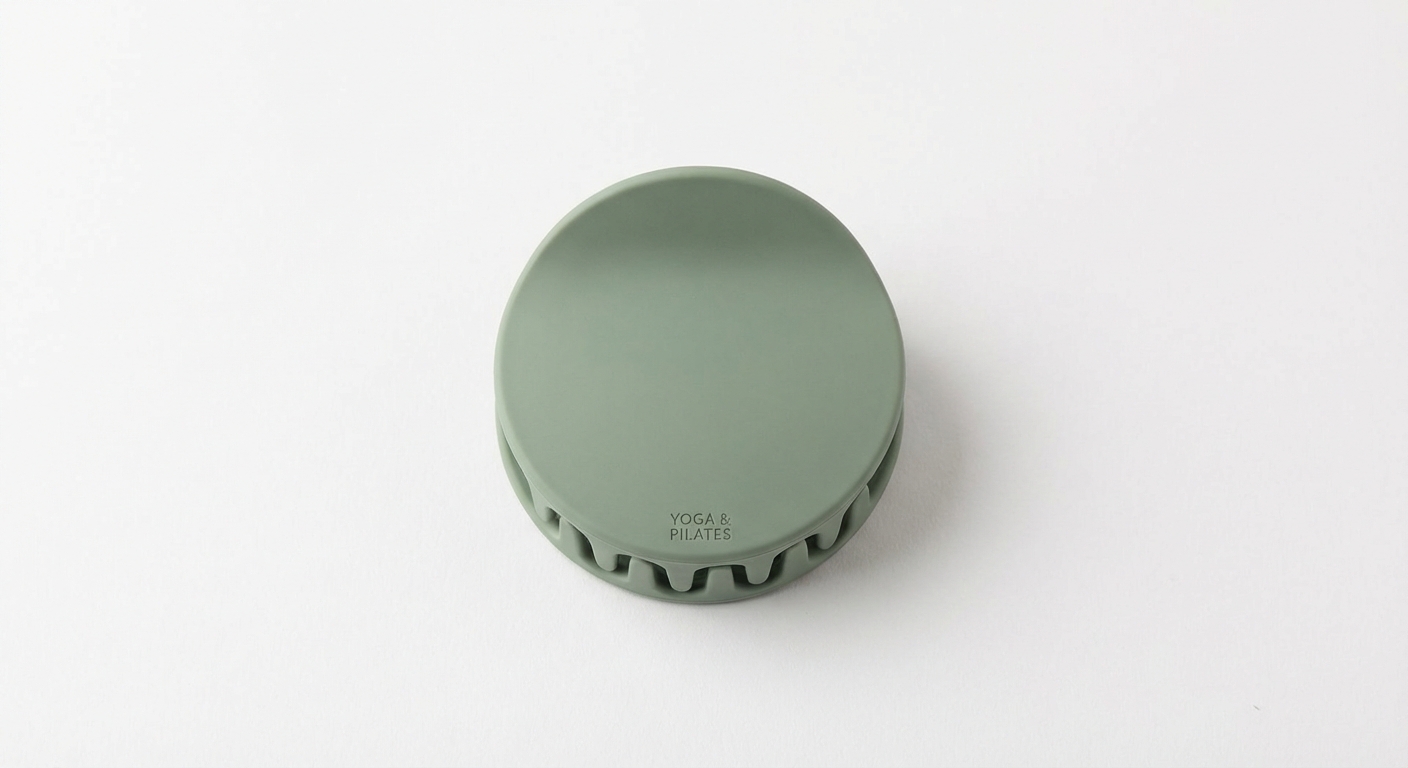
TELETIES Medium Flat Round Clip
The flat-back design eliminates pressure points completely. Sits flush against your head without creating the concentrated stress that causes headaches.
“First clip I've worn all day without a headache. The flat design makes all the difference....”
We tested dozens of claw clips to find the very best options. Below you'll find our complete ranking, with detailed reviews and real customer feedback for each pick.
The Complete Ranking
TELETIES Medium Flat Round Clip
“First clip I've worn all day without a headache. The flat de...” — Verified Buyer
The flat-back design eliminates pressure points completely. Sits flush against your head without creating the concentrated stress that causes headaches. Bendable teeth add flexibility for sensitive scalps.
“First clip I've worn all day without a headache. The flat design makes all the difference.”
— Verified Buyer

France Luxe Couture Jaw Clip
“Worth every penny for a chronic migraine sufferer. Zero pres...” — Verified Buyer
Premium acetate with exceptionally smooth, polished surfaces. Smooth, rounded teeth won't dig into your scalp. The gold standard for migraine sufferers who still want to style their hair.
“Worth every penny for a chronic migraine sufferer. Zero pressure points.”
— Verified Buyer
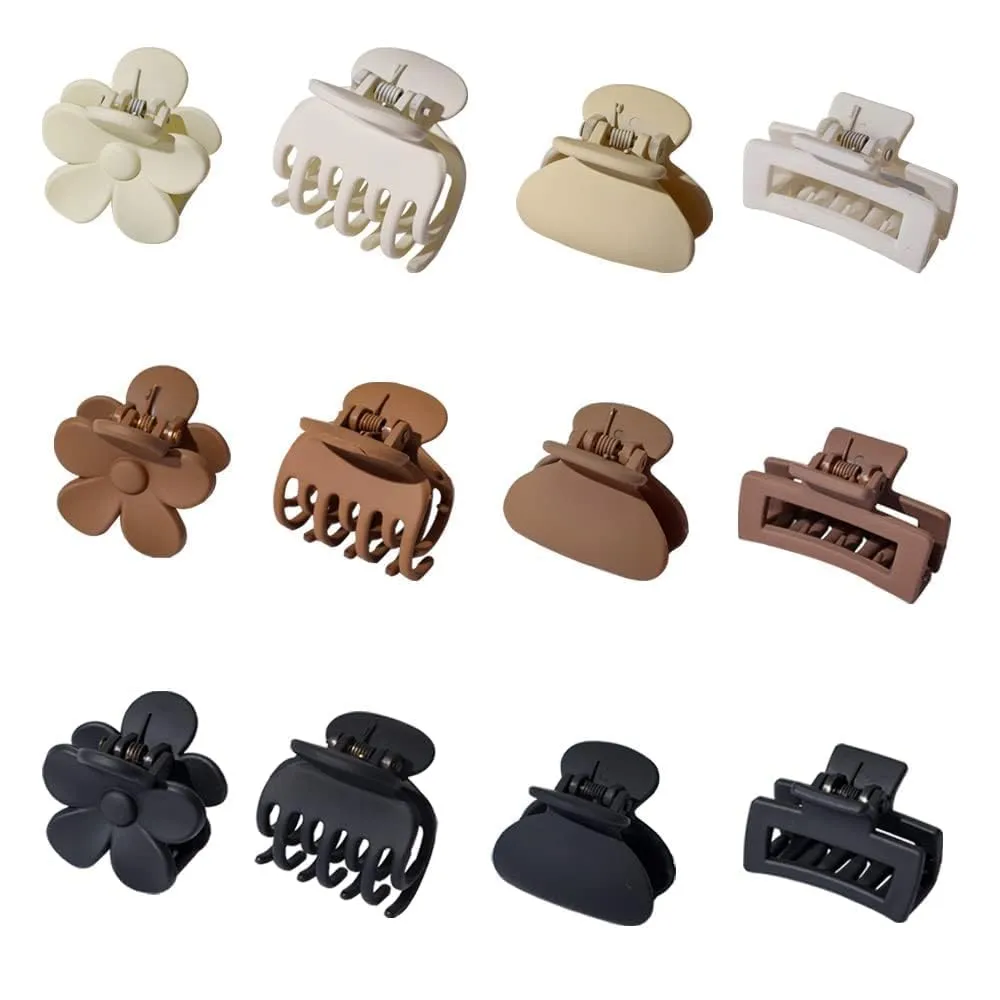
Mini Matte Jaw Clips (12 Pack)
“So light I forget I'm wearing it. No more tension headaches....” — Verified Buyer
Weighs almost nothing, so there's minimal pull on your scalp. Perfect for sensitive heads that can't handle the weight of standard clips. The matte finish grips without requiring tight styling.
“So light I forget I'm wearing it. No more tension headaches.”
— Verified Buyer
First clip I've worn all day without a headache. The flat design makes all the difference.
Quick Comparison
A side-by-side look at our top picks
Frequently Asked Questions
Pain is a signal, not a sacrifice
The wrong clip in the wrong spot
Comfort compounds

Donna Miller
Enjoyed This Guide?
Get more hair tips and product recommendations delivered weekly.