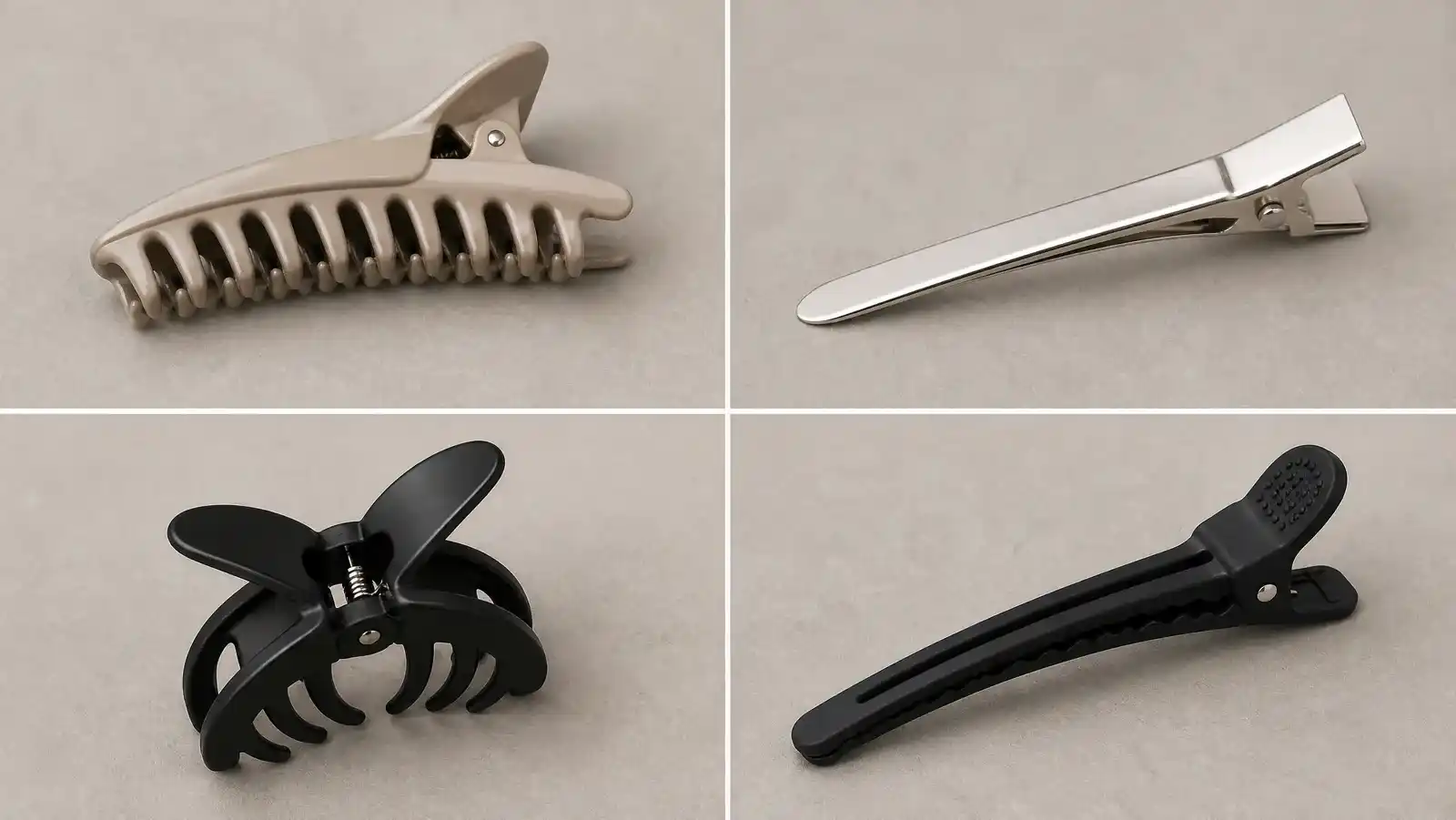
- How to Tell Sectioning Clips Apart at a Glance
- Alligator Sectioning Clips: Two Hinged Jaws, Wide Teeth
- Sectioning Duckbill Clips: The Flattest Thing in the Drawer
- Sectioning Butterfly Clips: Half Clip, Half Claw
- Crocodile and Jumbo Clips: For Sections That Fight Back
- Sectioning Clips With Teeth: What the Tooth Pattern Actually Does
- Which Type Should You Buy First?
- The Bottom Line
Four clips that look nearly identical in a drawer are doing four genuinely different jobs, and picking the wrong one is why your sections keep slipping.
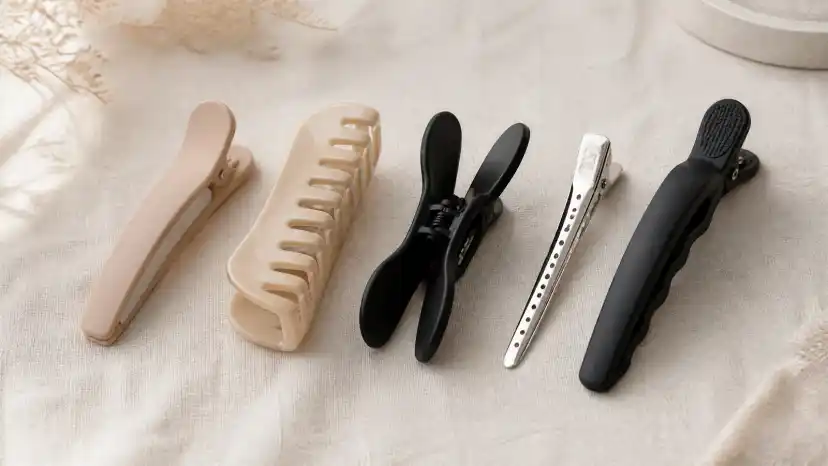
Alligator clips are toothed, spring-loaded jaws for general sectioning. Duckbills are thin flat blades that slide under a section instead of lifting it. Butterfly clips are rounded clamps with inward-facing claws, roughly halfway to a claw clip. Crocodile and jumbo clips are oversized alligators built for heavy, wet, product-soaked sections.
We may earn a commission from links on this page, at no cost to you.
That four-way split is the whole answer, but the useful part is knowing where each one fails. A duckbill will hold a pin curl beautifully and then slide straight out of thick dry hair. A jumbo croc clip will clamp a soaking-wet section without blinking and then feel absurd on a fine-haired fringe.
Below we go through each mechanism in turn: what it physically does, what it is genuinely best at, where it falls down, and who should own one. If you want the broader picture first, our guide to hair sectioning clips covers how sectioning fits into a styling routine.
How to Tell Sectioning Clips Apart at a Glance
Pick one up and look at the jaw. That tells you almost everything.
- Alligator: two straight arms, interlocking teeth along the whole jaw, opens when you squeeze the back. Flat-ish against the head.
- Duckbill: one thin, flat, un-toothed lower blade and a curved upper blade. The lowest profile of the four.
- Butterfly: a rounded, bulbous body with short claws facing inward rather than teeth facing each other. Looks like a claw clip that went to beauty school.
- Crocodile or jumbo: the same alligator mechanism scaled up, usually rubberized, usually double-hinged.
Everything after this is a variation on those four. Sectioning clips explained in one sentence: you are choosing between bite, profile and surface area, and no single clip maximizes all three.
Alligator Sectioning Clips: Two Hinged Jaws, Wide Teeth
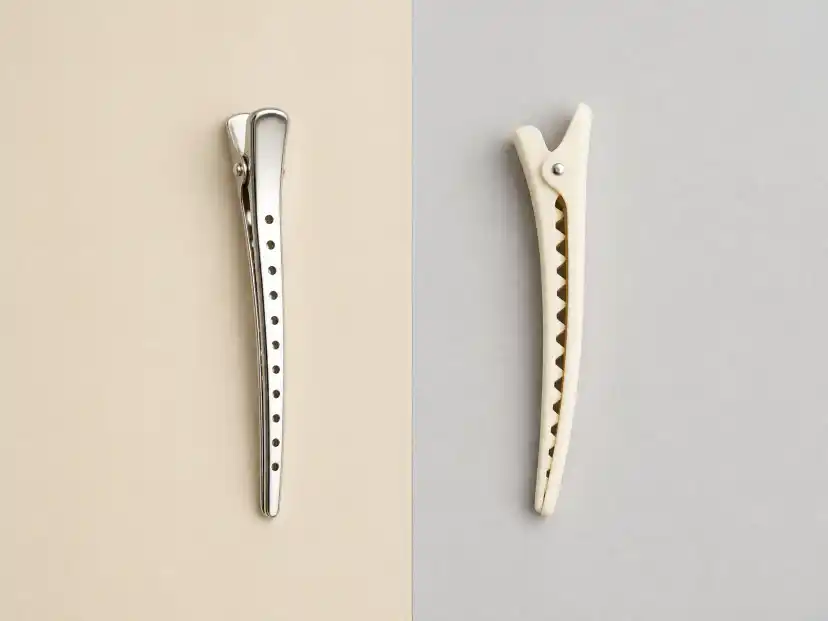
An alligator clip is a spring-loaded flat clip with serrated or toothed inner jaws, named for the way the jaw profile resembles an alligator's snout. Squeeze the outer arms, the spring compresses, the jaws open. Release, and the teeth interlock through the hair.
The detail worth understanding is the double hinge. A single-hinge clip pivots from one point, so the jaws close like scissors and the tip bites before the base does. A double-hinged clip lets the jaws stay closer to parallel, which spreads the grip along the whole length instead of pinching at the tip.
What it is best at: everyday sectioning on dry or barely damp hair. Quadrant parting before a blowout. Holding the top half up while you work the bottom. It is the default for a reason.
Where it falls down: the jaw footprint is narrow, so the force concentrates along a toothed line. On damp hair that is exactly the geometry that marks a section. Cheap all-plastic versions also give up on genuinely dense hair, where the section simply pushes the jaws back open.
The HH&LL Wide-Teeth Double-Hinged Alligator Clips are the textbook version of this shape: all plastic, wide interlocking teeth, ten mixed-color clips in a pack, $4.99 as of October 2026. HH&LL describes an upgraded dual metal spring for stronger clamping on thick hair and states that the design holds without leaving dents or kinks. Those are the maker's claims rather than ours, and the second one is the kind of claim we would want to test on your own hair before trusting it on a fresh blow-dry.
Who should own one: everyone. At this price the right quantity is ten, not two, because sectioning clips migrate. If your hair is dense enough that plastic alligators pop open mid-section, our roundup of the best sectioning clips for thick hair is the more useful starting point.
Sectioning Duckbill Clips: The Flattest Thing in the Drawer
A duckbill clip inverts the alligator logic. Instead of two toothed jaws meeting in the middle, it has a thin, flat, smooth lower blade and a curved upper blade that presses down onto it. The lower blade slides underneath a section the way a letter opener slides under an envelope flap, without lifting the hair off the scalp first.
That is why the shape survived from the vintage setting era into modern salons. Vintage-hairstyling histories root pin curling in the water-waving and finger-wave techniques of the 1920s, with pin curls themselves becoming the main setting method from the mid-1930s through the 1950s, and the duckbill is the clip that was holding them. Metal duckbills are still the standard choice for wet work: most are rust-resistant, which is why they suit finger waves and other wet-to-dry styles, and they lie flat enough to stack under a dryer hood.
What it is best at: pin curls, wet sets and finger waves. Holding a part while you work next to it. Clipping a fringe back for makeup without a bulky clip in the way. Anywhere the clip needs to disappear under something else.
Where it falls down: bite. A flat blade with no teeth grabs a shallow slice of hair, which is fine for a pin curl and useless for half a head of thick hair. Metal also conducts heat, so a duckbill left in while you blow-dry around it gets warm, and a warm metal edge on a damp section is the worst-case setup for a crease.
The Bantoye Metal Duck Bill Clips are the archetype: nickel-plated, rust-resistant, 24 clips per pack, $5.71 as of October 2026, down from a $5.98 list price, also as of October 2026. One honest note on the spec: the listing title says 3.35 inches and the description says 3.5 inches, so treat the length as roughly three and a half inches rather than an exact figure. Bantoye suggests them for pin curls that get combed out after setting, which is precisely the job this shape was invented for.
Who should own one: anyone who sets hair wet, anyone doing a vintage-adjacent style, and anyone who needs a clip that vanishes. Twenty-four is not excessive here. Guides to pin-curl setting routinely talk about 40 to 50 clips for a full head.
Sectioning Butterfly Clips: Half Clip, Half Claw
Butterfly clips are the hybrid of the group. The body is a rounded clamp rather than two flat arms, and the gripping surface is a set of short claws facing inward rather than teeth meeting edge to edge. Functionally they behave like a small, precise claw clip with enough spring tension to hold a working section.
That inward-facing geometry changes what they are good at. Teeth that meet in a line are built to hold a flat sheet of hair. Claws that curl inward are built to hold a twisted or rolled section, because they cage it rather than pinching it.
What it is best at: holding a twisted section during cutting or coloring, and doubling as a normal hair clip when you are done. Butterfly clips look like something you would wear, which matters more than it sounds: they are the sectioning clip most likely to stay in your rotation.
Where it falls down: the rounded body stands proud of the head. That is uncomfortable against a car headrest and awkward under a dryer hood. The parting line is also softer than a duckbill's, so for genuinely precise work the flat blade still wins.
The Ondder Butterfly Sectioning Clips are a clean example: 3.2 inches, 12 per pack, plastic body with an elastic spring, nine inner claws per clip, $6.99 as of October 2026. Ondder describes smooth polished claw edges intended to limit pulling and snagging, and markets them for cutting, coloring and everyday styling on wet or dry hair. Twelve is generous for sectioning alone, which is part of the appeal: you can keep four in the styling kit and still have eight for ordinary use.
If you are already thinking of these as wearable clips rather than tools, our claw clip size guide covers how clip length maps to hair volume, and the same logic applies to a 3.2-inch butterfly.
Crocodile and Jumbo Clips: For Sections That Fight Back
A crocodile clip is an alligator clip that kept growing. Same spring, same interlocking jaw, same double hinge, but noticeably longer and usually finished in rubber rather than bare plastic. The rubberizing is not cosmetic. Wet hair coated in conditioner, color or styling cream is slippery, and a smooth plastic jaw will let it creep out.
What it is best at: heavy sections. Thick hair, long hair, wet hair, foils, and anything where the section has real weight pulling against the clip. The longer jaw also means the grip spreads over more inches of hair, which is the one case where a bigger clip is arguably gentler per square inch than a small one.
Where it falls down: everything else. A jumbo croc on fine hair is a comedy of overkill, the clip outweighs the section, and four of them cost roughly twice what ten alligator clips do. They are also conspicuous, so this is not the clip you wear to the shops.
The Colortrak Rubberized Jumbo Croc Clips are the salon-standard example: 5.3 inches long, double-hinged, rubberized finish, molded thumb grip, four per pack, $9.99 as of October 2026. Colortrak states this jumbo size runs about an inch longer than their standard croc clip and describes the finish as stain-resistant for color work, which tells you the intended buyer is someone standing at a color bar rather than at a bathroom mirror.
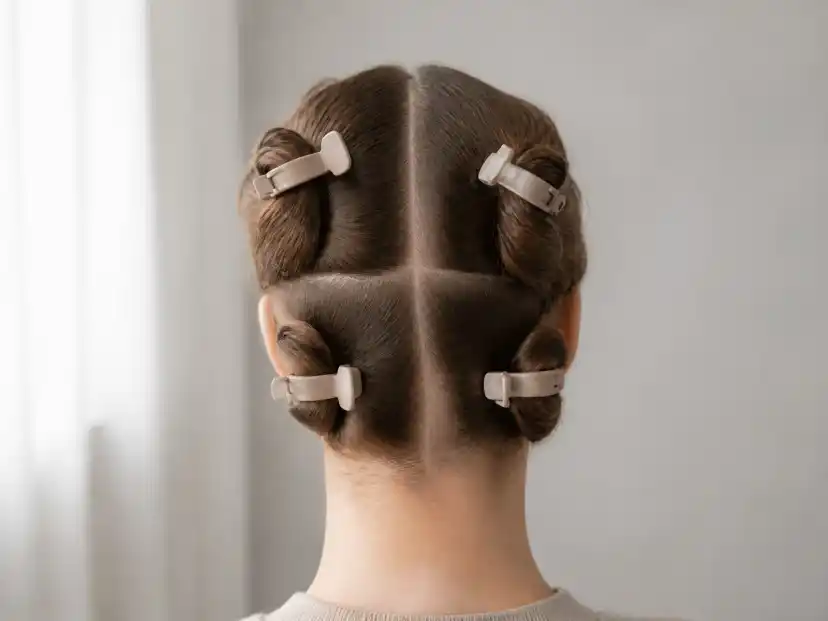
Four clips is also exactly the quadrant count, which is not a coincidence. Salon guides to sectioning for color describe the same base pattern: part down the center from the forehead to the nape, then across from ear to ear, and clip the four quadrants. If you want more of that professional-tier gear, our picks for professional sectioning clips go deeper on the salon end of the range.
Sectioning Clips With Teeth: What the Tooth Pattern Actually Does
The tooth pattern is the one spec people ignore and then complain about afterwards.
Wide-spaced teeth take bigger bites of hair and let more of it pass between them. That is good for thick or curly textures, where fine serration just mats the section. Fine serration grips a thin or slippery section that wide teeth would let slide. No teeth at all, as on a duckbill, gives you the lowest profile and the least bite.
Crease severity comes down to the same geometry. The usual explanation in hair-clip guides is that a clip compresses the strand against a rigid surface long enough to temporarily disrupt the hydrogen bonds that hold the hair's shape, and that three factors drive how visible the result is: how hard the spring presses, how much surface area it presses across, and the shape of the jaw doing the pressing. Spread the same force over a wide rubberized jaw and you get a soft shadow. Concentrate it along one narrow metal edge and you get a line.
Moisture is the multiplier. Hair-science explainers note that water temporarily disrupts the hydrogen bonds in keratin and swells the shaft, leaving wet hair more elastic and more vulnerable to mechanical damage than dry hair, and crease guides make the practical point that a bend set into damp hair dries into that shape. If you only change one habit after reading this, make it this one: clip damp hair loosely, and move the clip before it dries.
Tension matters over longer timescales too. According to WebMD, traction alopecia is hair loss caused by repeated pulling or tension on the follicles, and it is largely preventable by easing off the tension. No single sectioning session will do that, but clipping the same spot tightly every day for years is the pattern worth avoiding, especially around a fine hairline.
Which Type Should You Buy First?
Match the clip to the job you actually do most often.
- You just want to get hair out of the way while you style. Buy alligator clips. Buy a lot of them, in plastic, and do not overthink it.
- You set hair wet, do pin curls, or need a clip to sit flat. Buy metal duckbills. Nothing else has that profile.
- You want one clip that sections hair and then stays in it. Buy butterfly clips. They are the only type on this list that doubles as something you would wear out.
- Your hair is thick, long, or you color it at home. Buy a jumbo croc clip, and own four rather than ten.
If you are starting from zero, the honest order is alligator first, then a croc or two if your hair is dense, then duckbills only if you genuinely do wet sets. Butterfly clips are the one category you can skip entirely and never miss, unless you like the look.
One last practical note: size is not a loyalty test. A 5.3-inch jumbo on fine hair is slower and heavier with no benefit, and a 3.2-inch butterfly on waist-length thick hair will pop. Our claw clip size guide applies here almost unchanged, because the physics of clip length against hair volume does not care whether you call the clip a tool or an accessory.
The Bottom Line
Four shapes, four mechanisms, four honest use cases. Alligator clips are the general-purpose default and the only type most people truly need. Duckbills are a specialist tool for wet setting that happens to be the flattest clip you can buy. Butterfly clips trade a little precision for comfort and wearability. Crocodile and jumbo clips exist because heavy wet sections defeat everything smaller.
Buy for the job in front of you, keep clips out of hair that is drying, and replace anything whose teeth have gone rough. For the full picture on sectioning technique, materials and routine, read our complete guide to hair sectioning clips.
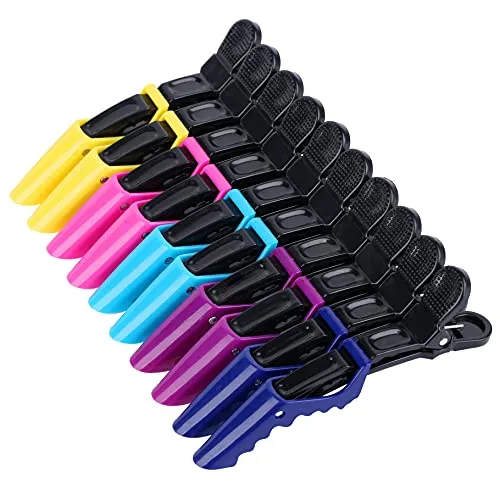
HH&LL Wide-Teeth Double-Hinged Alligator Clips (10 Pack)
The textbook alligator clip: two hinged jaws, wide interlocking teeth, all plastic. Cheap enough to buy ten and leave them in three rooms, which is how most people actually use sectioning clips.
“This is the shape we would tell a beginner to start with: two hinged jaws, wide interlocking teeth, ...”
We tested dozens of claw clips to find the very best options. Below you'll find our complete ranking, with detailed reviews and real customer feedback for each pick.
The Complete Ranking
HH&LL Wide-Teeth Double-Hinged Alligator Clips (10 Pack)
“This is the shape we would tell a beginner to start with: tw...” — Verified Buyer
The textbook alligator clip: two hinged jaws, wide interlocking teeth, all plastic. Cheap enough to buy ten and leave them in three rooms, which is how most people actually use sectioning clips.
“This is the shape we would tell a beginner to start with: two hinged jaws, wide interlocking teeth, all plastic, and ten of them in a pack so you can leave a few in every room you style hair in.”
— Verified Buyer
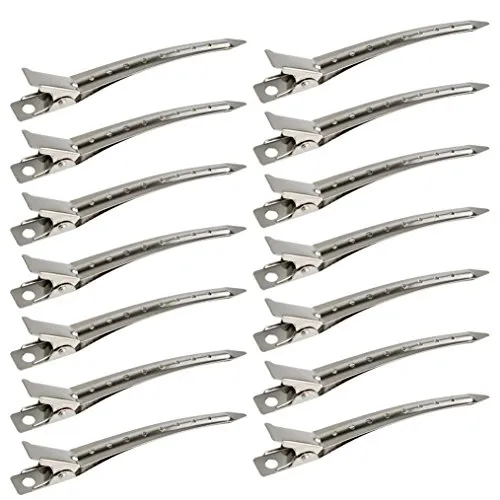
Bantoye Metal Duck Bill Clips (24 Pack, 3.35 in)
“The flat lower blade is the entire argument for this shape. ...” — Verified Buyer
The all-metal duckbill: a thin, flat lower blade that slides under a section without lifting it. The classic pin-curl and wet-set clip, and the thinnest profile of anything in this guide.
“The flat lower blade is the entire argument for this shape. It slides under a section instead of lifting it, which is why metal duckbills have outlasted every styling trend in wet setting.”
— Verified Buyer
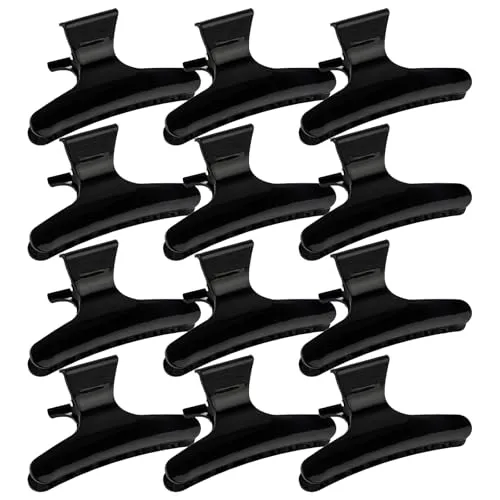
Ondder Butterfly Sectioning Clips (12 Pack, 3.2 in)
“A sensible middle ground. The inward-facing claws grab a twi...” — Verified Buyer
Butterfly clips sit between a sectioning clip and a claw clip: a rounded clamp with inward-facing claws rather than a flat toothed jaw. Twelve 3.2-inch clips, which is enough to section a full head and still have spares.
“A sensible middle ground. The inward-facing claws grab a twisted section the way a claw clip does, but at 3.2 inches the clip is still small enough to park four of them on one head.”
— Verified Buyer
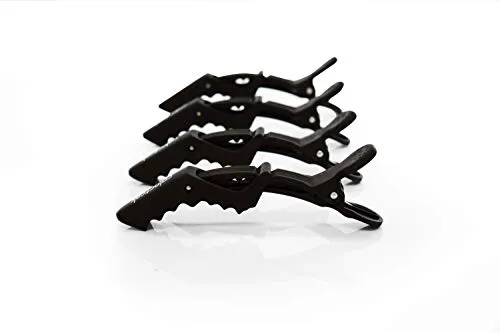
Colortrak Rubberized Jumbo Croc Clips (4 Pack, 5.3 in)
“This is a color-bar tool, not a drawer clip. At 5.3 inches w...” — Verified Buyer
At 5.3 inches this is the longest clip in the guide and the only one built for genuinely heavy sections. Rubberized finish, double-hinged, with a thumb grip: a salon color-bar tool rather than a bathroom-drawer clip.
“This is a color-bar tool, not a drawer clip. At 5.3 inches with a rubberized, double-hinged jaw, it is the only clip here we would hand someone with a soaking-wet, shoulder-width section to hold.”
— Verified Buyer
This is the shape we would tell a beginner to start with: two hinged jaws, wide interlocking teeth, all plastic, and ten of them in a pack so you can leave a few in every room you style hair in.
Quick Comparison
A side-by-side look at our top picks
Frequently Asked Questions
What is the difference between an alligator clip and a croc clip?
Do sectioning clips crease hair?
How many sectioning clips do you actually need?

Donna Miller
Enjoyed This Guide?
Get more hair tips and product recommendations delivered weekly.