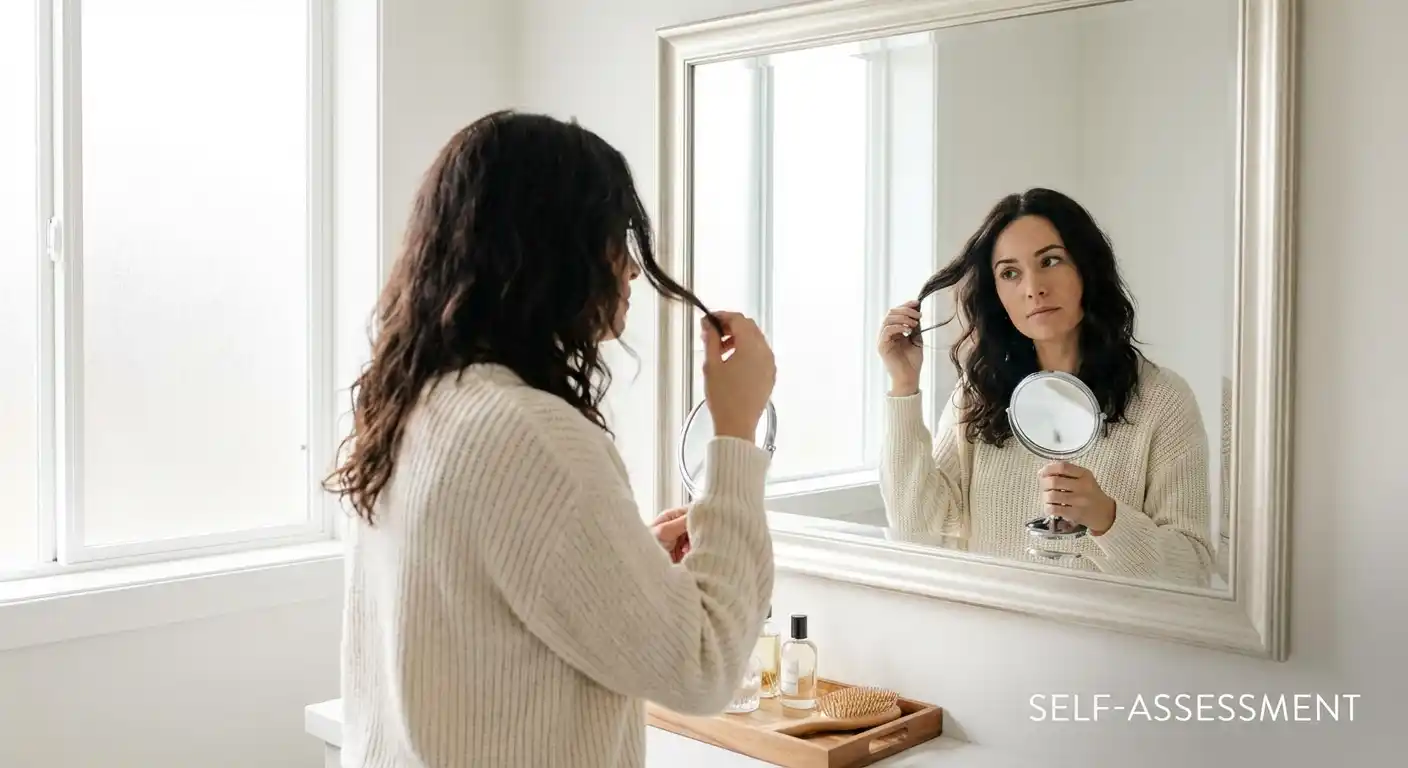
Is your hair routine helping or hurting?
Many people follow routines that seem healthy but actually cause damage—and they don't realize it until damage becomes severe. The styling habits you've had for years might be why your hair isn't thriving.
This self-assessment guide helps you honestly evaluate your routine. Check each section, note your answers, and discover whether changes are needed.
For comprehensive protection strategies, see our complete guide to protecting your hair from damage.
Section 1: Physical Hair Assessment
Start by examining your actual hair, not your habits.
Test 1: The Breakage Check
How to check: After brushing, examine your brush and the floor. Collect loose hair from a typical styling session.
What you're looking for:
| Finding | What It Means |
|---|---|
| Full-length strands with white bulb at end | Normal shedding (50-100 daily is normal) |
| Short pieces without bulb | Breakage (hair snapped mid-strand) |
| Pieces at consistent length | Breakage at a specific stress point |
| Excessive amounts | May indicate damage or underlying issue |
Red flags:
- Many short broken pieces (not full-length strands)
- Broken pieces all similar length (indicates specific damage point)
- Increasing amount over time
- Breakage concentrated in one area
Test 2: The Texture Check
How to check: Run fingers through dry, product-free hair. Note how it feels.
| Texture | What It Means |
|---|---|
| Smooth, slides easily | Healthy cuticle |
| Slightly rough | Some cuticle damage |
| Rough, catches on fingers | Significant cuticle damage |
| Straw-like, tangled | Severe damage |
Red flags:
- Hair that tangles immediately after brushing
- Rough texture that doesn't improve with conditioning
- Feeling of "straw" or dryness despite moisturizing
- Texture that's worsened over time
Test 3: The Elasticity Check
How to check: Take a single wet strand. Gently stretch it.
| Result | What It Means |
|---|---|
| Stretches slightly, returns to shape | Healthy elasticity |
| Stretches but doesn't fully return | Some protein damage |
| Stretches significantly, feels gummy | Over-moisturized, needs protein |
| Snaps immediately | Severe protein loss |
Red flags:
- Hair that breaks rather than stretches
- Hair that stretches far without returning (mushy feeling)
- Consistent breakage during the test
Test 4: The Hairline Check
How to check: Look at your hairline in good lighting. Compare to photos from 1-2 years ago.
| Finding | What It Means |
|---|---|
| Same as before | No traction damage |
| Slightly receded at temples | Early traction alopecia |
| Noticeably thinner at edges | Progressing traction damage |
| Visible balding at hairline | Advanced traction alopecia |
Red flags:
- Any recession at temples or hairline
- Thinning where you typically style
- Baby hairs that won't grow past a certain length
- Visible difference from previous photos
For more on this, see traction alopecia from hair accessories.
Test 5: The Targeted Area Check
How to check: Examine areas where you typically style—where clips sit, where ties wrap, where you part your hair.
| Finding | What It Means |
|---|---|
| Same as surrounding hair | Styling isn't causing localized damage |
| Slightly thinner | Early stress damage |
| Noticeably thinner | Significant styling damage |
| Broken pieces visible | Breakage from styling |
Red flags:
- Any difference between styled areas and non-styled areas
- Thin spots correlating with clip positions
- Breakage line where hair ties sit
Section 2: Styling Habit Assessment
Now evaluate your actual habits honestly.
Question 1: How Do You Feel After Styling?
After putting your hair up, do you feel:
| Feeling | Assessment |
|---|---|
| Nothing—I forget my hair is styled | Good sign |
| Slight awareness of the style | Acceptable |
| Tension or pulling | Too tight—causing damage |
| Headache or scalp soreness | Definitely causing damage |
Red flag: Any discomfort from your hairstyle indicates damage occurring.
Question 2: Do You Style in the Same Position Daily?
| Answer | Assessment |
|---|---|
| I rotate positions regularly | Good—distributing stress |
| I vary sometimes but have a favorite spot | Could improve |
| I use the same position almost always | Likely causing localized damage |
Red flag: Same position daily concentrates all damage in one area.
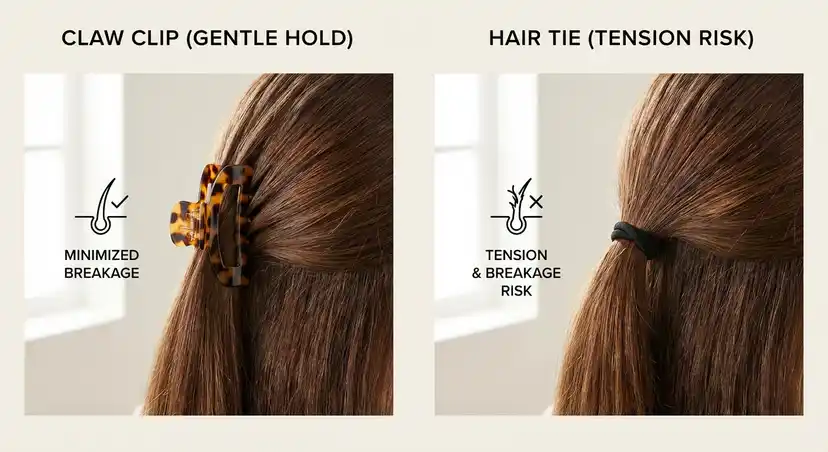
Question 3: What Accessories Do You Use Most?
| Accessory | Damage Risk |
|---|---|
| Quality claw clips | Lower risk |
| Silk/satin scrunchies | Lower risk |
| Regular fabric scrunchies | Low-moderate risk |
| Elastic hair ties | Moderate-high risk |
| Rubber bands | High risk—stop immediately |
Red flag: Daily use of elastic ties or rubber bands.
See claw clips vs. hair ties for hair health.
Question 4: How Do You Remove Accessories?
| Method | Assessment |
|---|---|
| Open fully before lifting away | Correct |
| Pull off quickly | Causing friction damage |
| Yank when it catches | Definitely causing damage |
Red flag: Any pulling, yanking, or catching during removal.
See how to use a claw clip without damaging your hair.
Question 5: How Long Do You Wear Styles Daily?
| Duration | Assessment |
|---|---|
| Varies—take hair down when home | Good approach |
| 8-10 hours (work day) then down | Acceptable if comfortable |
| Styled constantly, even at home | May be excessive |
| Sleep with hair styled tight | Damaging—stop |
Red flag: Extended wear with tight styles, or sleeping with accessories.
Question 6: How Old Are Your Clips?
| Condition | Assessment |
|---|---|
| New or well-maintained, smooth | Safe |
| Some wear but still smooth | Monitor closely |
| Showing rough spots or damage | Replace immediately |
| Can't remember when I bought them | Inspect now |
Red flag: Using clips without regular inspection.
See safe vs. damaging hair clips: how to tell.
Section 3: Other Damage Sources
Hair health is cumulative. Assess other potential damage sources.
Heat Styling
| Habit | Damage Level |
|---|---|
| Rarely/never use heat | Low |
| Weekly heat styling with protectant | Moderate |
| Multiple times weekly | High |
| Daily heat styling | Very high |
Chemical Treatments
| Treatment | Damage Level |
|---|---|
| No chemical treatments | Low |
| Semi-permanent color only | Low-moderate |
| Permanent color | Moderate |
| Bleaching or lightening | High |
| Relaxers or perms | High |
Washing Habits
| Habit | Assessment |
|---|---|
| Wash 2-3x weekly | Generally good |
| Wash daily | May be stripping oils |
| Wash less than weekly | May have buildup |
| Use clarifying shampoo occasionally | Good |
Environmental Exposure
| Factor | Impact |
|---|---|
| Sun exposure | Can degrade hair proteins |
| Chlorine (swimming) | Damages and dries hair |
| Hard water | Mineral buildup |
| Extreme dryness or humidity | Affects moisture balance |
Section 4: Scoring Your Assessment
Review your answers and tally your red flags.
Physical Assessment Score
Count red flags from Section 1:
- 0 red flags: Hair appears healthy
- 1-2 red flags: Early damage—address now
- 3-4 red flags: Moderate damage—changes needed
- 5+ red flags: Significant damage—overhaul routine
Habit Assessment Score
Count red flags from Section 2:
- 0 red flags: Habits appear protective
- 1-2 red flags: Room for improvement
- 3-4 red flags: Habits likely causing damage
- 5+ red flags: Habits definitely causing damage
Overall Assessment
| Physical Score | Habit Score | Interpretation |
|---|---|---|
| Low | Low | Routine is working—maintain it |
| Low | High | Habits risky but not yet showing damage—change now before damage appears |
| High | Low | Damage present but maybe from past habits or other sources—investigate |
| High | High | Habits are causing damage—immediate changes needed |
Section 5: Action Plans Based on Results
If Your Routine Is Working
Continue:
- Maintaining gentle habits
- Using quality accessories
- Rotating positions
- Regular clip inspection
Prevent regression:
- Don't reintroduce damaging habits
- Stay vigilant as accessories age
- Keep monitoring for changes
If You Need Improvement
Immediate changes:
- Switch to gentler accessories (claw clips, silk scrunchies)
- Start rotating positions
- Loosen all styling
- Remove clips gently
Week 1-4:
- Adapt to new habits
- Notice comfort improvements
- Track any changes in breakage
Month 2-3:
- Assess improvement
- Continue refining technique
- Replace old accessories
If Damage Is Moderate
Immediate changes:
- Stop all tight styling immediately
- Replace all questionable accessories
- Begin gentle-only styling
- Start recovery treatments
Recovery protocol:
- Protein treatment (if elasticity is low)
- Deep conditioning weekly
- Minimize all other damage sources
- See how to recover from hair accessory damage
Timeline: Expect 2-3 months to see significant improvement.
If Damage Is Significant
Immediate changes:
- Stop all potentially damaging practices
- Consider seeing a dermatologist or trichologist
- Evaluate whether trimming damaged sections helps
- Begin intensive recovery
Professional help if:
- Visible hair loss (not just breakage)
- No improvement after 3 months
- Suspected traction alopecia
- Other symptoms present
Timeline: Significant damage may take 6-12 months for full recovery.
Section 6: Reassessment Schedule
Schedule regular reassessments to track progress:
| Timeline | What to Check |
|---|---|
| Weekly | Breakage levels, comfort during styling |
| Monthly | All physical tests, habit compliance |
| Quarterly | Full assessment, compare to previous |
| Yearly | Comprehensive review, photo comparison |
FAQ
My hair seems healthy but I have bad habits—should I still change?
Yes. Damage is cumulative. Today's habits become tomorrow's damage. Change before damage appears—it's much easier than repairing after.
I have good habits but my hair is damaged—why?
Possible explanations:
- Past habits (damage is still growing out)
- Other damage sources (heat, chemicals, environment)
- Underlying health issues
- Genetics
If habits are truly good and damage continues, consider professional evaluation.
How long until I know if changes are working?
- Less breakage: 2-4 weeks
- Improved texture: 4-8 weeks
- Visible health improvement: 2-3 months
- Full recovery: Varies by severity
What if my partner/family causes some of my damage?
Communicate about your hair care goals. If they style your hair or choose accessories for you, share what you've learned. If shared pillows are the issue, get your own silk pillowcase.
Should I see a professional?
Consider professional help if:
- Actual hair loss (not just breakage)
- No improvement after 3 months of changes
- Symptoms beyond just hair (scalp issues, other health changes)
- You're unsure what's causing the damage
Related Articles
- The Complete Guide to Protecting Your Hair from Damage
- How to Use a Claw Clip Without Damaging Your Hair
- Traction Alopecia from Hair Accessories
- How to Recover from Hair Accessory Damage
- Best Claw Clips for Damaged Hair
- Why Your Hair Clip Might Be Breaking Your Hair
- How to Reduce Tension & Pressure When Wearing Clips
- Best No-Damage Claw Clips for Everyday Wear
- Best Breakage-Preventing Claw Clips
- Best Silk & Satin Hair Accessories for Hair Health
- How to Protect Your Hair While You Sleep
- Safe vs. Damaging Hair Clips: How to Tell
- Best Gentle Claw Clips for Thinning Hair
- Acetate vs. Plastic Claw Clips
- Claw Clips vs. Hair Ties for Hair Health
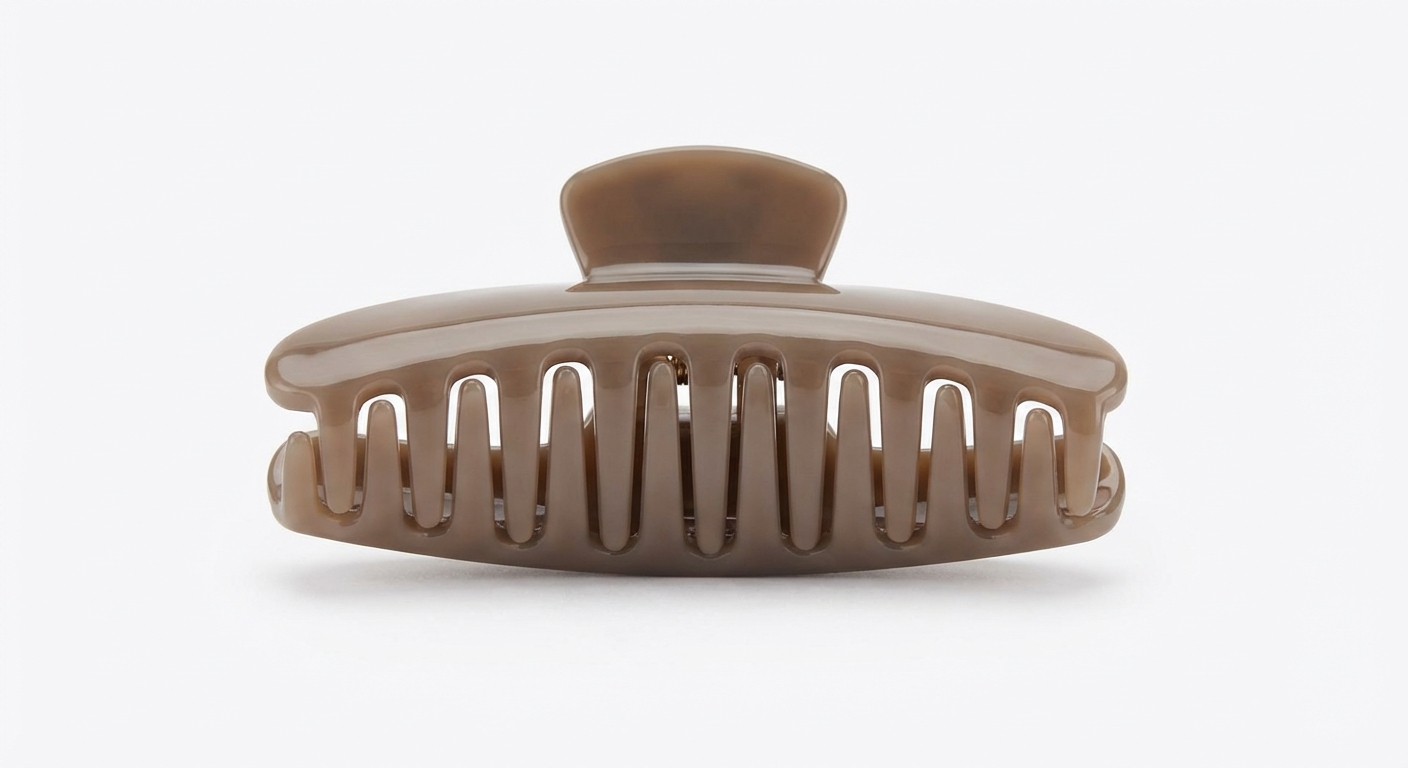
France Luxe Jaw Clip with Double Row Teeth
If the assessment reveals your clips are causing damage, start here. Premium acetate, smooth construction, distributed grip—addresses the most common clip-related damage causes.
“Upgraded after the assessment. My hair is already healthier....”
We tested dozens of claw clips to find the very best options. Below you'll find our complete ranking, with detailed reviews and real customer feedback for each pick.
The Complete Ranking
France Luxe Jaw Clip with Double Row Teeth
“Upgraded after the assessment. My hair is already healthier....” — Verified Buyer
If the assessment reveals your clips are causing damage, start here. Premium acetate, smooth construction, distributed grip—addresses the most common clip-related damage causes.
“Upgraded after the assessment. My hair is already healthier.”
— Verified Buyer
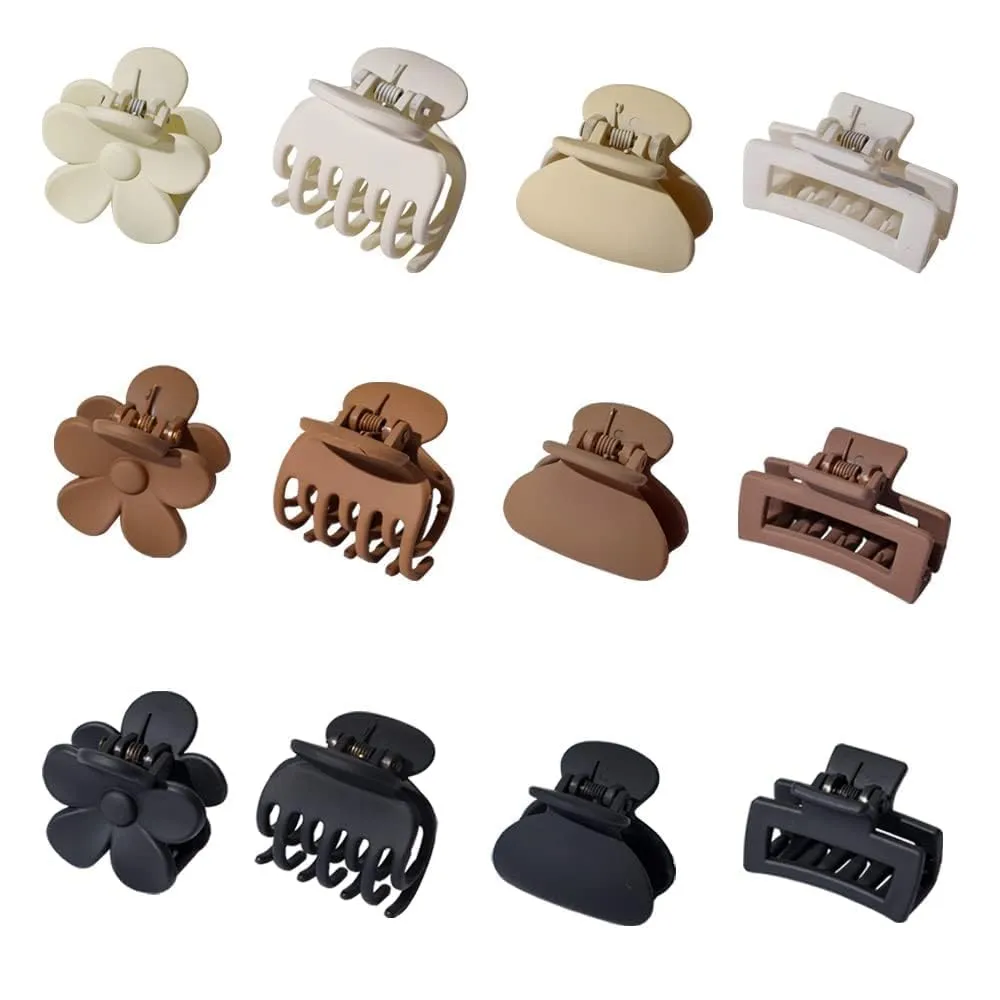
Mini Matte Jaw Clips (12 Pack)
“Having multiple clips makes rotation easy. My hair is thanki...” — Verified Buyer
Multiple clips make it easy to rotate positions daily—a key fix for same-position damage. Lightweight and gentle for transitioning to healthier styling habits.
“Having multiple clips makes rotation easy. My hair is thanking me.”
— Verified Buyer
Upgraded after the assessment. My hair is already healthier.
Quick Comparison
A side-by-side look at our top picks
Frequently Asked Questions
Your hair is trying to tell you something
Location reveals the culprit
Honest assessment requires honesty

Donna Miller
Enjoyed This Guide?
Get more hair tips and product recommendations delivered weekly.