- The Quick Answer
- How Hair Ties Damage Hair
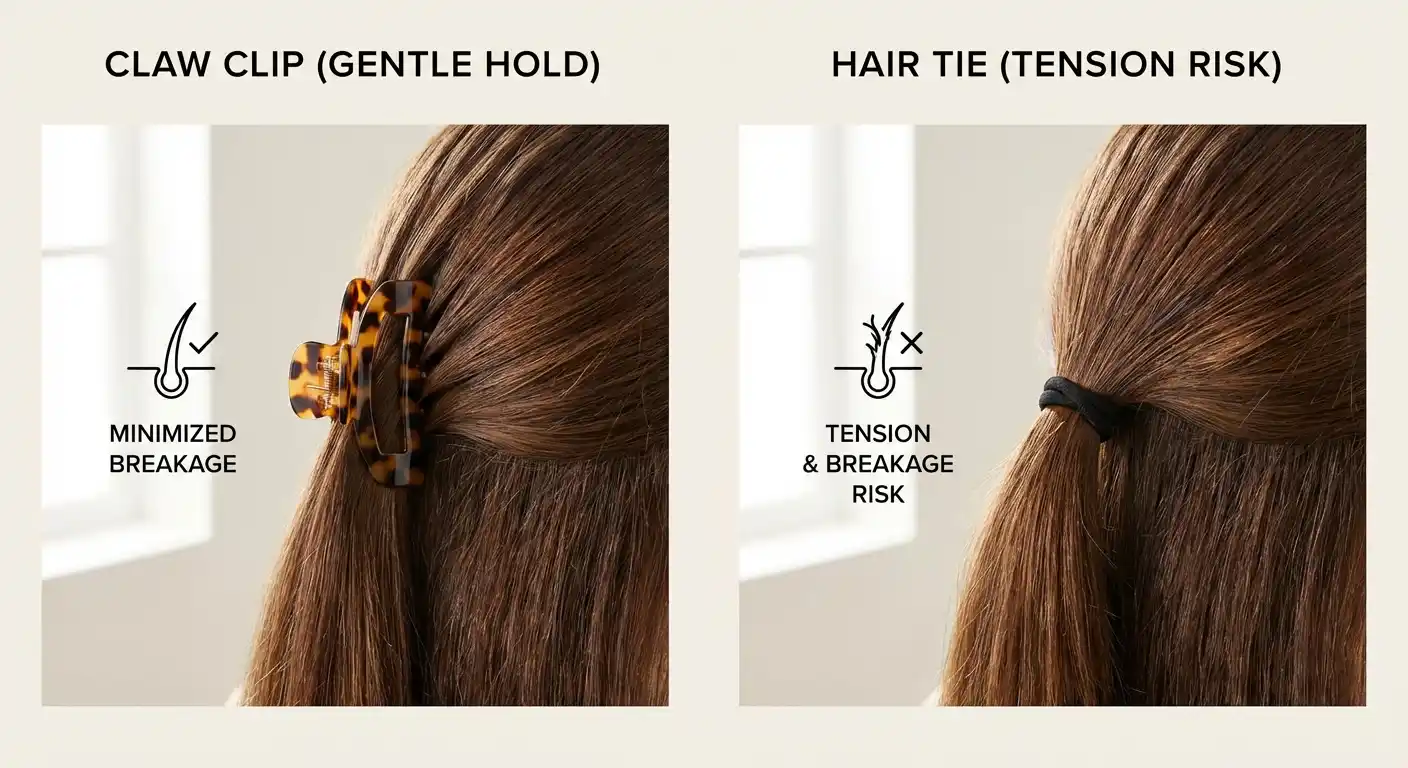
- How Claw Clips Hold Differently
- Side-by-Side Comparison
- What the Research Says
- When Hair Ties Still Make Sense
- Making the Switch
- The Hybrid Approach
- Signs Your Current Method Is Causing Damage
- Damage Comparison by Tie Type
- Claw Clips Still Require Proper Use
- Bottom Line
- FAQ
- Related Articles
The accessories you use daily have more impact on your hair than occasional heat styling.
That's not intuitive. Heat tools feel dangerous—you can hear the sizzle, smell the product. But the cumulative mechanical damage from daily hair ties often exceeds occasional thermal damage.
Here's the good news: you have a choice. And research increasingly shows one option is significantly gentler than the other.
For the complete picture on protecting your hair, see our complete guide to protecting your hair from damage.
The Quick Answer
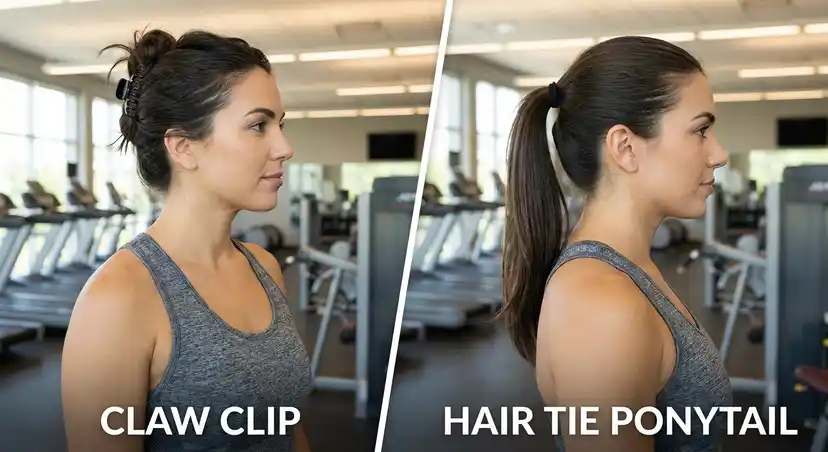
Claw clips cause less damage than hair ties.
Research comparing these two accessory types consistently shows claw clips cause significantly less hair shaft damage than elastic hair ties. The difference comes down to fundamental mechanics: how each accessory holds hair.
But this comparison isn't just about picking a winner—it's about understanding why, so you can make informed choices for your specific situation.
How Hair Ties Damage Hair
Hair ties damage hair through three mechanisms:
1. Friction from Wrapping
Every time you wrap a hair tie around your ponytail, the elastic slides against your hair. This friction:
- Roughens the outer cuticle layer
- Creates micro-tears in the hair shaft
- Causes frizz and split ends
- Compounds with each use
The math: If you wrap a tie 2-3 times daily, that's 730-1,095 wrapping motions per year. Each one creates friction damage.
2. Concentrated Tension
When you pull hair through an elastic, all the tension concentrates in a thin line—exactly where the tie sits.
What this causes:
- Stress at a single point rather than distributed
- Breakage at the "ponytail line" over time
- Weakened strands that snap under normal handling
- Potential for traction alopecia at the hairline
Dermatologists note that claw clips reduce the risk of traction alopecia because they don't tightly constrict hair the way elastic bands do.
For more on this condition, see traction alopecia from hair accessories.
3. Removal Damage
Removing hair ties creates additional stress:
- Pulling the elastic out drags against hair
- Caught strands can be yanked out
- The dent left behind indicates compressed, stressed fibers
- Fast removal = more friction and pulling
The telltale sign: That visible crease after removing a ponytail? It shows where your hair was compressed. Repeated compression at the same spot weakens hair over time.
How Claw Clips Hold Differently
Claw clips work on fundamentally different mechanics:
Distributed Pressure
Instead of concentrating tension in one line, claw clip teeth spread the load across multiple points.
The difference:
- 8-12 teeth sharing the work vs. one elastic line
- Pressure per contact point is dramatically lower
- No single area bears all the stress
No Wrapping Required
Claw clips grip between teeth without wrapping:
- Zero friction from wrapping motions
- Hair slides into position once, not repeatedly wound
- Removal doesn't require unwrapping
Easy Release
Opening a claw clip releases hair immediately:
- Squeeze and the clip opens completely
- Hair falls free without dragging or pulling
- No caught strands (if clip is in good condition)
Positioning Flexibility
Claw clips work in more positions than ponytails:
- Easy to rotate placement daily
- Multiple style options at different heights
- Reduces concentrated stress in one area
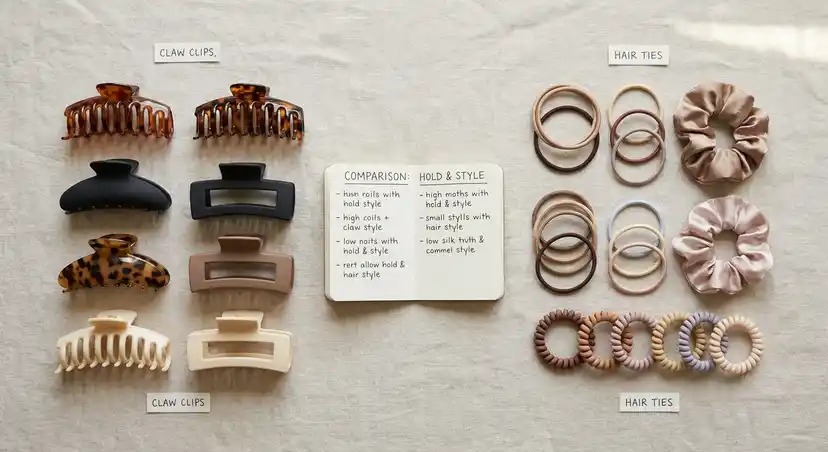
Side-by-Side Comparison
| Factor | Claw Clips | Hair Ties |
|---|---|---|
| Friction per use | Minimal (no wrapping) | High (2-3 wraps) |
| Tension distribution | Spread across teeth | Concentrated in one line |
| Removal friction | None (squeeze and release) | Moderate to high |
| Crease/dent creation | Temporary, superficial | More pronounced |
| Traction alopecia risk | Lower | Higher with tight use |
| Position flexibility | High (many styles) | Lower (typically one spot) |
| Research-backed damage | Significantly less | Significantly more |
What the Research Says
How Mechanics Explain the Difference
Research comparing claw clips to elastic hair ties consistently shows clips cause less damage. The mechanics explain why:
Key factors:
- Claw clips distribute pressure across multiple teeth
- No wrapping friction (hair ties wrap 2-3 times per use)
- Easy release without pulling or dragging
- Less concentrated tension on any single spot
Expert Perspectives
Celebrity hairstylist Jennifer Korab (Renaissance Salon & Spa): "Tight elastic hair ties can create tension on the hair shaft, leading to breakage and thinning, especially when worn repeatedly in the same spot."
Korab also notes that rubber bands are particularly harmful: "They can stick to hair and rip it out when removed, resulting in severe breakage."
Trichologists and dermatologists generally agree that claw clips are safer for long-term hair health, especially for loose styles. For high-activity settings, they recommend gentle alternatives like silk scrunchies over standard elastics.
American Academy of Dermatology
The AAD recommends using covered rubber bands made specifically for hair to minimize damage—acknowledging that standard elastics are problematic.
When Hair Ties Still Make Sense
Despite claw clips' advantages, hair ties have legitimate uses:
High-Impact Workouts
For running, HIIT, or other high-movement activities, a secure ponytail may be necessary:
Harm reduction strategies:
- Use fabric-covered or silk scrunchies instead of elastics
- Keep ties loose
- Switch to claw clips for post-workout
- Don't wear the workout ponytail all day
See claw clips vs. hair ties for working out for activity-specific guidance.
Certain Sports Requirements
Some sports require specific hair containment:
- Swimming (caps + ties)
- Contact sports (secure containment)
- Activities where clips could be dangerous
Personal Preference
Some people simply prefer ponytails for certain looks:
If you choose ties:
- Upgrade to silk or fabric scrunchies
- Rotate position daily
- Keep tension loose
- Limit duration
- Take breaks when possible
For a broader comparison of alternatives, see claw clips vs. scrunchies.
Making the Switch
If you're convinced to try claw clips instead of ties, here's how to transition:
Week 1: Awareness
- Count how often you use hair ties
- Notice where you typically position them
- Pay attention to how tight you style
Week 2: Partial Switch
- Use claw clips when at home
- Keep ties for work/activities where you need them
- Practice different clip styles
Week 3: Primary Switch
- Make claw clips your default
- Reserve ties only for workouts or specific needs
- Build your clip technique
Week 4: Optimize
- Notice any difference in breakage
- Fine-tune your clip styles
- Consider upgrading to quality clips
For styling guidance, see how to style a claw clip: 10 easy hairstyles and how to use a claw clip without damaging your hair.
The Hybrid Approach
You don't have to choose exclusively:
Optimal Strategy
| Situation | Best Choice | Why |
|---|---|---|
| Daily styling | Claw clips | Lowest cumulative damage |
| Work/professional | Quality claw clips | Polished look + hair health |
| Workouts | Secure claw clip or scrunchie | Security with less damage |
| High-impact sports | Fabric scrunchie | Necessary security |
| Sleep | Loose braid with silk scrunchie | Overnight protection |
| Special occasions | Varies by style | Match accessory to need |
This approach captures most of the hair health benefits while accommodating situations where ties are practical.
Signs Your Current Method Is Causing Damage
If you're currently using hair ties regularly, watch for:
Breakage Indicators
- Shorter pieces at the ponytail line
- Hair that seems to snap easily
- Lots of hair in your brush at the tie location
Tension Signs
- Tenderness after wearing ponytails
- Headaches from your hairstyle
- Visible creasing that lasts hours
Progressive Damage
- Hairline appearing to recede
- Temples thinning
- The ponytail itself getting thinner over time
If you notice these signs, switching to claw clips (and gentler techniques overall) can prevent further damage. For a full assessment, see signs your hair routine is causing damage.
Damage Comparison by Tie Type
Not all hair ties are equally damaging:
| Tie Type | Damage Level | Notes |
|---|---|---|
| Rubber bands | Severe | Never use on hair |
| Standard elastics | High | Most common damage source |
| Fabric-covered elastics | Moderate | Better than bare elastic |
| Spiral/coil ties | Low-Moderate | Can tangle in hair |
| Cloth scrunchies | Low | Much gentler than elastics |
| Silk/satin scrunchies | Very Low | Minimal friction |
If you must use ties, upgrading the type dramatically reduces damage—even without switching to clips entirely.
Claw Clips Still Require Proper Use
Claw clips aren't damage-proof. They cause less damage than ties when used properly:
Clip damage sources:
- Twisting too tight before clipping
- Using same position daily
- Clips too small for hair volume
- Poor-quality clips with rough edges
- Yanking clips out without opening
Proper use principles:
- Loose twists only
- Rotate positions daily
- Size clips appropriately
- Choose quality clips with smooth surfaces
- Remove gently by squeezing open first
For detailed technique, see how to use a claw clip without damaging your hair.
Bottom Line
For hair health, claw clips win.
The research is clear: significantly less damage compared to elastic ties. The mechanics explain why: distributed pressure, no wrapping friction, easy removal.
But context matters:
- For most daily styling, claw clips are the healthier choice
- For high-intensity workouts, secure options (including gentle ties) may be necessary
- The hybrid approach captures most benefits while staying practical
- Even switching just your primary method to clips makes a significant difference
Your hair experiences cumulative stress. Every small improvement compounds over time. Switching from daily elastic ties to daily claw clips could mean the difference between visible damage and visible health.
FAQ
Can I still wear ponytails sometimes?
Yes. Occasional ponytails with gentle ties (silk scrunchies) are fine. The issue is daily tight elastic use. If ponytails are your go-to style, try to rotate positions and keep tension loose.
What about spiral/coil hair ties?
Spiral ties are gentler than standard elastics because they distribute tension better. They're a reasonable compromise between elastic ponytails and claw clips. Watch out for tangling, which can cause its own damage.
Do claw clips work for workouts?
Many people successfully use claw clips for workouts. The key is strong springs and proper sizing. For high-impact activities, you may need to experiment or accept some ties for security.
See best claw clips for the gym for recommendations.
How long before I notice a difference?
With consistent claw clip use and gentle technique, many people notice less breakage within 2-4 weeks. More significant improvement in hair health may take 2-3 months as new, undamaged growth comes in.
Are expensive clips really better?
For hair health specifically, quality matters more than brand. Premium acetate clips have smoother surfaces and better springs than cheap plastic. But a well-made budget clip can be gentler than a worn-out expensive one. Focus on: smooth edges, appropriate size, and good spring tension.
For clip recommendations, see best no-damage claw clips for everyday wear.
Related Articles
- The Complete Guide to Protecting Your Hair from Damage
- How to Use a Claw Clip Without Damaging Your Hair
- Traction Alopecia from Hair Accessories
- Claw Clips vs. Scrunchies: Complete Comparison
- Claw Clips vs. Hair Ties: Which Is Better
- Best Claw Clips for Damaged Hair
- Best Breakage-Preventing Claw Clips
- How to Reduce Tension & Pressure When Wearing Clips
- Best Silk & Satin Hair Accessories for Hair Health
- Signs Your Hair Routine Is Causing Damage
- Safe vs. Damaging Hair Clips: How to Tell
- Best No-Damage Claw Clips for Everyday Wear
- How to Protect Your Hair While You Sleep
- How to Recover from Hair Accessory Damage
- Acetate vs. Plastic Claw Clips
TOCESS 8 Pack Big Hair Claw Clips
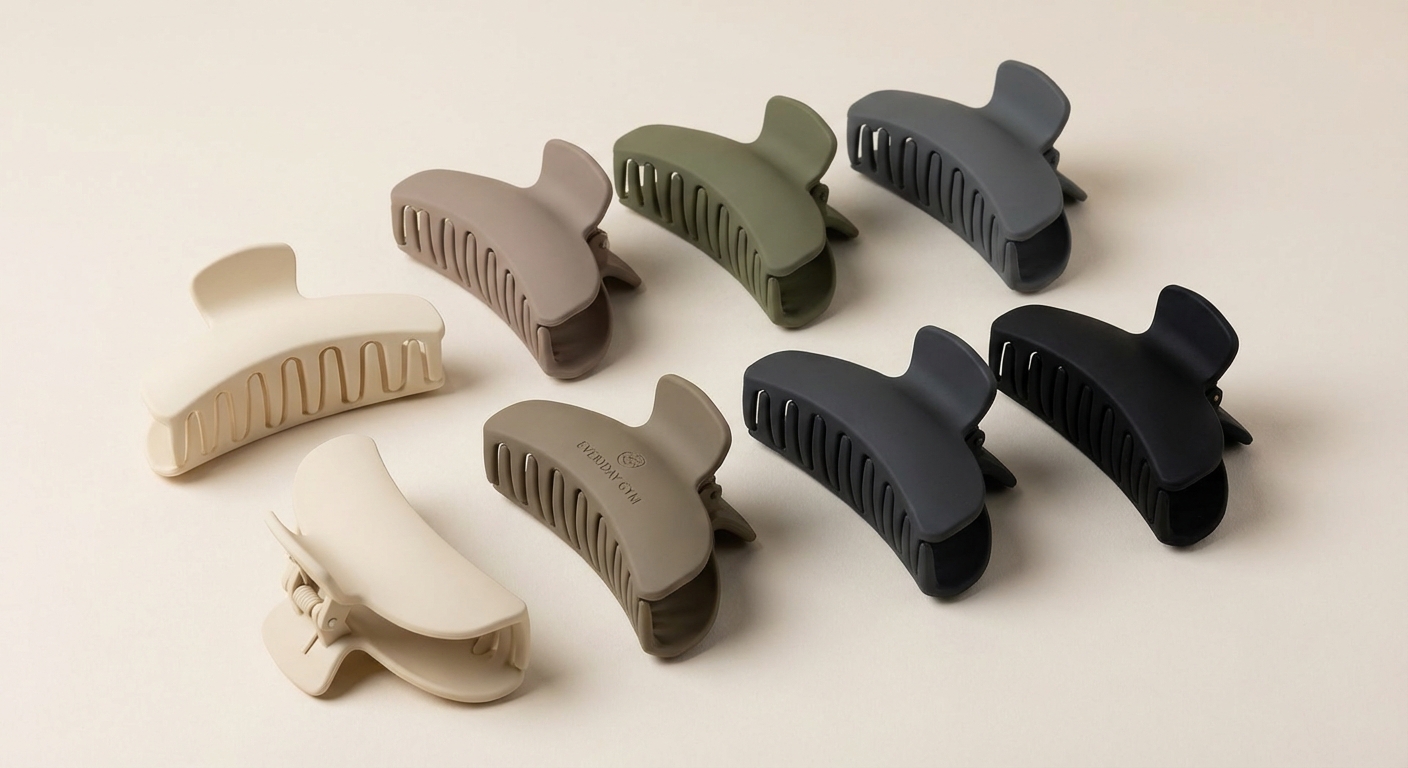
Ready to switch from hair ties? Start here. No wrapping friction, distributed grip, and instant release.
“Switched from hair ties and my breakage has dramatically reduced....”
We tested dozens of claw clips to find the very best options. Below you'll find our complete ranking, with detailed reviews and real customer feedback for each pick.
The Complete Ranking
TOCESS 8 Pack Big Hair Claw Clips
“Switched from hair ties and my breakage has dramatically red...” — Verified Buyer
Ready to switch from hair ties? Start here. No wrapping friction, distributed grip, and instant release. The 8-pack makes transitioning easy with plenty of clips for your new routine.
“Switched from hair ties and my breakage has dramatically reduced.”
— Verified Buyer
France Luxe Jaw Clip with Double Row Teeth
“Made the switch after reading about damage. This clip is so ...” — Verified Buyer
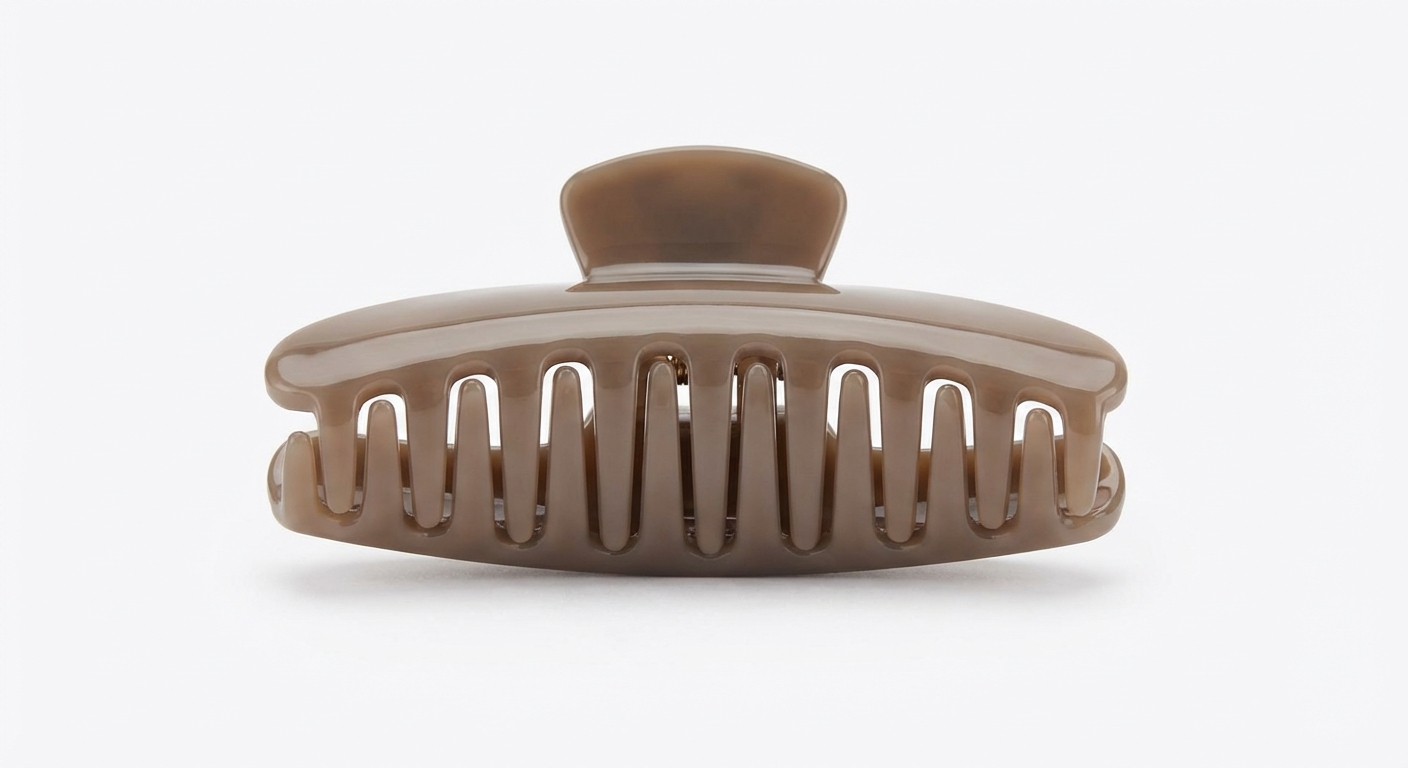
For maximum gentleness after years of hair tie damage. Premium acetate and double row teeth are significantly gentler than any elastic alternative. Investment in recovery.
“Made the switch after reading about damage. This clip is so much gentler.”
— Verified Buyer
Goody Ouchless Hair Elastics
“When I need a hair tie, these are the gentlest. But I use cl...” — Verified Buyer
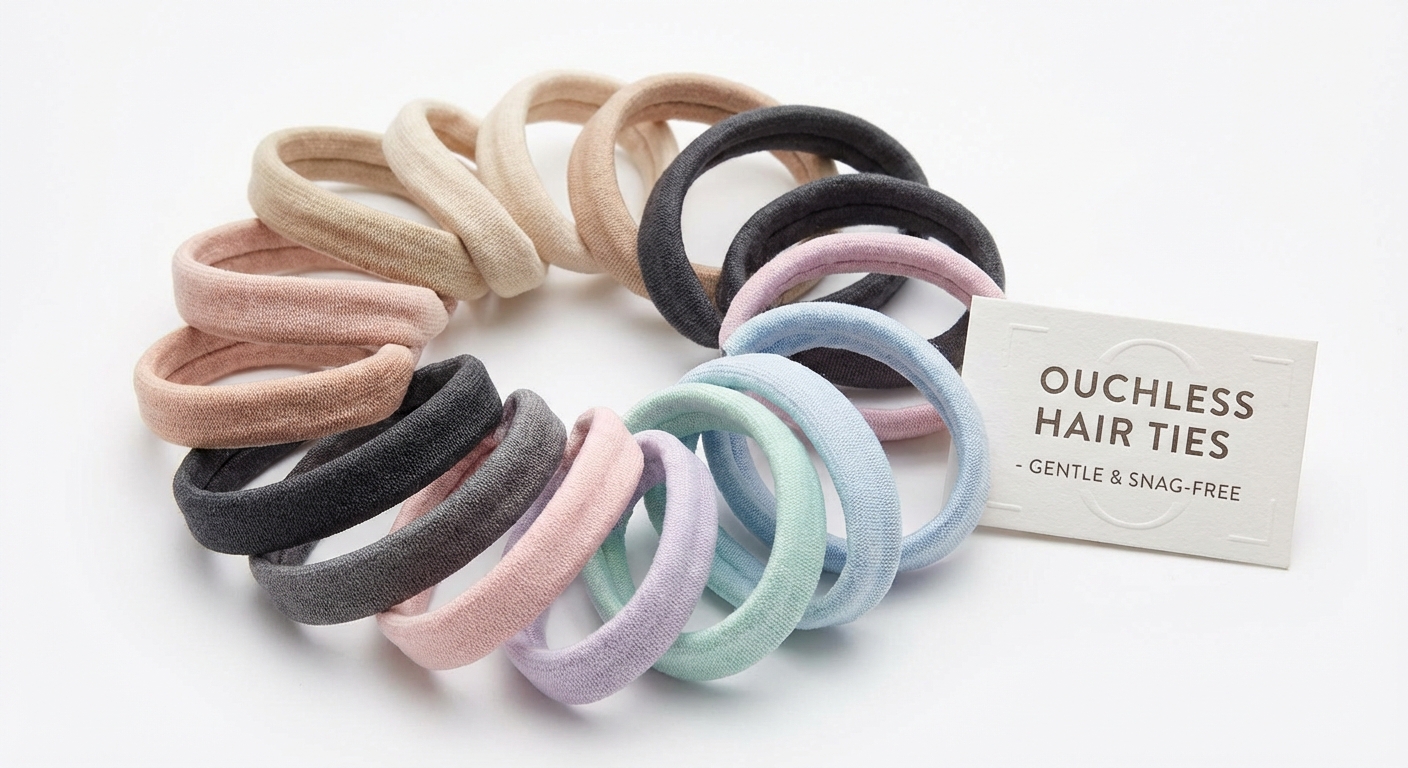
If you must use hair ties for workouts, these are the gentlest option. No-snag construction minimizes friction. But consider claw clips for most other occasions.
“When I need a hair tie, these are the gentlest. But I use clips most days now.”
— Verified Buyer
Switched from hair ties and my breakage has dramatically reduced.
Quick Comparison
A side-by-side look at our top picks
Frequently Asked Questions
Research supports the switch
The wrapping problem
It's not all or nothing

Donna Miller
Enjoyed This Guide?
Get more hair tips and product recommendations delivered weekly.