- Why Reducing Tension Matters
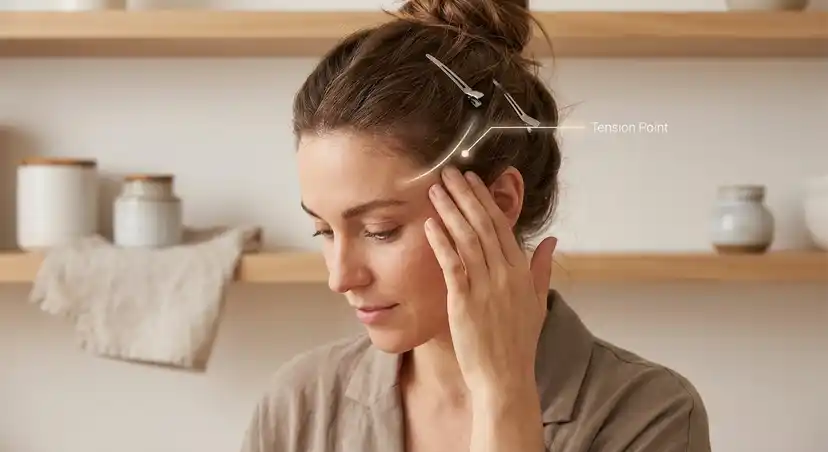
- The Tension Assessment
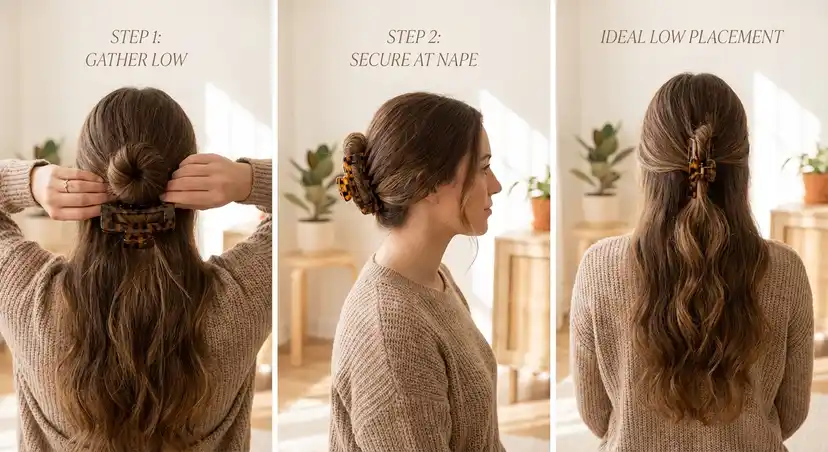
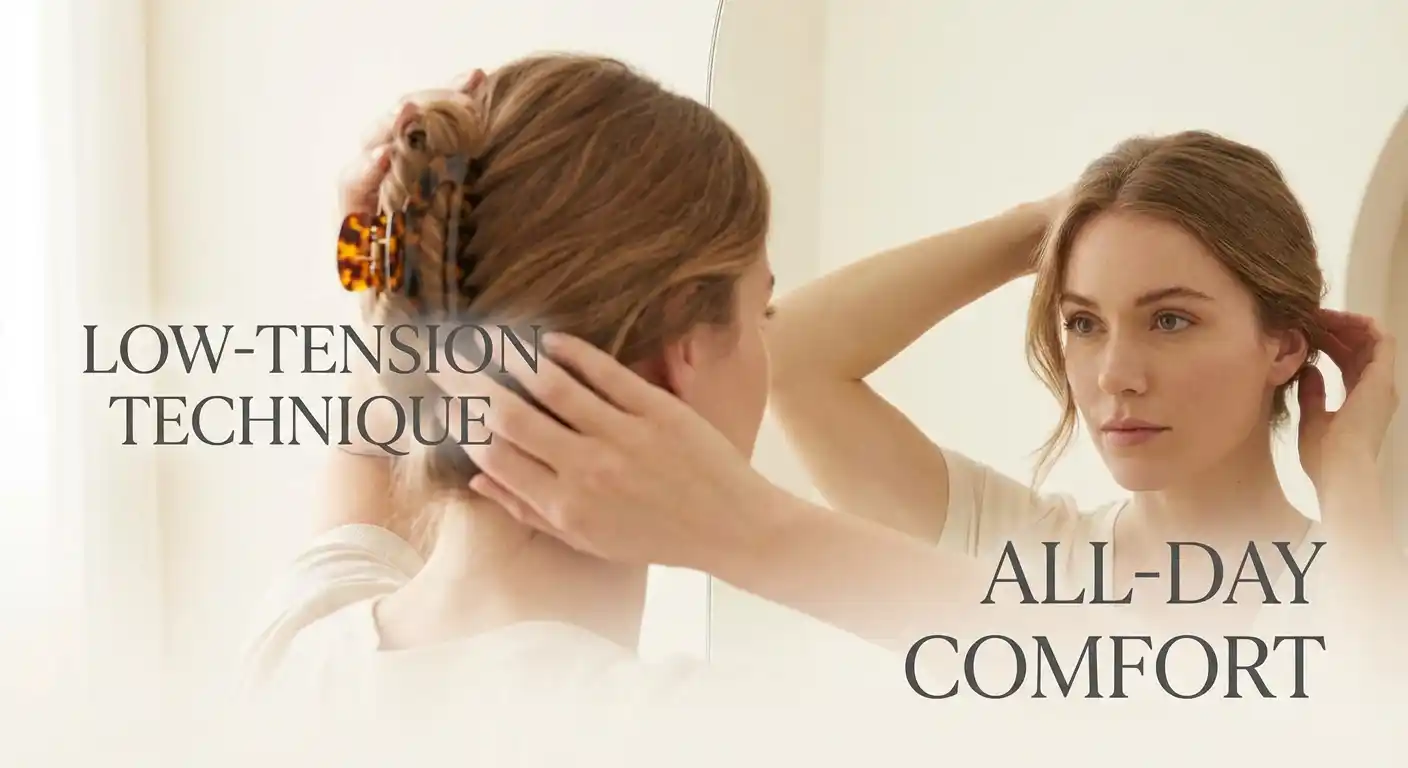
- Technique 1: The Pre-Loosening Gather
- Technique 2: The Gravity Check
- Technique 3: The Two-Point Distribution
- Technique 4: The Half-Up Solution
- Technique 5: The Elastic-Free Approach
- Technique 6: The Rotation Protocol
- Technique 7: The Break Strategy
- Technique 8: The Intentional Looseness
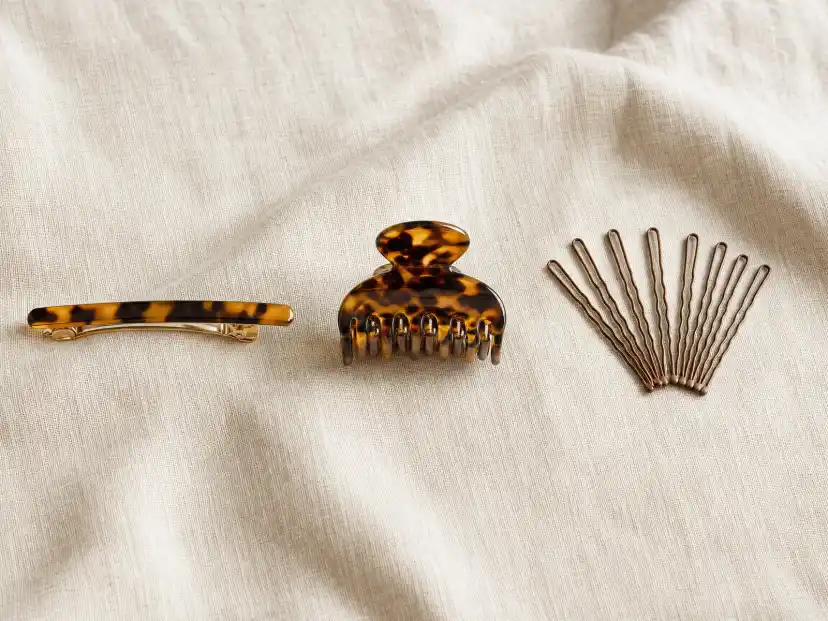
- Choosing the Right Clips for Lower Tension
- Troubleshooting Common Tension Problems
- Signs Your Tension-Reduction Is Working
- FAQ
- Related Articles
If your hairstyle is uncomfortable, it's probably damaging your hair.
Tension creates breakage. Pressure causes headaches. Tight styling leads to traction alopecia. The path to healthier hair runs through gentler styling—and that means consciously reducing tension.
This guide covers practical techniques for reducing tension and pressure while still achieving styles that hold. Because gentle doesn't have to mean messy.
For comprehensive hair protection, see our complete guide to protecting your hair from damage.
Why Reducing Tension Matters
For Hair Strand Health
Tension creates stress at specific points:
- Where you twist
- Where the clip grips
- Where hair bends over the clip
That stress causes:
- Micro-fractures in the hair shaft
- Weakening at stress points
- Eventual breakage
For Scalp and Follicle Health
Tension pulls on hair follicles:
- Follicles become inflamed
- Repeated stress damages the follicle structure
- Chronic tension causes traction alopecia (hair loss)
For more on this, see traction alopecia from hair accessories.
For Comfort
High-tension styles cause:
- Headaches
- Scalp tenderness
- Discomfort that distracts throughout the day
- The need to take hair down early
The Tension Assessment
Before you can reduce tension, you need to identify it. After styling, ask:
The Sensation Test
- Do I feel pulling anywhere on my scalp? (If yes, too tight)
- Is there a constant awareness of my hairstyle? (May indicate tension)
- Do I feel relief when I take hair down? (Indicates sustained tension)
The Time Test
- After 30 minutes, is my scalp sore? (Style needs loosening)
- Do I get headaches after an hour of wearing this? (Style is too tight)
- Can I comfortably wear this all day? (Goal achieved)
The Visual Test
- Does the hair at my hairline look pulled taut? (Too tight)
- Is there visible strain at the clip point? (Loosen the twist)
- Are there red marks on my scalp when I remove clips? (Too much pressure)
Technique 1: The Pre-Loosening Gather
Instead of gathering hair tightly then trying to loosen:
Step by step:
- Start with loose, falling hair
- Gather with absolutely no pulling—just collecting
- Let hair drape rather than pull it
- Only then begin a very loose twist
- Clip before the twist becomes tight
The principle: It's easier to keep hair loose from the start than to loosen hair that's already gathered tight.
Technique 2: The Gravity Check
High styles fight gravity; low styles work with it.
High styles (crown, top of head):
- Gravity constantly pulls hair down
- Clips must grip tighter to hold
- More tension on follicles
- Higher headache risk
Low styles (nape, below ears):
- Gravity supports the style
- Clips hold with less grip needed
- Less tension on follicles
- Typically more comfortable
Application: Default to lower positions. Reserve high styles for occasions, not daily wear.
Technique 3: The Two-Point Distribution
Instead of one tight clip, use two looser clips.
Why it works:
- Total holding force divided by two
- Each clip needs to grip less hard
- No single point bears all stress
- Looks intentional and stylish
How to do it:
- Gather hair loosely
- Create a loose twist
- Position first clip
- Position second clip nearby
- Each clip grips part of the style
Best for: Thick hair, heavy hair, styles that normally require tight gripping.
Technique 4: The Half-Up Solution
Half-up styles inherently create less tension because less hair is under stress.
Benefits:
- Less weight pulling on clips
- Fewer strands under tension
- More natural, relaxed appearance
- Lower position often works well
How to do it gently:
- Take only the top/front section
- Leave the majority of hair down
- Use a small or mini clip
- Keep the gathered portion loose
For half-up clip options, see best mini claw clips for half-up styles.
Technique 5: The Elastic-Free Approach
Eliminating elastics removes a major tension source.
Why claw clips create less tension than ties:
- No wrapping friction
- Distributed grip vs. concentrated line
- Easy adjustment without full restyling
- Simple, gentle removal
Research shows claw clips cause significantly less hair shaft damage than elastic ties because they distribute pressure across multiple teeth rather than concentrating tension in one line.
For the comparison, see claw clips vs. hair ties for hair health.
Technique 6: The Rotation Protocol
Same position daily = cumulative tension at that spot.
Daily rotation schedule:
| Day | Position | Height |
|---|---|---|
| Monday | Center back | High |
| Tuesday | Center back | Low |
| Wednesday | Right side | Mid |
| Thursday | Center back | Mid |
| Friday | Left side | Mid |
| Weekend | Varied or down | Rest |
The principle: No single area experiences repeated stress. Tension distributes over time.
Technique 7: The Break Strategy
Give your scalp regular relief.
Micro-breaks:
- Reposition clips every 2-3 hours
- Slightly different spot reduces cumulative stress
- Takes seconds, provides relief
Daily breaks:
- Take hair down when you arrive home
- Evening hours = scalp recovery time
- Don't wear clips while sleeping
Weekly breaks:
- At least one day with hair completely down
- Let follicles fully recover
- Consider this essential, not optional
Technique 8: The Intentional Looseness
Many people tighten reflexively. Counter this consciously.
The loose enough test: After styling, intentionally loosen a bit more than feels necessary.
- Does it still hold? Great—that's your new baseline
- Does it fall immediately? Tighten minimally and try again
The discovery: Most people find their styles hold at much looser tensions than they habitually use. The tight grip is often unnecessary.
Choosing the Right Clips for Lower Tension
Some clips require more tension to hold. Choose clips that grip well without death grips.
Features That Enable Loose Styling
| Feature | Why It Helps |
|---|---|
| Double-row teeth | More grip points = less pressure per point |
| Matte finish | Friction grip without sharp teeth |
| Strong spring | Holds without needing tight twist |
| Appropriate size | Doesn't strain to contain hair |
| Quality construction | Consistent, reliable hold |
Features That Require More Tension
| Feature | Problem |
|---|---|
| Weak spring | Forces tighter twisting to compensate |
| Too small | Strains to hold, requires tight grip |
| Smooth, shiny surface | Slips, requiring tighter styling |
| Poor teeth alignment | Uneven grip needs compensation |
For clip recommendations, see best no-damage claw clips for everyday wear.
Troubleshooting Common Tension Problems
"My styles fall out when I style loosely"
Causes and fixes:
- Wrong clip size → Size up
- Weak spring → Higher quality clip
- Fine/slippery hair → Double-row teeth or matte finish
- Wrong technique → Practice the pre-loosening gather
See why does my claw clip keep falling out.
"I get headaches from my hairstyles"
Causes and fixes:
- Too tight at hairline → Lower position, looser style
- Clips pressing scalp → Reposition away from sensitive spots
- Extended wear → More frequent breaks
- High position fighting gravity → Try lower styles
"My hairline is thinning where I style"
Immediate action:
- Stop all tight styling immediately
- Switch to loose claw clips only
- Rotate position every single day
- See a dermatologist if thinning continues
This is early traction alopecia—caught now, it reverses. See traction alopecia from hair accessories and signs your hair routine is causing damage for self-assessment.
"I can't achieve the style I want with loose techniques"
Consider:
- Does that style require damaging tension?
- Is a modified version achievable loosely?
- Would a different style work better?
- Is the aesthetic worth the damage?
Some styles inherently require tension. That doesn't make them safe—it means they shouldn't be worn daily.
Signs Your Tension-Reduction Is Working
After implementing these techniques, you should notice:
Within days:
- Less scalp soreness
- Fewer headaches
- Increased comfort
- Styles feel "easy" rather than "tight"
Within weeks:
- Less breakage
- No tender spots
- No hairline irritation
- Confidence in comfortable styling
Within months:
- Hair appears healthier
- Previous thinning areas may recover
- Styling becomes naturally gentle
- You forget you used to style tightly
FAQ
Won't loose styles look messy?
Not if you embrace intentional looseness. The "effortless" look that's trendy literally requires loose styling. Tight, perfect styles look dated compared to relaxed, lived-in looks.
How do I know if I've loosened enough?
If you can feel your hairstyle (awareness of tension), it's probably still too tight. If you forget you're wearing clips until you look in a mirror, you've achieved appropriate looseness.
Can I wear high ponytails at all?
Occasionally, yes. The issue is daily tight high styling. A loose-ish high ponytail for a special occasion won't cause damage. Daily tight high ponytails cause progressive damage.
What if my hair is thick and heavy?
Thick hair needs support, not tighter grips. Try: multiple clips distributing weight, lower positions working with gravity, the two-point distribution technique, and larger clips that don't strain.
Is some tension inevitable?
Any styling creates some tension. The goal is minimizing unnecessary tension—the extra tightness from habit, anxiety about styles falling, or wrong technique. Essential tension (just enough to hold) is acceptable.
Related Articles
- The Complete Guide to Pain-Free Hair Styling
- Why Do Hair Clips Give Me Headaches?
- Best Claw Clips for Sensitive Scalps
- How to Position Hair Clips to Avoid Headaches
- The Complete Guide to Protecting Your Hair from Damage
- How to Use a Claw Clip Without Damaging Your Hair
- Traction Alopecia from Hair Accessories
- Why Does My Claw Clip Keep Falling Out: 7 Fixes
- Best Gentle Claw Clips for Thinning Hair
- Best No-Damage Claw Clips for Everyday Wear
- Best Breakage-Preventing Claw Clips
- Safe vs. Damaging Hair Clips: How to Tell
- Signs Your Hair Routine Is Causing Damage
- Best Claw Clips for Damaged Hair
- How to Protect Your Hair While You Sleep
- How to Recover from Hair Accessory Damage
- Claw Clips vs. Hair Ties for Hair Health
- Why Your Hair Clip Might Be Breaking Your Hair
- Best Silk & Satin Hair Accessories for Hair Health
- Acetate vs. Plastic Claw Clips
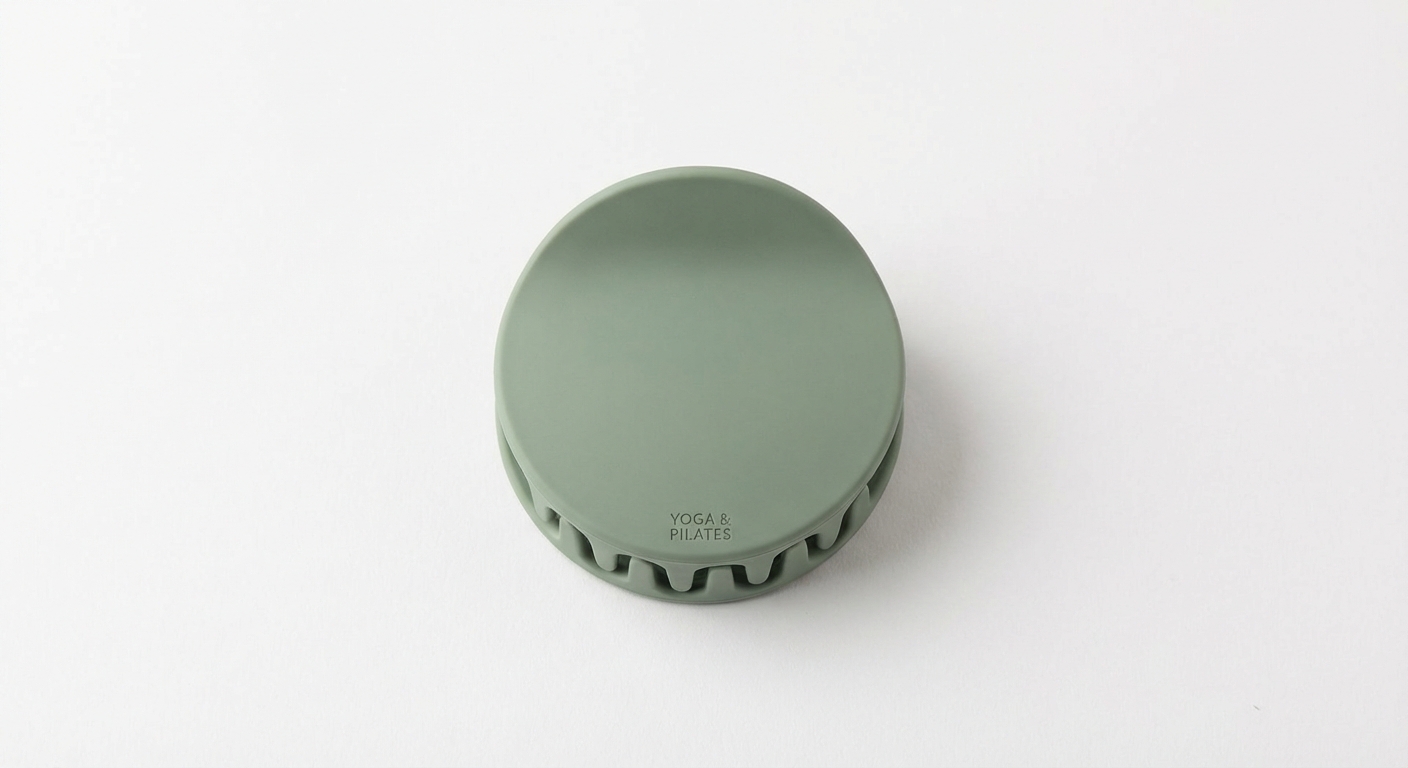
TELETIES Medium Flat Round Clip
Flat-back design is the key to eliminating pressure. Sits flush against your head without creating the concentrated stress points that cause headaches and damage.
“No more headaches! The flat design completely eliminated pressure points....”
We tested dozens of claw clips to find the very best options. Below you'll find our complete ranking, with detailed reviews and real customer feedback for each pick.
The Complete Ranking
TELETIES Medium Flat Round Clip
“No more headaches! The flat design completely eliminated pre...” — Verified Buyer
Flat-back design is the key to eliminating pressure. Sits flush against your head without creating the concentrated stress points that cause headaches and damage. Bendable teeth add flexibility.
“No more headaches! The flat design completely eliminated pressure points.”
— Verified Buyer
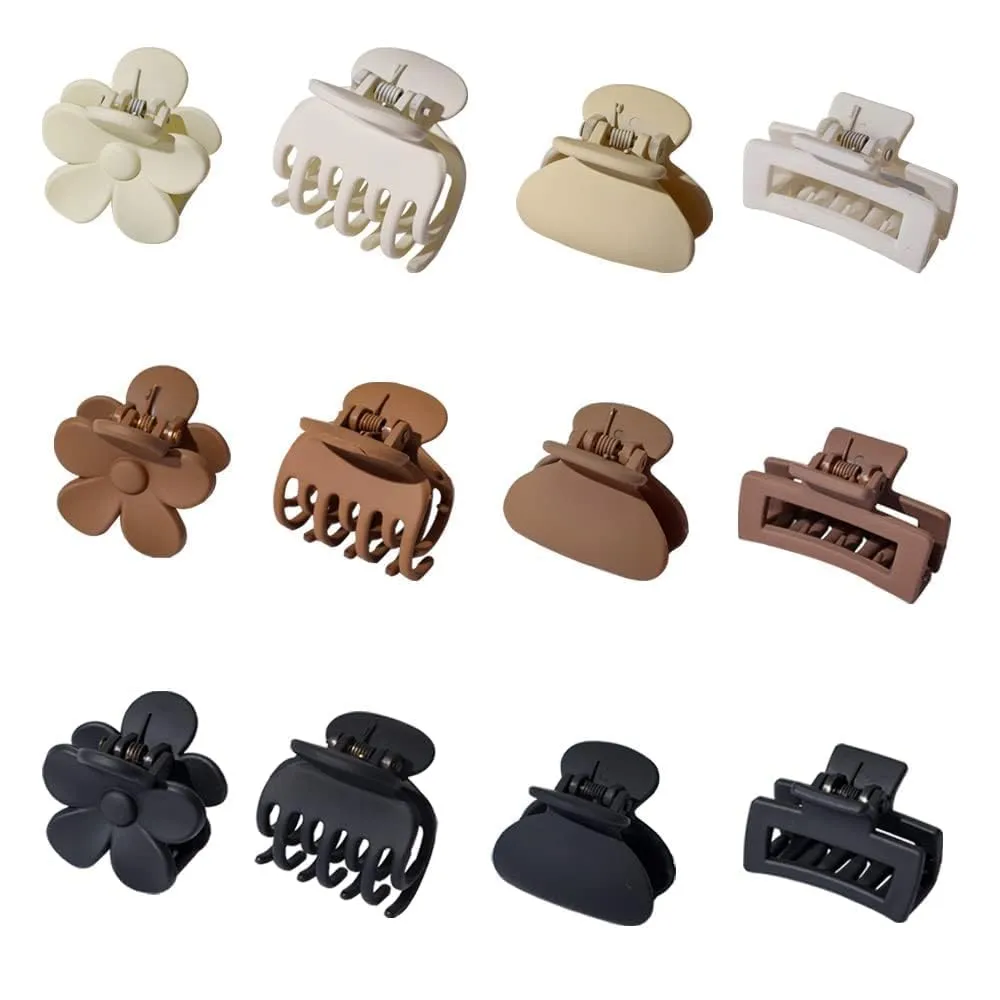
Mini Matte Jaw Clips (12 Pack)
“So light I forget I'm wearing it. Zero scalp tension....” — Verified Buyer
Lightweight construction means less pull on your scalp. Mini size reduces leverage that causes tension. Perfect when you need gentle hold without any discomfort.
“So light I forget I'm wearing it. Zero scalp tension.”
— Verified Buyer
No more headaches! The flat design completely eliminated pressure points.
Quick Comparison
A side-by-side look at our top picks
Frequently Asked Questions
Tension is the enemy
Comfort equals safety
Loose can still be secure

Donna Miller
Enjoyed This Guide?
Get more hair tips and product recommendations delivered weekly.