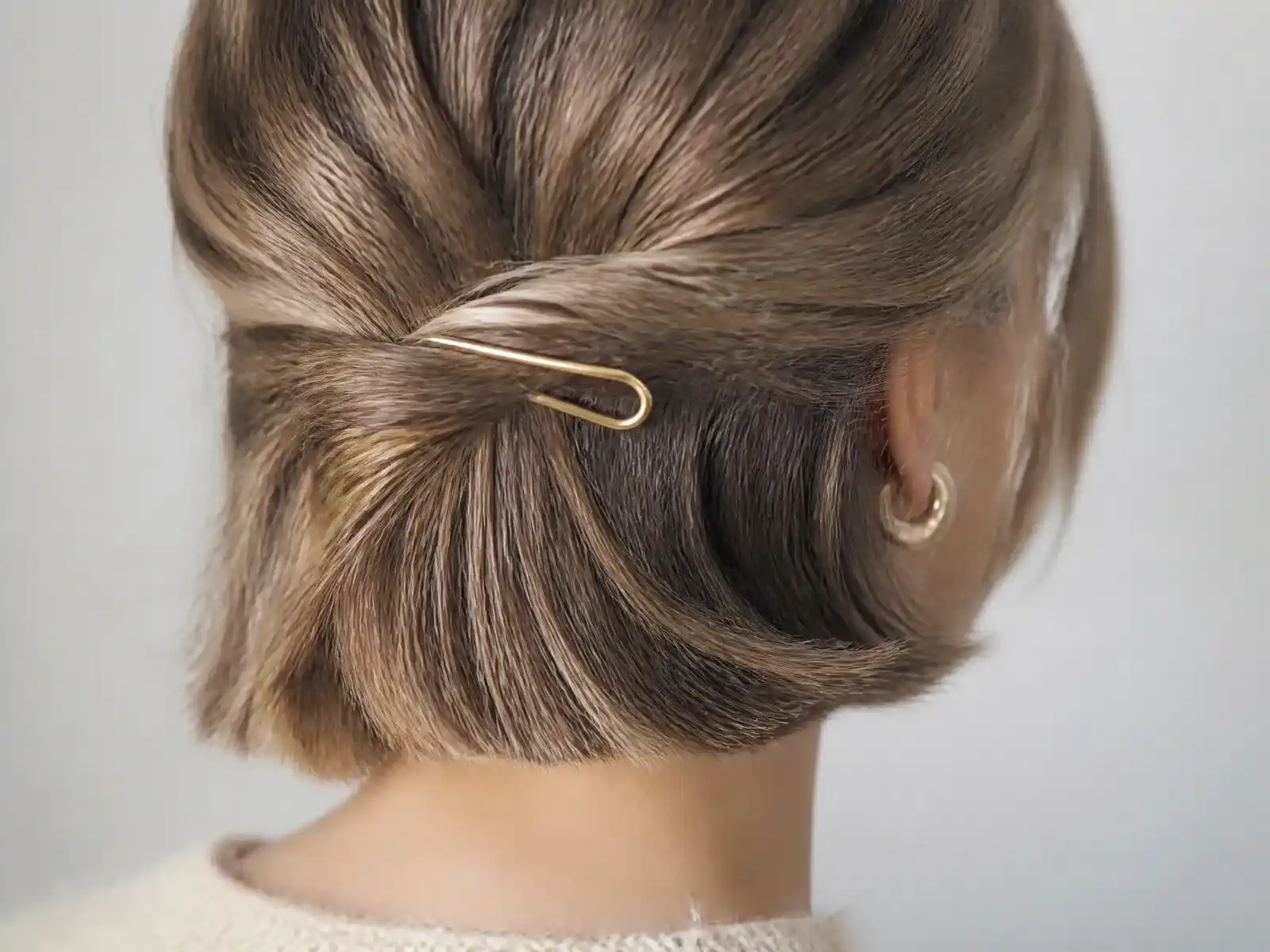
- The Length Threshold for a French Pin With Short Hair
- Why a French Hair Pin on Short Hair Slips: Three Failure Modes
- Four Short Hair Styles That Actually Hold a French Pin
- Choosing a French Hair Pin for Short Hair: Buy Shorter Than You Think
- French Pin or Claw Clip on a Bob?
- If Your Hair Is Below the Threshold
- The Bottom Line
Short answer: a French hair pin on short hair works down to roughly collarbone length, and mostly does not below that. The pin holds by wrapping hair around one prong and levering the other through a twist, so it needs enough length for one full turn. A chin-length bob cannot supply that turn.
Best Claw Clips is reader-supported. When you buy through links on our site, we may earn an affiliate commission at no extra cost to you.
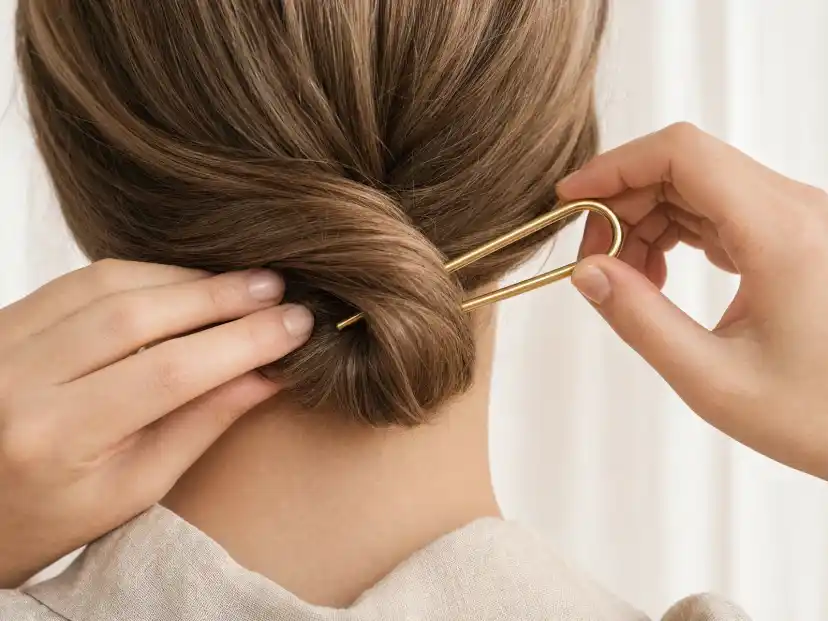
That threshold is geometric, not cosmetic, which is why the same pin that holds a friend's chignon all day falls out of your bob in ninety seconds. Your technique is probably fine — there is simply not enough hair to complete the rotation the tool runs on. If that motion is new, read how to use a french hair pin first — the insert, scoop, half-turn, push sequence is identical on short hair, just far less forgiving of a sloppy step. For materials, prong gaps and sizing across every length, our french hair pin fundamentals guide covers the whole category. This piece answers one question: what holds on short hair, and what slips.
The Length Threshold for a French Pin With Short Hair
Glamour South Africa, in a guide built around expert stylist and Mint Tools cofounder Van Hong, states that just about anyone with collarbone-length hair or longer can use this accessory. That is the cleanest published line on the subject, and it matches what we see.
Here is why the collarbone keeps coming up. Teleties, which publishes its own how-to, explains that the French hair pin relies on tension to stay put, and that failing to create enough of it leaves the pin nothing to grip. Tension comes from the wrap: as you rotate the pin inside a twist, a small band of hair winds around the near prong while the far prong levers down through the mass. One full turn of a twist is the minimum unit of grip. Below that, you are not making a coil, you are making a bend, and a bend springs back.
Length converts to turns very roughly. America's Beauty Show's guide to bob lengths uses the chin, the jaw and the collarbone as its reference lines, describing a chin-length bob at the short end and a collarbone-length lob at the long end. In practice a lob gives you one usable turn at the nape. A chin-length bob gives you most of one, which is not the same thing.
Why a French Hair Pin on Short Hair Slips: Three Failure Modes
Short-hair slippage is almost never mysterious. It is one of three things, each with a different fix.
Too little wrap. The twist was shallow, so the rotation had nothing to wind. You feel this as a pin that turns freely and never builds resistance. Teleties' advice for fine hair applies just as well to short hair: create tighter twists and use smaller sections so the pin has more grip and does not slip out. Retwist until the rope feels firm enough to tug, then pin.
Ends escaping the twist. Short hair has proportionally more ends near the anchor point, and a layered bob has several sets of them. Ends that slide out of the coil take the tension with them, and the style loosens from the outside in. Fold the tail back into the twist before you pin rather than after, and pin through the outer wall of the coil into the hair beneath it.
The pin sitting proud of the head. This is the most common one, and the easiest to spot in a mirror. The push step is what lays the pin flat along the skull, and on short hair it feels like there is nowhere left to push, so people stop at the rotation. A pin that stands away from the head is a lever with your own head movement applying force to it. If you can hook a finger under the outside edge, it will unseat itself before lunch.
One caution while you are tightening things up. Glamour South Africa's guide advises that a French pin should never cause pain, and that hair pulled too tightly means taking the pin out and reinserting it closer to the surface of the style. The American Academy of Dermatology lists pain from tightly pulled hair, stinging, crusts and scalp tenting as signs a style is too tight. Short hair tempts you to compensate for a shallow twist by pulling harder. Take a thinner section instead.
Four Short Hair Styles That Actually Hold a French Pin
Ordered from most to least forgiving. All four ask the pin to hold a section rather than a whole head.
- The half-up. The one to start with. Teleties addresses shorter and layered hair directly, advising those who have given up on the pin to ditch the low bun and opt for a half-up look that secures only the top section. Gather from behind the temples, twist that section once toward the back, and pin through the twist into the hair underneath.
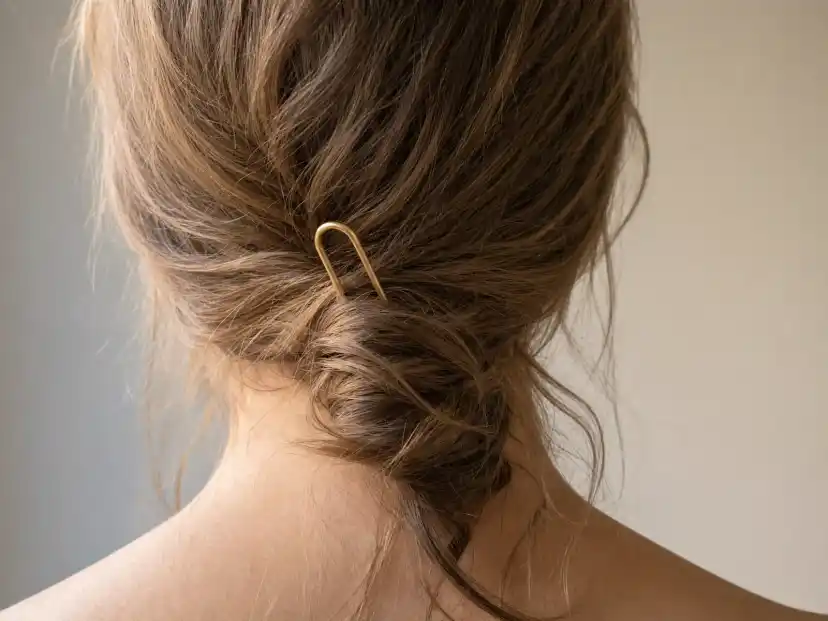
- A low nape twist. For lob length only. Gather everything low, roll it upward once against the head, tuck the ends inside, and pin horizontally through the outer wall. If the roll unravels before the pin lands, fold the ends in earlier so the roll shortens into something one hand can hold.
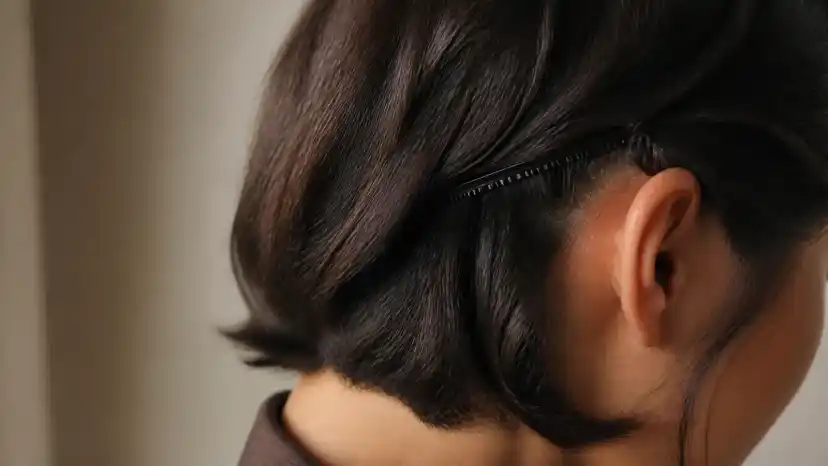
- The side tuck. Sweep everything to one side, twist the sweep flat against the head just behind the ear, and pin it there. This works below the usual threshold because the twist lies along the scalp rather than standing off it, so the prongs have the head to brace against.
- Pinning back one section. Take one front section, twist it back, pin it behind the ear and leave the rest down. It is not an updo, but it is the most reliable thing a pin does on a bob.
Grip is not optional at this length. TEMUR, the celebrity hairstylist quoted by PureWow, recommends that those with finer hair apply texture or hairspray to build grip and stop the pin slipping out; Teleties suggests teasing, texturising spray or texturising powder for the same reason. An Indigo Day is blunter still, calling it the real trick: spray the exact section that is going into the pin with texturising spray or powder before you twist.
Choosing a French Hair Pin for Short Hair: Buy Shorter Than You Think
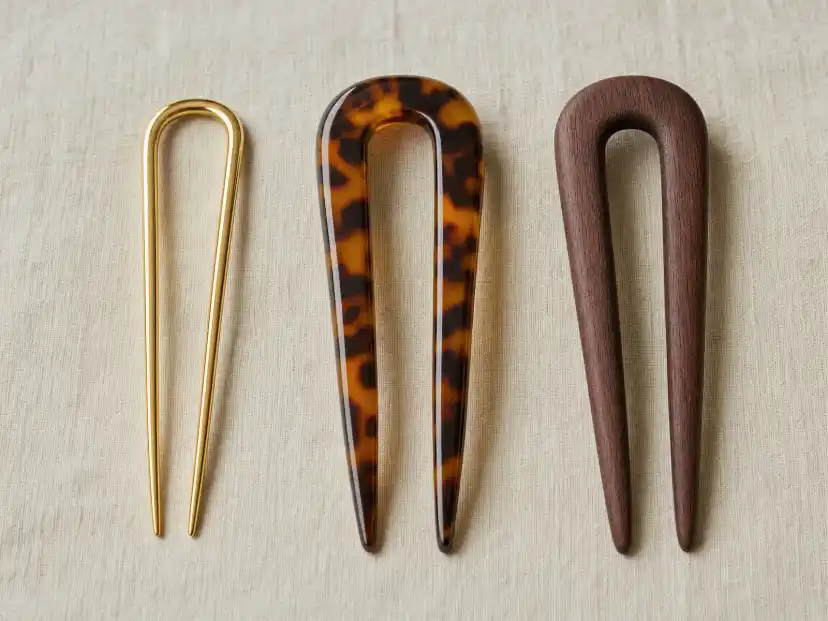
Most people arrive with a pin that is too long, because the long ones photograph better. PureWow's sizing guidance is that small pins of around one to two inches are best for short locks, while larger pins of three to four inches suit long, thick or curlier strands.
A four-inch pin on a bob is not neutral — it is worse than no pin. A prong longer than the depth of your twist exits the far side of the coil, where it holds nothing, catches on collars and pushes the whole pin outward as you move. Length only helps while the prong is still inside hair.
So the short-hair spec is a short pin, a curve that follows the head, and a finish that will not snag a fine section.
Of the three here, the Twoheadpig four-pack is the one we would start with, at 9.99 dollars as of August 2026. It is the only pin in this group with a published measurement — the listing gives 3.2 by 1.1 by 0.2 inches — the short end of what we can source, though still above PureWow's one-to-two-inch band for short hair. Twoheadpig describes acetate board material, a serrated anti-slip design and a curved angle for better head fit. Treat the rest of the copy sceptically: the same listing pitches it as a prestige pin for fine hair and as suitable for thin or thick hair. The length is the reason to buy it.
If you would rather have one solid metal pin than four, the Kitsch French Hair Pin was 9.93 dollars as of August 2026. Kitsch specifies zinc alloy with a smooth anti-rust finish that it says glides through hair without snagging, and markets it for thick, thin, curly or straight hair with ergonomic curves said to distribute tension evenly. Kitsch does not publish a length, so check the listing photograph against your own twist before committing.
And because short styles usually want two or three small anchors rather than one big one, the BEoffer three-pack at 6.29 dollars as of August 2026 is the cheapest way to test that. BEoffer supplies gold, silver and black, describes rounded tips and a smooth rubbed finish that glides without pulling, and claims the U-shaped profile does not leave the dents or creases a claw clip does. That last one is a seller claim, not our finding — though an open pin does not clamp, so it has less to crease with.
French Pin or Claw Clip on a Bob?
On short hair a claw clip closes on a gathered section and grips mechanically. A French pin has to be earned through a twist, a rotation and a push, and on a bob any of those three can go wrong.
Where the pin wins is finish. PureWow notes that French pins are larger than bobby pins and can hold more hair without leaving marks, and on a deliberate half-up twist the result looks styled rather than clipped. Where the clip wins is tolerance — it does not care whether your twist was tight. We work through the full trade in french hair pin vs claw clip; the short version for short hair is that the pin is the better-looking option and the clip is the more reliable one.
Our rule of thumb: use the pin on days you have a mirror and two minutes, and the clip on days you do not.
If Your Hair Is Below the Threshold
If your hair sits at or above the chin, a French pin is not going to hold a whole-head style, and no amount of texturising powder changes the geometry. There is no technique waiting to be discovered.
What still works is the pinned-back section above, treated as a decorative anchor rather than a structural one. Everything else at that length belongs to clips: our guide to how to use a claw clip on short hair covers the sizes and the half-up, side-pin and back-gather styles that were designed around not having a twist to work with.
One more thing worth doing while your hair is short, whichever tool you use. The American Academy of Dermatology advises avoiding frequently wearing hairstyles that pull on your hair, and changing your style regularly so hair can recover. Short hair means fewer anchor points, so the same spot takes the load every day unless you deliberately move it.
The Bottom Line
The threshold is one turn of a twist, which in practice means roughly collarbone length. Above it, a low nape twist will hold. Below it, work in half-up and side sections, buy the shortest pin you can find, add texture before you twist, and push the pin flat rather than leaving it standing.
If you are still deciding what to buy, our french hair pin buying guide covers length, material, prong gap and stiffness across every hair type. For a bob, the only one of those four you cannot compromise on is length.
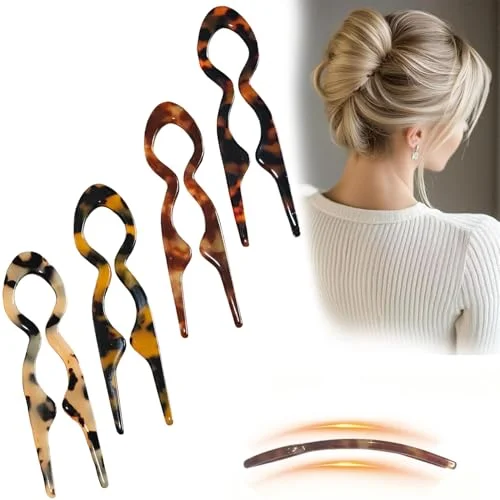
Twoheadpig Prestige Curved French Hair Pins, 3.2 Inch (4 Pack)
At 3.2 inches this is the shortest pin we stock, and on a bob that is the point — anything longer exits the twist before it can turn.
We tested dozens of claw clips to find the very best options. Below you'll find our complete ranking, with detailed reviews and real customer feedback for each pick.
The Complete Ranking
At 3.2 inches this is the shortest pin we stock, and on a bob that is the point — anything longer exits the twist before it can turn. The seller also curves the body to sit flat against the head.
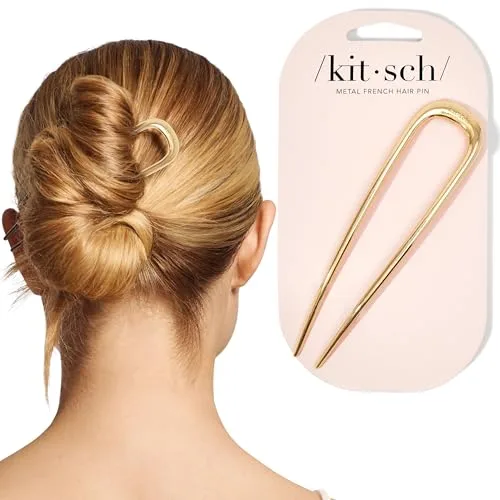
A single compact alloy pin. On short hair you are usually pinning one small twist rather than a whole updo, so one good pin beats a pack of mediocre ones.
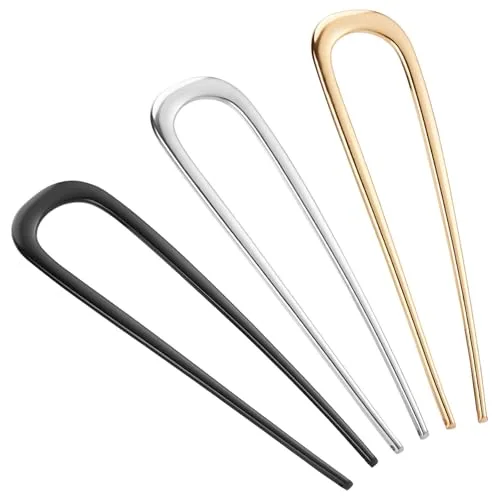
Three pins for the price of one premium pin, which matters on short hair because short styles usually need two or three small anchors rather than one big one.
Quick Comparison
A side-by-side look at our top picks
Frequently Asked Questions
Will a French hair pin stay in a chin-length bob?
What length French pin should I buy for short hair?
Why does my French pin stick out from my head?

Donna Miller
Enjoyed This Guide?
Get more hair tips and product recommendations delivered weekly.