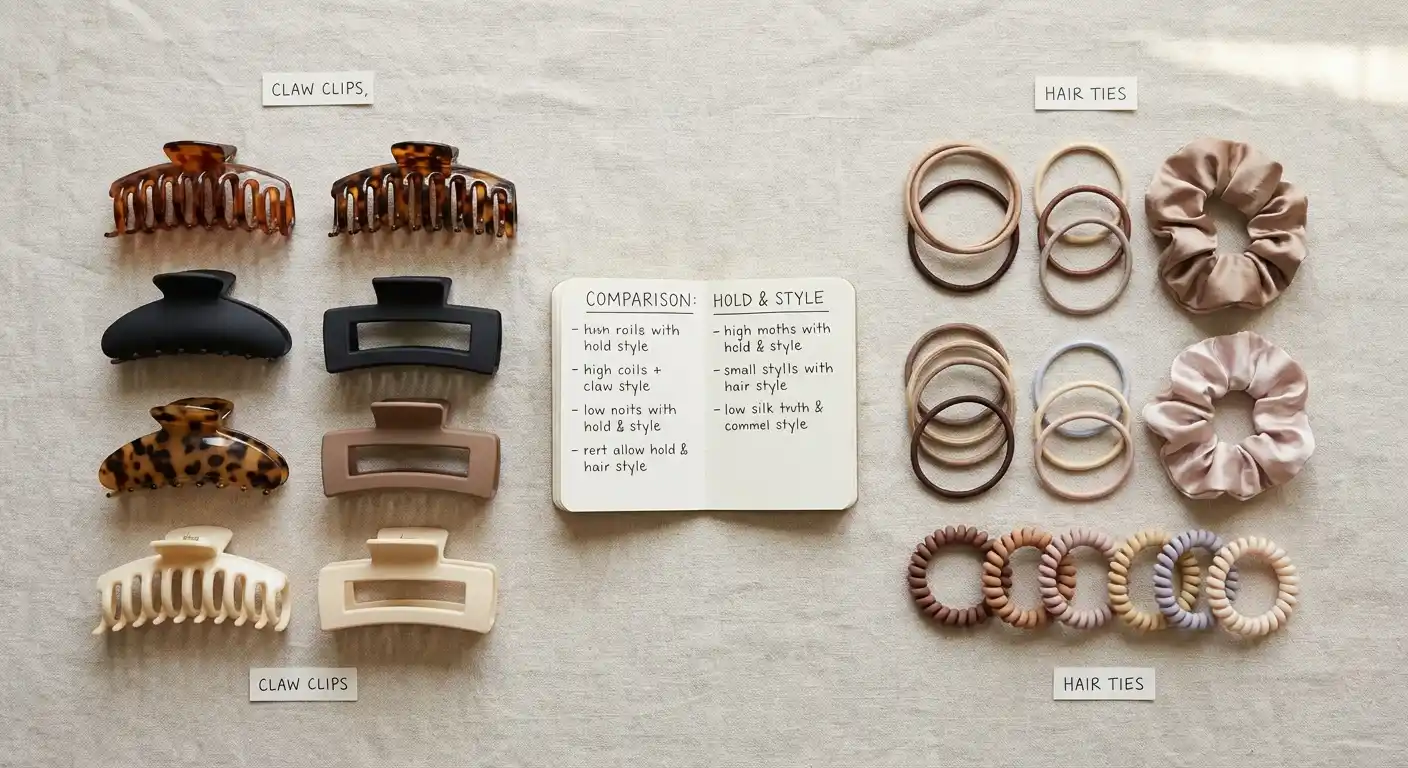
Hair ties have been the go-to for decades, but claw clips are having a major resurgence. If you're wondering whether to make the switch, or how to decide between them for different situations, this comparison breaks down everything you need to know.
The short answer: claw clips are generally better for hair health, while hair ties offer more security for high-activity situations. But the full picture is more nuanced.
For complete claw clip basics, see our ultimate guide to claw clips.
Quick Comparison
| Factor | Claw Clips | Hair Ties |
|---|---|---|
| Hair Damage | Minimal | Moderate to high |
| Breakage Risk | Low | Higher (friction + tension) |
| Hold Security | Good for daily wear | Best for workouts |
| Ease of Use | Quick, no wrapping | Quick, practiced motion |
| Portability | Bulkier | Fits on wrist |
| Style Options | Many looks | Mainly ponytails/buns |
| Price | $5-50+ per clip | $3-15 for a pack |
| Headache Risk | Lower | Higher (tight ponytails) |
| Best For | Daily styling, work, casual | Exercise, sleeping, swimming |
Hair Damage: The Most Important Difference
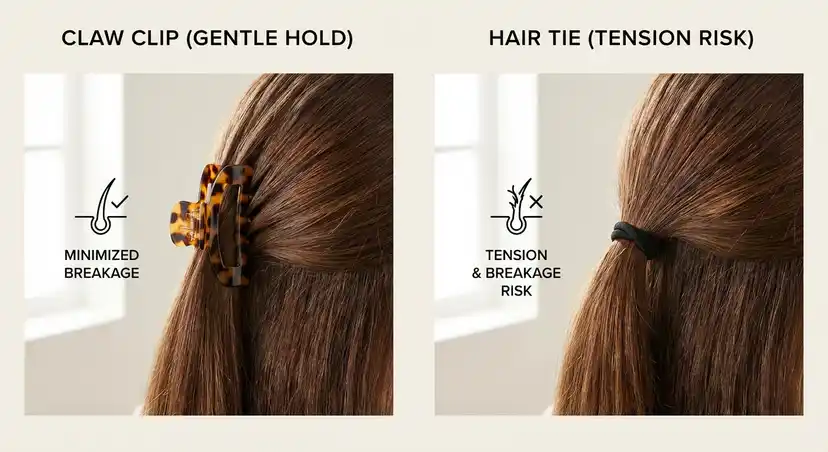
The biggest reason people switch from hair ties to claw clips is hair health. Here's why:
How Hair Ties Damage Hair
Friction damage: Every time you pull a hair tie out, it creates friction against your strands. This is especially damaging for the hairs that get caught in the elastic.
Tension alopecia: Tight ponytails pull at the hairline and around the elastic. Over time, this constant tension can cause thinning and even permanent hair loss in severe cases (traction alopecia).
Breakage at the tie point: The spot where your elastic sits becomes a weak point. Hair breaks at this spot from repeated stress, leading to shorter pieces that stick out of styles.
Crease and dent damage: That "ponytail crease" isn't just cosmetic. The indentation represents stressed, potentially weakened hair fibers.
How Claw Clips Compare
No wrapping friction: Clips grip hair between teeth without circling around it, eliminating the friction caused by elastic bands.
Distributed pressure: The weight and tension are spread across multiple teeth rather than concentrated in one line.
Easy removal: No pulling or tugging to remove, which eliminates the damage caused by taking hair ties out.
No permanent crease: Any indentation from clip teeth is temporary and superficial.
The Bottom Line on Damage
For daily wear, claw clips are significantly gentler on hair. The TOCESS 8 Pack Big Hair Claw Clips are an excellent starting point—strong metal springs hold all day without the damage of elastics. If you currently wear a ponytail every day, switching to claw clips for most days could visibly reduce breakage within a few months.
For more on hair health, see are claw clips bad for your hair?.
Hold Security: When Each Wins
When Claw Clips Hold Better
- All-day desk work: The clip stays in place for 8+ hours without adjustment
- Casual activities: Walking, shopping, light housework
- Thick hair updos: Large clips can hold more hair than most elastics
- Low manipulation days: When you want to touch your hair as little as possible
When Hair Ties Hold Better
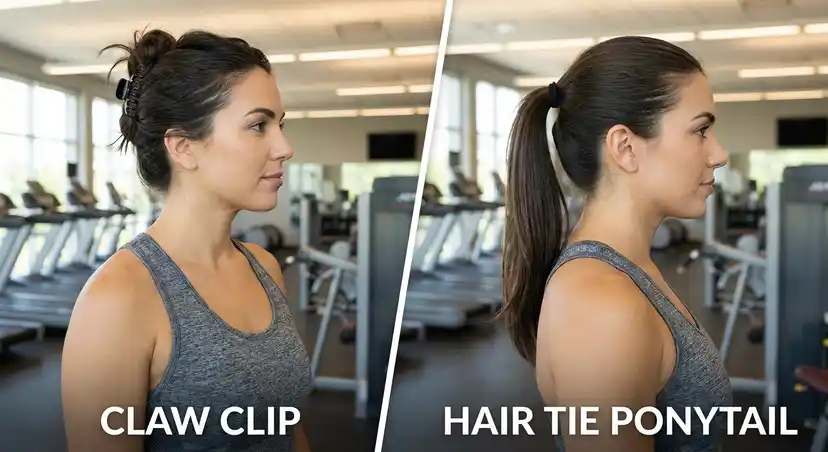
- Intense exercise: Running, CrossFit, spinning, anything high-impact (when you need ties, the Goody Ouchless Hair Elastics are the gentlest option)
- Swimming: Clips can fall off underwater
- Sports with helmets: Clips create uncomfortable pressure points under helmets
- Sleeping: Less likely to fall out during movement
- Wind: Clip-secured styles can come loose in strong wind
The Verdict
For most daily activities, both hold adequately. Hair ties win for high-activity situations where you absolutely cannot have hair falling down. Claw clips win for situations where style and comfort matter more than maximum security.
Ease of Use
Hair Tie Learning Curve
Most people have been using hair ties since childhood, so the motion is automatic. Wrap, twist, wrap, done. The downside is that "easy" is relative. Properly using a hair tie (not too tight, not damaging) actually requires more thought than most people give it.
Claw Clip Learning Curve
There's a brief adjustment period when switching to clips. Common challenges:
- Finding the right clip size for your hair
- Learning which styles work for your hair type
- Getting the twist tension right
Most people master basic claw clip styling within a week of regular use.
Time Comparison
| Style | Hair Tie Time | Claw Clip Time |
|---|---|---|
| Basic hold | 5-10 seconds | 10-20 seconds |
| Polished look | 30+ seconds | 20-30 seconds |
| Half-up style | 15-20 seconds | 15-20 seconds |
| Removal | 5-10 seconds (with tugging) | 2-3 seconds |
Claw clips take slightly longer to put in but are faster and gentler to remove.
Portability and Accessibility
Hair Ties Win Here
Let's be honest: you can wear a hair tie on your wrist. This makes it instantly accessible whenever you need to throw your hair up. Claw clips need to go in a bag, pocket, or already in your hair.
The Workaround
Some people clip a claw clip to their bag strap for accessibility. Others keep one on their desk, in the car, and by the bed. It requires more planning than a wrist-worn elastic, but it's manageable.
Style Versatility
Hair Tie Styles
- Low ponytail
- High ponytail
- Basic bun
- Braided styles (as a tie-off)
- Double buns/space buns
Hair ties are functional but limiting. Most styles look similar to each other.
Claw Clip Styles
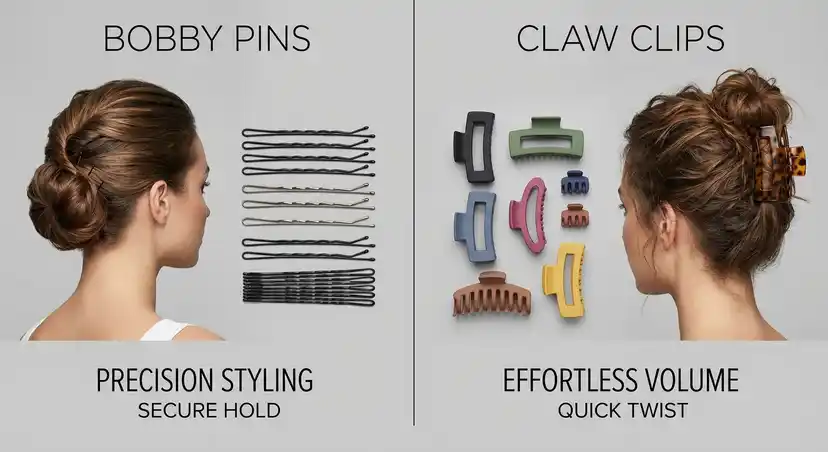
- Classic twist
- French twist
- Half-up styles
- Low bun
- High bun
- Side twist
- Decorative placement
- Layered looks with multiple clips
Claw clips offer significantly more style variety. See our 10 easy claw clip hairstyles for inspiration.
Visual Impact
Claw clips are visible accessories that contribute to your overall look. Hair ties disappear into styles. If you want your hair accessory to be part of your outfit, clips offer more options.
Cost Comparison
Hair Ties
- Basic elastics: $3-8 for 20-50 ties
- No-crease ties: $8-12 for 10-20 ties
- Silk/satin ties: $10-20 for 5-10 ties
- Premium spirals: $5-15 for 3-5 pieces
Hair ties are cheaper individually but need frequent replacement. The average hair tie lasts 2-4 weeks of regular use before stretching out, breaking, or getting lost.
Claw Clips
- Budget clips: $8-15 for multi-packs
- Mid-range clips: $15-25 for 2-4 quality clips
- Premium clips: $25-50 per clip
Claw clips cost more upfront but last years with proper care. A $40 clip that lasts 5 years costs $8/year. A $5 pack of ties that lasts 2 months costs $30/year.
Hair Type Considerations
Best Accessory by Hair Type
| Hair Type | Better Choice | Why |
|---|---|---|
| Fine, thin | Claw clips | Hair ties cause visible breakage faster |
| Thick, heavy | Depends | Clips for daily, ties for workouts |
| Curly | Claw clips | Less frizz disruption, gentler on curls |
| Long | Claw clips | Less tension on length, more style options |
| Short | Hair ties (small) | Very short hair may not grip clips well |
| Damaged/fragile | Claw clips | Minimizes further breakage |
Special Considerations for Curly Hair
Curly hair is particularly vulnerable to hair tie damage because:
- Elastics can stretch and distort curl patterns
- Friction creates frizz that takes days to recover
- Tight styles can permanently alter curl formation
Claw clips let curls maintain their natural pattern while being secured. For curly hair, premium clips like the France Luxe Jaw Clip with Double Row Teeth offer smooth acetate teeth that won't disrupt curl formation.
For curly-specific recommendations, see best claw clips for curly hair.
Comfort Comparison
Hair Tie Discomfort
- Ponytail headaches: Common with tight ponytails, caused by prolonged tension on scalp
- Hairline pulling: Tension at the temples and forehead
- Elastic marks: Visible indentation on hair after removal
- Scalp soreness: After long days in tight styles
Claw Clip Discomfort
- Pressure points: If clip is positioned poorly against the skull
- Pulling: If clip is too small and gripping too tightly
- Leaning back: Some clip shapes are uncomfortable when resting head against chairs
The fix: Choose clip sizes and positions that work with your activities. Flat clips are better for leaning back, for example.
Overall, most people find claw clips more comfortable for extended wear because they don't create constant pulling tension.
Use Case Recommendations
Use Claw Clips For
- Work/office: Professional appearance, comfortable all day
- Casual outings: Shopping, errands, coffee dates
- Styling variety: When you want different looks
- Hair health focus: Daily wear with minimal damage
- Quick touch-ups: Fast to adjust or redo
- Date nights: More elegant aesthetic options
- Bad hair days: Hides issues while looking intentional
Use Hair Ties For
- Workouts: Maximum security during movement
- Swimming: Won't fall off in water
- Sleeping: Some find ponytails comfortable for bed
- Cooking: Hair completely out of face
- Under hats/helmets: No bulk under headwear
- Emergencies: Wrist accessibility matters
- Braided styles: Necessary for securing braid ends
Making the Switch
If you're transitioning from hair ties to claw clips, here's how to do it smoothly:
Week 1: Experimentation
- Find your ideal clip size (use our size guide)
- Try the basic twist style
- Wear clips only for low-activity situations
Week 2: Building Habits
- Clip usage for work/daily activities
- Keep hair ties for workouts only
- Learn 2-3 clip styles that work for you
Week 3: Observation
- Notice your hair's condition at the tie point
- Compare comfort levels throughout the day
- Identify when you still prefer ties
Week 4 and Beyond
- Establish your personal system (clips for X, ties for Y)
- Invest in quality clips for daily use
- Keep cheap ties for occasional high-activity needs
FAQs
Can I use both?
Absolutely. Many people use claw clips for daily wear and hair ties only for workouts or specific situations. There's no need to choose exclusively.
Which is better for preventing headaches?
Claw clips generally cause fewer headaches because they don't create the constant pulling tension that tight ponytails do. If you get ponytail headaches, try switching to clips.
Do claw clips work for thick hair?
Yes, but you need the right size. Thick hair typically needs large or jumbo clips (4+ inches). See our best claw clips for thick hair.
Are spiral hair ties better than regular elastics?
Spiral (telephone cord style) ties are gentler than traditional elastics because they distribute tension more evenly. However, they still create more friction and tension than claw clips.
Which lasts longer?
A quality claw clip can last 5-10 years. Hair ties typically last weeks to a few months before losing elasticity or breaking. Clips are more economical long-term.
Can I sleep in a claw clip?
It's possible with a flat clip positioned correctly, but most people find hair ties or loose braids more comfortable for sleeping. See how to sleep with a claw clip.
The Bottom Line
For most daily situations, claw clips are the better choice. They're gentler on hair, more comfortable for extended wear, and offer more styling versatility. Hair ties still have their place for high-activity situations where security is the top priority.
The best approach? Use claw clips as your default and keep a few hair ties for specific situations like workouts or swimming. Your hair will be healthier, and you'll have more style options for daily wear.
For help choosing your first clips, see our complete claw clip guide or explore specific recommendations for fine hair, long hair, or short hair.
Also check out our comparison with another popular alternative: claw clips vs scrunchies.
For a more detailed analysis of hair damage from accessories, see our comprehensive damage comparison of claw clips vs hair ties and our complete guide to protecting your hair from damage.
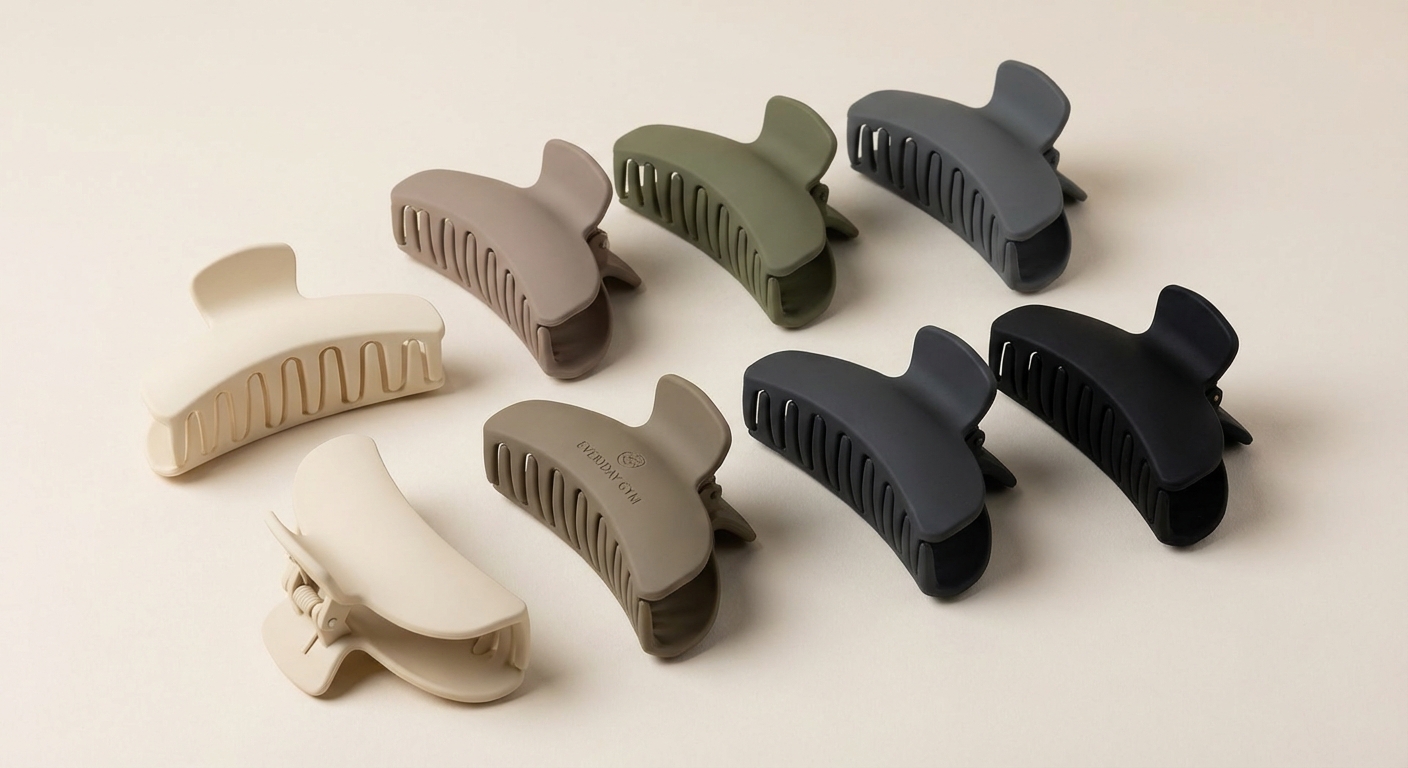
TOCESS 8 Pack Big Hair Claw Clips
The gentler alternative to hair ties for daily styling. No wrapping friction, distributed grip, and quick release.
“Switched from hair ties and never looked back. Less damage, more style options....”
We tested dozens of claw clips to find the very best options. Below you'll find our complete ranking, with detailed reviews and real customer feedback for each pick.
The Complete Ranking
TOCESS 8 Pack Big Hair Claw Clips
“Switched from hair ties and never looked back. Less damage, ...” — Verified Buyer
The gentler alternative to hair ties for daily styling. No wrapping friction, distributed grip, and quick release. Strong metal springs provide secure hold without the damage of elastics.
“Switched from hair ties and never looked back. Less damage, more style options.”
— Verified Buyer
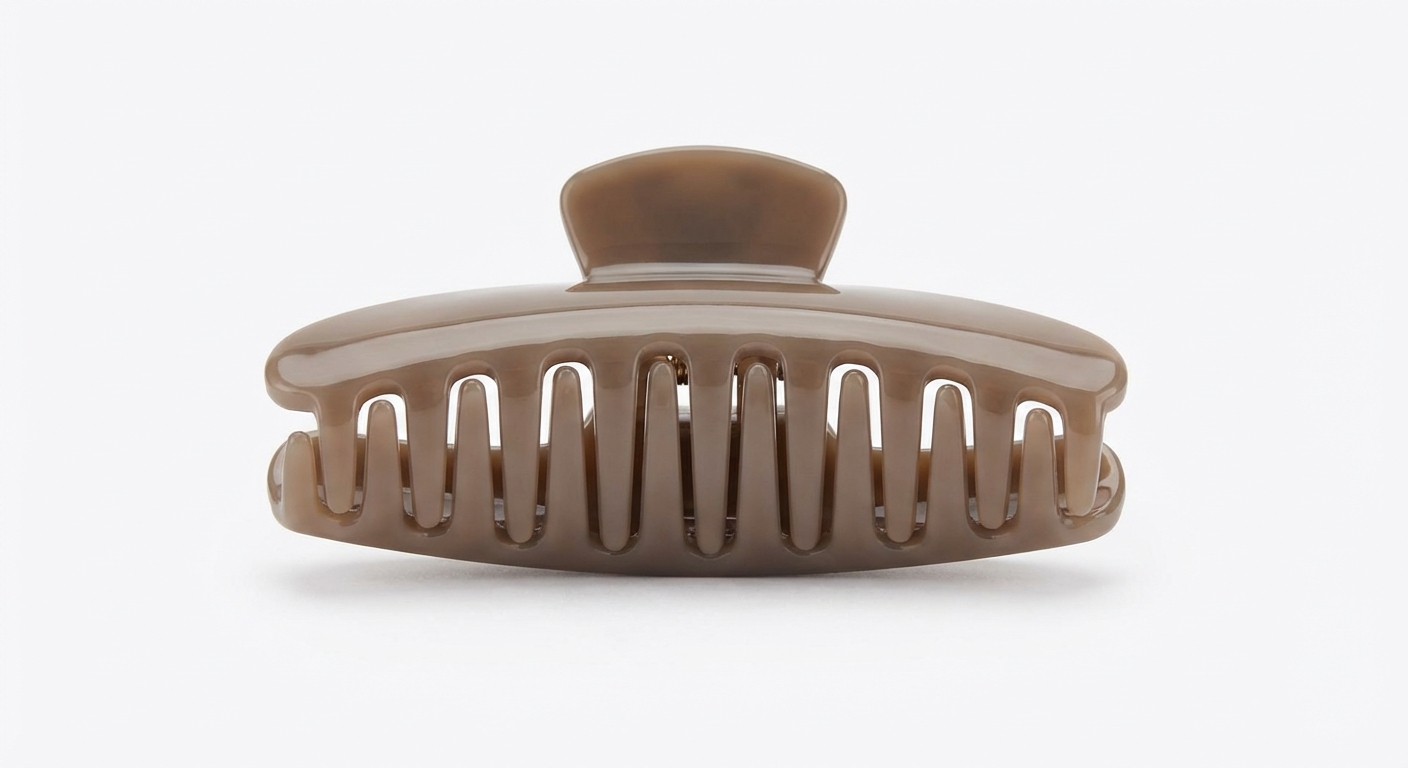
France Luxe Jaw Clip with Double Row Teeth
“My hair is so much healthier since switching to this clip fr...” — Verified Buyer
Premium acetate is significantly gentler than any hair tie. Double row teeth distribute grip for no concentrated stress. The investment choice for those committed to switching from ties.
“My hair is so much healthier since switching to this clip from daily ponytails.”
— Verified Buyer
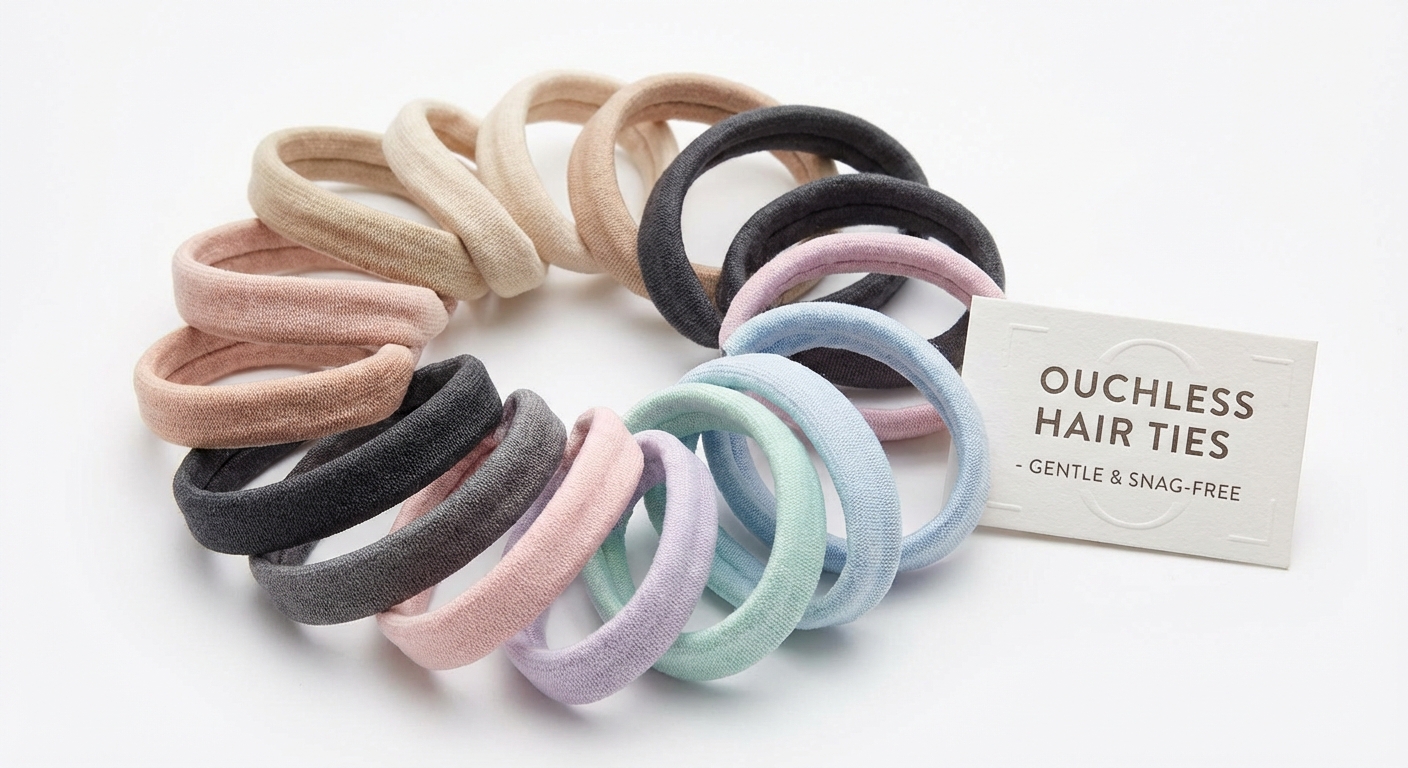
Goody Ouchless Hair Elastics
“The gentlest hair ties when I need them for workouts....” — Verified Buyer
If you need hair ties for workouts or sports, these are the gentlest option. No-snag construction minimizes friction. But use claw clips when possible for better hair health.
“The gentlest hair ties when I need them for workouts.”
— Verified Buyer
Switched from hair ties and never looked back. Less damage, more style options.
Quick Comparison
A side-by-side look at our top picks
Frequently Asked Questions
The Breakage Math
The Convenience Trade-Off
Why Not Both?

Donna Miller
Enjoyed This Guide?
Get more hair tips and product recommendations delivered weekly.