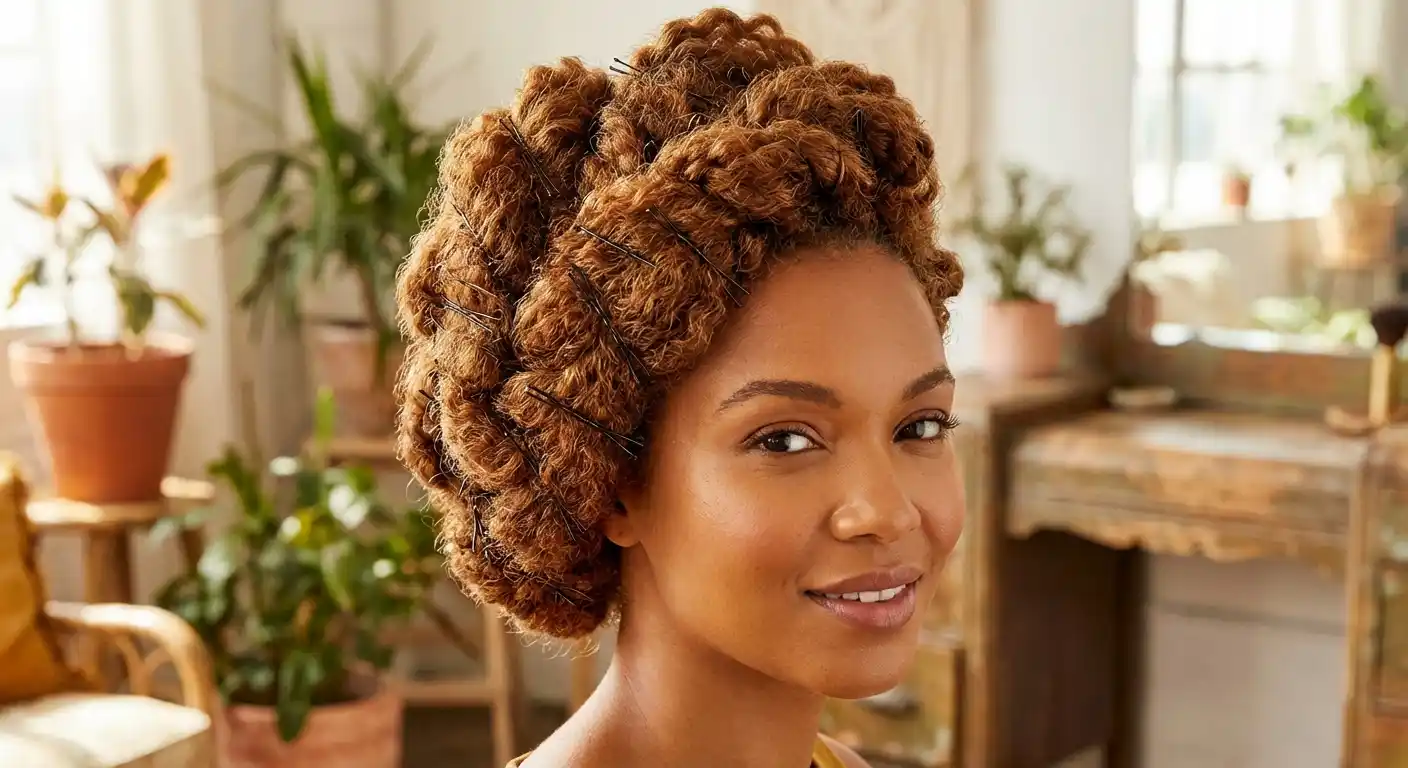
Curly hair and bobby pins have a complicated relationship. The same textured coatings that help pins grip straight hair can snag and damage curls. Pins that are too tight crush curl patterns. And removal can cause breakage if pins catch in the coils.
But the right bobby pins work beautifully with curly hair, holding styles without disrupting texture. This guide covers which pins work for curls, how to use them without damage, and techniques that preserve your curl pattern.
For general bobby pin information, see our ultimate guide to bobby pins. For curl-specific styling with other accessories, see best claw clips for curly hair.
Understanding Curly Hair's Needs
Curly hair has unique characteristics that affect how bobby pins perform.
Curl Types and Pin Considerations
| Curl Type | Characteristics | Pin Needs |
|---|---|---|
| 2A-2C (Wavy) | S-shaped waves, medium volume | Standard pins usually work |
| 3A-3C (Curly) | Defined spirals, more volume | Smooth tips, wider opening |
| 4A-4C (Coily) | Tight coils/zigzag, most volume | Smooth, wide, gentle |
The tighter your curl pattern, the more careful you need to be with pin selection and technique.
Why Standard Pins Often Fail Curly Hair
| Problem | Cause | Result |
|---|---|---|
| Snagging | Textured coating catches curls | Frizz and breakage |
| Crushing | Tight spring flattens curls | Pattern disruption |
| Difficult removal | Hair wraps around pin | Pulling and breakage |
| Creasing | Excessive pressure | Flat spots in curls |
| Slipping | Pin slides on conditioned hair | Style falls |
What Curly Hair Needs in Bobby Pins
| Feature | Why It Matters |
|---|---|
| Smooth tips | Won't catch or pull curls |
| Ball-end tips | Glide through without snagging |
| Moderate spring | Holds without crushing |
| Smooth coating | Slides in/out without friction |
| Wider opening | Accommodates curl volume |
Key Features for Curly Hair Pins
When shopping, prioritize these characteristics for curly and coily hair.
Tip Design (Most Important)
The tips touch your curls constantly. They must be:
| Tip Type | Curl-Friendly? | Notes |
|---|---|---|
| Ball tips | Excellent | Round end glides through curls |
| Dipped tips | Very good | Plastic coating prevents snagging |
| Rounded tips | Good | Depends on smoothness |
| Bare metal tips | Poor | Can catch and pull |
| Flat-cut tips | Poor | Sharp edges snag |
Look for: "Ball tip," "rounded tip," or "coated tip" in descriptions.
Coating Type
For curly hair, smooth coatings beat textured ones:
| Coating | For Curly Hair |
|---|---|
| Smooth enamel | Good, slides easily |
| Matte smooth | Good if not rough |
| Textured grip | May snag, use carefully |
| Flocked | Often snags, avoid |
| Rubberized | Can pull, not ideal |
This is opposite advice from fine straight hair, which needs grip coatings. Curly hair has natural texture that provides grip. You need smooth coatings to prevent snagging.
Spring Tension
Curly hair doesn't need extreme grip strength:
Why moderate tension works:
- Curly texture provides natural grip
- Tight springs crush curl patterns
- Moderate hold is sufficient
Test: Quality curly-hair pins should close firmly but not feel like they're fighting to open.
Opening Width
Curly hair takes up more space than the same amount of straight hair:
- Standard pins: May not open wide enough for dense curls
- Wide-opening pins: Better for 3B-4C hair
- Jumbo pins: Necessary for very thick curly hair
Size by Curl Type
| Curl Pattern | Recommended Size | Reason |
|---|---|---|
| 2A-2C (Waves) | Standard | Average volume |
| 3A-3B (Curls) | Standard to large | More volume per section |
| 3C-4A (Tight curls) | Large | Even more volume |
| 4B-4C (Coils) | Large to jumbo | Maximum volume per section |
Best Bobby Pins for Curly Hair
These pins are specifically chosen for compatibility with curly and textured hair.
Best Overall: Goody Ouchless Bobby Pins
Why they work: Ball tips and smooth coating designed not to snag. The "ouchless" design means gentler on all hair but especially helpful for curls.
Best for: All curl types, everyday styling
Considerations: Standard size may be tight for 4A-4C hair
Best for Coily Hair: Conair Styling Essentials Jumbo Pins
Why they work: Longer length and wider opening accommodate coily hair volume. Ball tips prevent snagging in tight coils.
Best for: 3C-4C hair, thick curly hair, updos
Considerations: May be too large for finer curls
Best for Sensitive Scalps: Diane Ball-Tip Bobby Pins
Why they work: Professional-quality construction with ball tips. Salon-grade means smoother finish overall.
Best for: Sensitive scalps, curly hair prone to snagging
Considerations: Standard size, may need larger for thick curls
Best for Tight Curls: Fromm Style Artistry Large Bobby Pins
Why they work: Professional salon quality with smooth coating and proper tip protection. Large size handles curl volume.
Best for: 3C-4C curls, professional styling
Considerations: Higher price point, may need to order online
Best Budget Option: Scunci Ball-Tip Bobby Pins
Why they work: Affordable option with ball tips for snag protection. Widely available for easy replacement.
Best for: Budget-conscious styling, backup pins
Considerations: Quality varies, check tips before use
Comparison Table
| Pin | Tip Type | Size | Curl-Friendly Coating | Best For | Price |
|---|---|---|---|---|---|
| Goody Ouchless | Ball | Standard | Smooth | All curls | $ |
| Conair Jumbo | Ball | Jumbo | Smooth | Coily 3C-4C | $ |
| Diane Ball-Tip | Ball | Standard | Smooth | Sensitive scalps | $$ |
| Fromm Large | Coated | Large | Smooth | Tight curls | $$ |
| Scunci Ball-Tip | Ball | Standard | Smooth | Budget option | $ |
Curl-Friendly Techniques
How you use pins matters as much as which pins you choose.
Insertion Without Disruption
The Gentle Slide:
- Don't force pins through curls
- Find the path of least resistance
- Slide pin along curl direction, not against
- Insert slowly to avoid snagging
The Curl Lift:
- Lift the curl or curl clump gently
- Slide pin underneath
- Close pin around the base/root area
- Curl sits on top, undisturbed
The Root Focus:
- Pin at the root, not mid-curl
- Roots have less curl definition to disrupt
- Pin parallel to scalp
- Let curls fall naturally over the pin
Removal Without Damage
This is where most damage happens. Technique matters:
- Open the pin first: Don't pull while closed
- Slide out slowly: Follow the path it went in
- Stop if resistance: Don't yank, find the snag
- Work gently: One pin at a time, not rushing
- Feel for catches: Pause and redirect if you feel pulling
Preserving Curl Pattern
To style without ruining your curls:
| Do | Don't |
|---|---|
| Pin at roots | Pin through curl spirals |
| Use loose hold | Over-tighten pins |
| Pin dried curls | Pin wet curls (creates creases) |
| Work with curl direction | Pull curls against their pattern |
| Use fewer, well-placed pins | Use many pins everywhere |
The Pineapple Preserve
For protective styling that maintains curls:
- Gather curls loosely at the crown
- Pin the base of the gathered section
- Don't pin through the curls themselves
- Curls cascade upward from the pinned base
- Style holds without disrupting pattern
Styles That Work for Curly Hair
Some styles complement curly hair's natural texture.
Best Styles for Curls
| Style | Why It Works | Pin Placement |
|---|---|---|
| Half-up, half-down | Shows curls while controlling volume | At crown, away from face |
| Side-swept | Asymmetry works with curl variation | Behind ear, hidden by curls |
| Pinned bangs | Keeps curls off face | Along hairline |
| Low loose bun | Doesn't crush curl pattern | At nape, through twisted section |
| Decorative accent pins | Embraces visible pins | Placed on top of curls |
Styles to Modify
| Style | Challenge | Modification |
|---|---|---|
| Sleek updo | Fights curl texture | Leave some curls loose around face |
| Tight bun | Crushes pattern | Looser gathering, wrap don't twist tight |
| Many pins throughout | Disruption risk | Fewer pins at roots, decorative visible ones |
| French twist | May crease curls | Softer twist, pin at base only |
Special Considerations by Curl Type
For Loose Curls (2A-3A)
Loose curls are most similar to straight hair in pin behavior:
- Standard pins usually work
- Can use grip coatings more safely
- Focus on smooth tips
- Standard techniques apply
For Medium Curls (3B-3C)
Medium curls need more accommodation:
- Ball tips essential
- Standard or large size
- Avoid textured coatings
- Pin at roots, not mid-curl
- Extra care during removal
For Tight Coils (4A-4C)
Coily hair requires the most curl-specific approach:
- Large or jumbo pins only
- Ball tips non-negotiable
- Smooth coating essential
- Wide opening required
- Minimal pins, maximum gentleness
- Consider alternatives like spin pins
Common Mistakes with Curly Hair
Using Grip-Coated Pins
Textured and flocked coatings that help fine straight hair grip are snag magnets for curly hair. The textures catch in curl spirals and cause damage during removal.
Pinning Through Curls
Sliding pins through the middle of curl spirals disrupts pattern, creates frizz, and makes removal difficult. Pin at roots instead.
Using Too Many Pins
More pins = more potential for damage and pattern disruption. Curly hair often holds styles with fewer pins because the texture provides natural grip.
Rushing Removal
Yanking pins out is the primary cause of bobby pin damage for curly hair. Slow, gentle removal prevents breakage.
Wrong Size Selection
Standard pins may not open wide enough for curly volume. Using pins that are too small forces hair and can damage both pin and curls.
FAQs
Why do bobby pins pull and snag my curly hair?
Usually the tips or coating. Bare metal tips, sharp edges, and textured grip coatings all catch in curls. Switch to ball-tip pins with smooth coatings for snag-free styling.
What size bobby pins should I use for curly hair?
Depends on curl density: waves (2A-2C) use standard, curls (3A-3B) use standard-large, tight curls (3C-4A) use large, coils (4B-4C) use large-jumbo. When in doubt, go larger.
Should I pin curly hair wet or dry?
Dry, always. Pinning wet curls creates creases that remain after drying. Let curls fully dry and set before using bobby pins.
How do I remove bobby pins without ruining my curls?
Open the pin first (don't pull while closed), slide out slowly following the insertion path, stop if you feel resistance, and never yank. One pin at a time, patiently.
Why don't textured grip pins work for my curly hair?
Textured coatings are designed to create friction on smooth straight hair. Curly hair already has texture. Adding more friction creates snags. You want smooth coatings that slide easily.
Can bobby pins cause damage to curly hair?
Yes, if used incorrectly. Wrong pins (sharp tips, rough coatings), wrong technique (pinning through curls, rough removal), and over-use can cause breakage. Right pins and gentle technique prevent damage.
Are there bobby pin alternatives for curly hair?
Yes. Spin pins work well for buns without snagging. Claw clips hold without friction. Satin scrunchies for ponytails. Decorative barrettes as accent pieces. See claw clips for curly hair.
How many bobby pins do I need for a curly updo?
Fewer than straight hair typically needs. Curly texture provides natural grip, so styles hold with fewer pins. Start with less than you think you need, add only if necessary.
Alternatives for Curly Hair
Sometimes other accessories work better for curly hair's specific needs.
Spin Pins
Corkscrew-shaped pins twist into buns without sliding through curls. One or two spin pins can replace many bobby pins with less potential for snagging.
See: spin pins vs bobby pins.
Claw Clips
Claw clips grip through pressure, not friction. They're naturally curl-friendly because they don't slide through hair at all.
See: best claw clips for curly hair and bobby pins vs claw clips.
Decorative Pins
Rather than hiding pins in curls, embrace visible decorative pins placed on top of curls. They add style without requiring pins to penetrate curl spirals.
Satin Accessories
Satin scrunchies and headbands work well with curls because the smooth fabric doesn't create friction or frizz.
The Bottom Line
Curly hair needs bobby pins that won't snag, pull, or disrupt curl patterns:
- Ball tips are essential: Prevents snagging in curls
- Smooth coating, not textured: Curls don't need extra grip
- Larger size for tighter curls: Accommodate volume
- Pin at roots, not through curls: Preserves pattern
- Gentle removal: Open first, slide slowly, never yank
The right bobby pins and gentle technique let you style curly hair without sacrificing your curl pattern. Don't force standard pins to work. Choose curl-friendly options designed for your texture.
For more bobby pin information, see our ultimate guide to bobby pins. For technique tips, check how to use bobby pins: 15 essential techniques. And for alternative accessories, explore claw clips for curly hair or compare bobby pins vs claw clips.
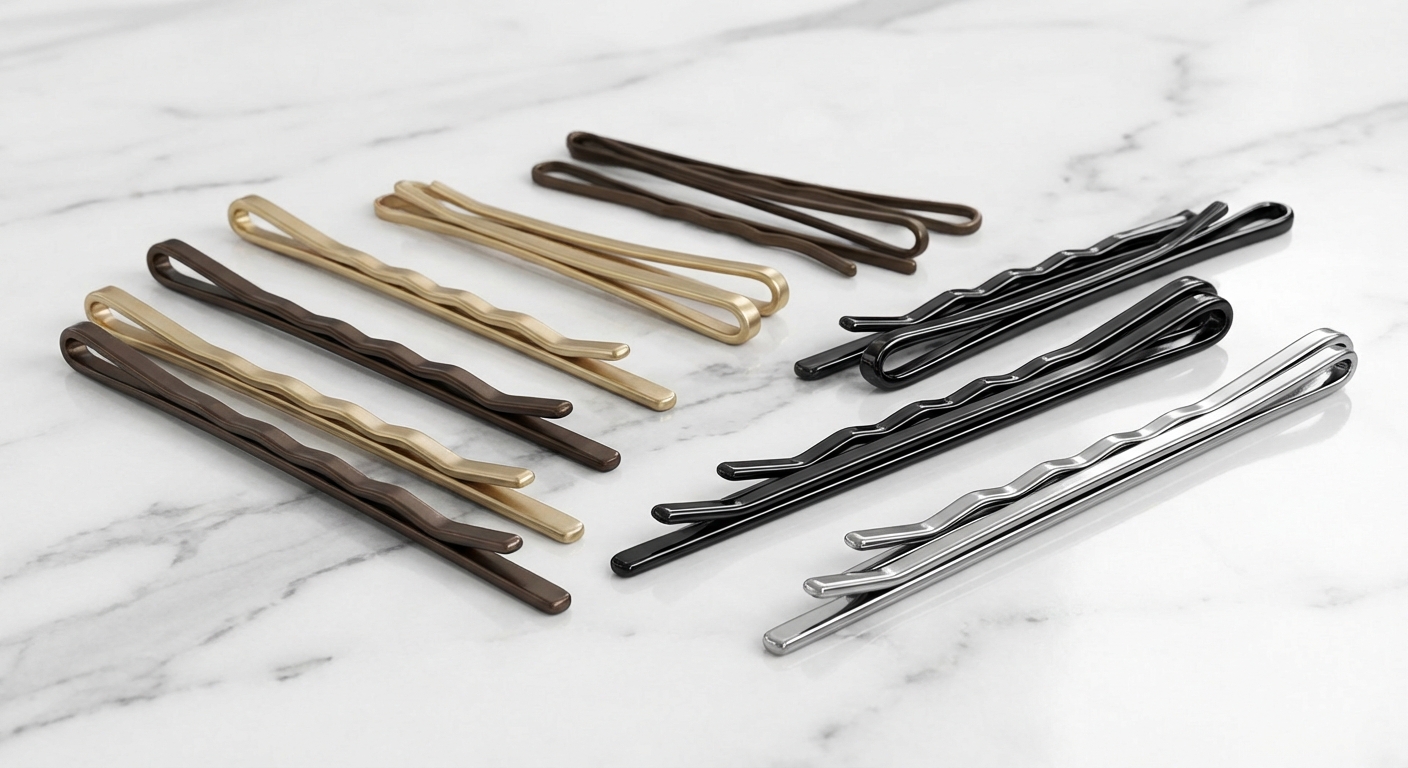
Kitsch Satin Bobby Pins (36 Pack)
Satin-coated pins glide through curls without snagging or disrupting curl patterns. The smooth coating prevents friction that causes frizz.
“Finally pins that don't snag my curls! The satin coating is so smooth....”
We tested dozens of claw clips to find the very best options. Below you'll find our complete ranking, with detailed reviews and real customer feedback for each pick.
The Complete Ranking
Kitsch Satin Bobby Pins (36 Pack)
“Finally pins that don't snag my curls! The satin coating is ...” — Verified Buyer
Satin-coated pins glide through curls without snagging or disrupting curl patterns. The smooth coating prevents friction that causes frizz. Essential for textured hair.
“Finally pins that don't snag my curls! The satin coating is so smooth.”
— Verified Buyer
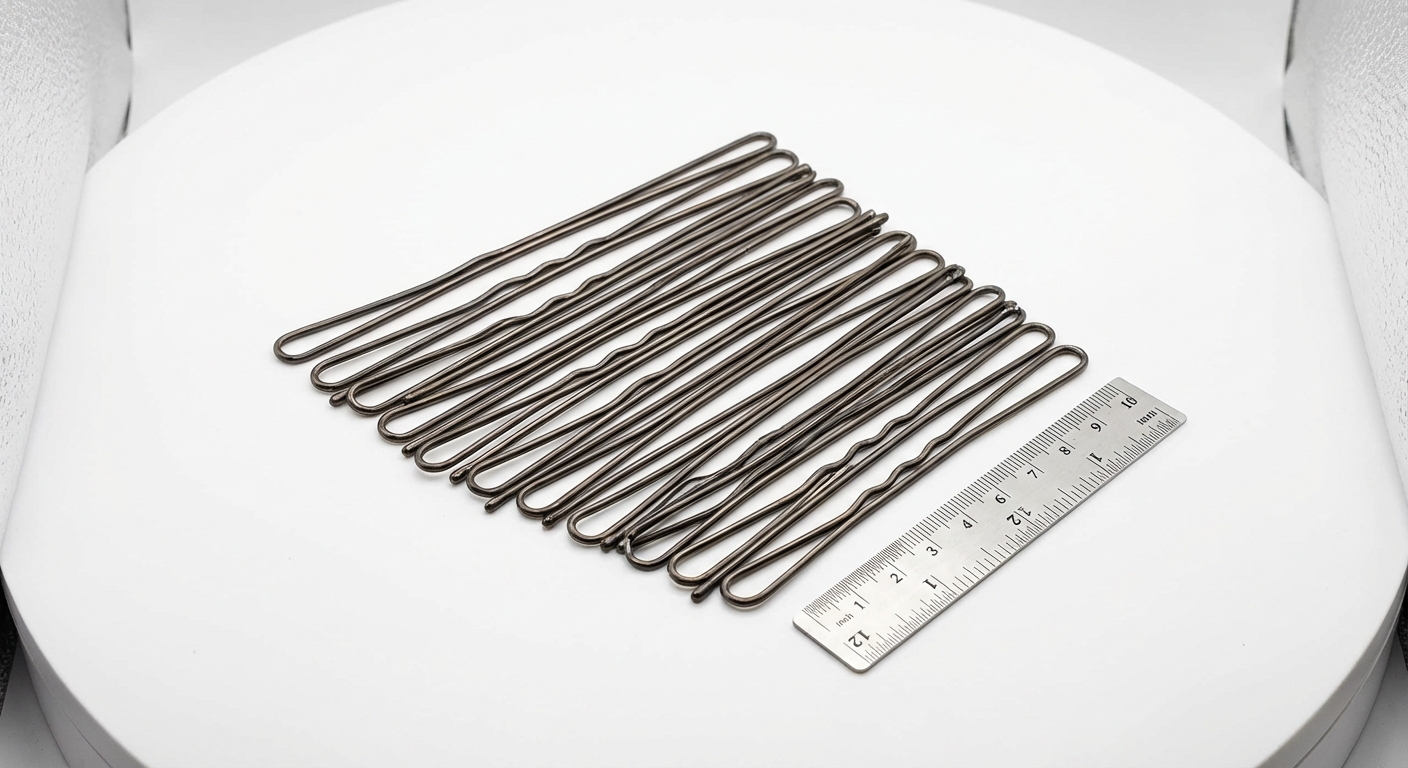
MORGLES 3.15 Inch Jumbo Bobby Pins (100 Pack)
“These fit my curly hair volume. Standard pins could never....” — Verified Buyer
Jumbo pins open wide enough to accommodate curl volume without forcing the spring. Essential when standard pins can't grip enough curly hair.
“These fit my curly hair volume. Standard pins could never.”
— Verified Buyer
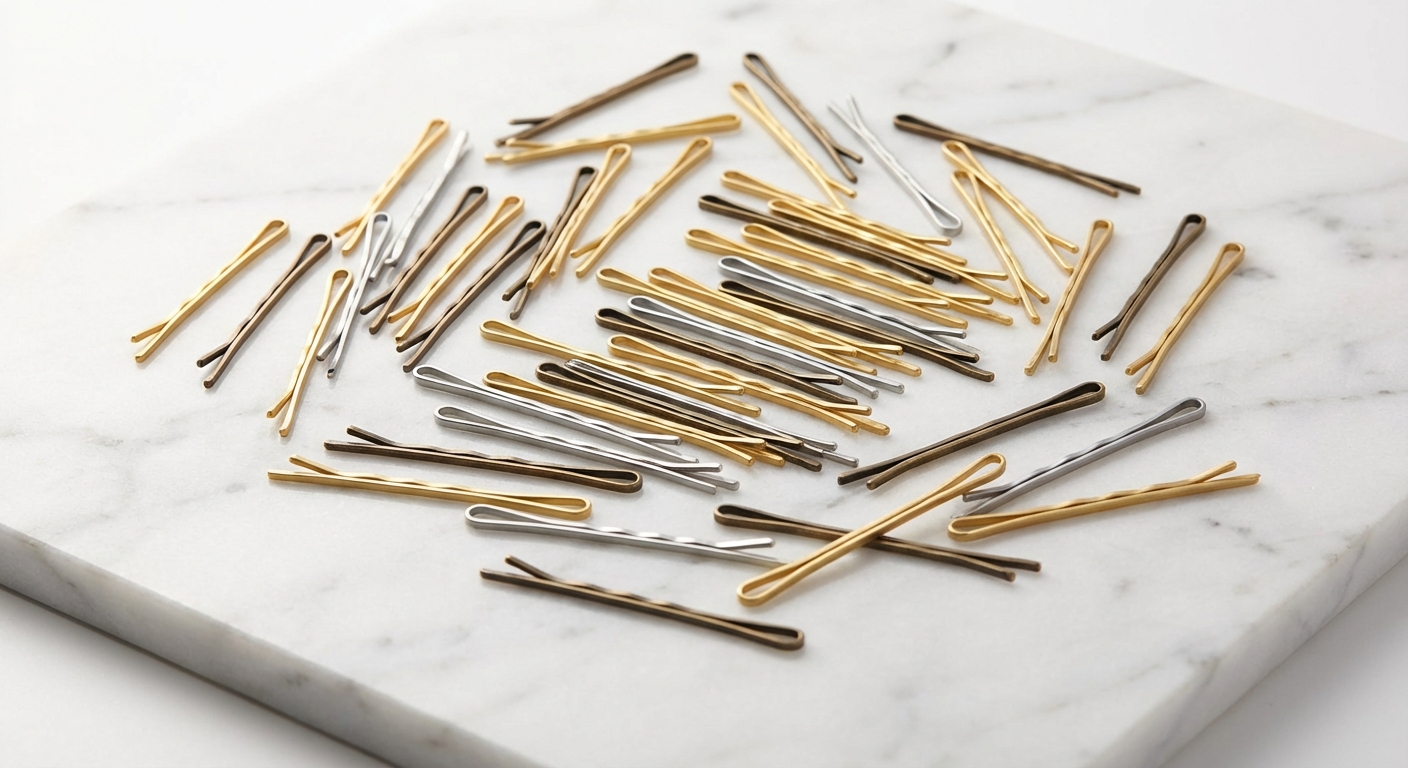
MetaGrip Premium Bobby Pins (100 Pack)
“Great grip without damaging my curls. Professional quality....” — Verified Buyer
Professional-grade grip coating holds curly textures securely. The coating is smooth enough to remove without pulling or snagging delicate curls.
“Great grip without damaging my curls. Professional quality.”
— Verified Buyer
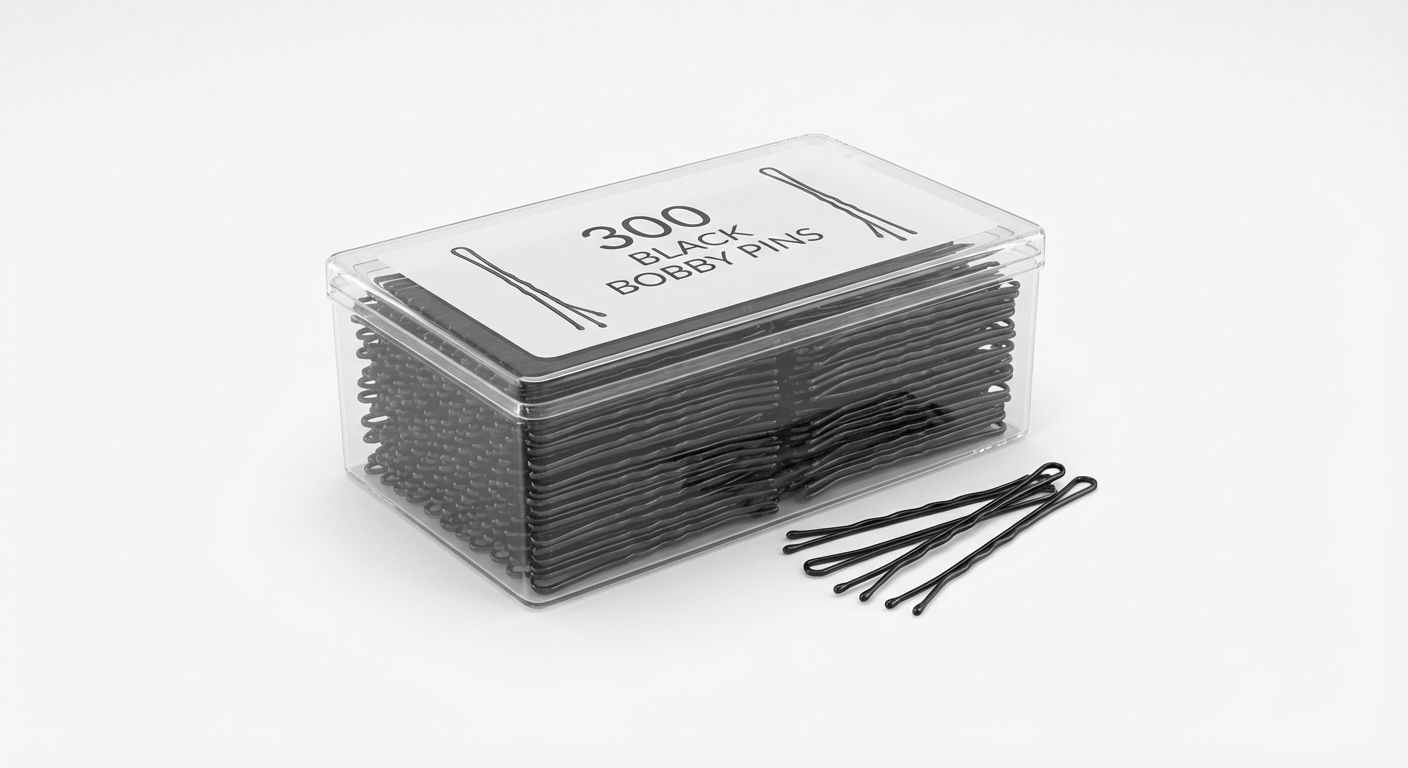
Diane Bobby Pins 1.75" (300 Pack)
“Good value and they don't snag my curly hair....” — Verified Buyer
Smooth tips protect curls from snagging during removal. Budget-friendly quantity lets you have plenty on hand without worry.
“Good value and they don't snag my curly hair.”
— Verified Buyer
Finally pins that don't snag my curls! The satin coating is so smooth.
Quick Comparison
A side-by-side look at our top picks
Frequently Asked Questions
The Snag Factor
Curl Pattern Preservation
The Volume Factor

Donna Miller
Enjoyed This Guide?
Get more hair tips and product recommendations delivered weekly.